

Good morning, C&C, it’s Saturday! The week’s news cycle hit an eddy yesterday, with very little requiring your attention. That provided us with a chance to touch on a topic that directly affects me, personally— but indirectly touches us all. Some of us more than others. I refer here to the legal system’s increasing reliance on artificial intelligence and the expanding opportunities for self-humiliation and taking giant L’s. Enjoy the special edition roundup.
🌍🇺🇸 ESSENTIAL NEWS AND COMMENTARY 🇺🇸🌍
🔥🔥🔥
Thanks to Claude, ChatGPT, Grok, and a cheap Chinese knockoff that probably begins every answer with Dear Respected User and/or Provincial Security Official, the practice of law is changing. A lot. I decided to take advantage of the slow news cycle and share some amusing, provocative insights from the trenches. We begin with yesterday’s story from news aggregator Reuters, which reported, “Lawyer cites fake witnesses in murder case and blames ChatGPT.” The legal profession devoted eight centuries to replacing plain English with Latin. Artificial intelligence only needed about eighteen months to replace the Latin with imaginary police officers.
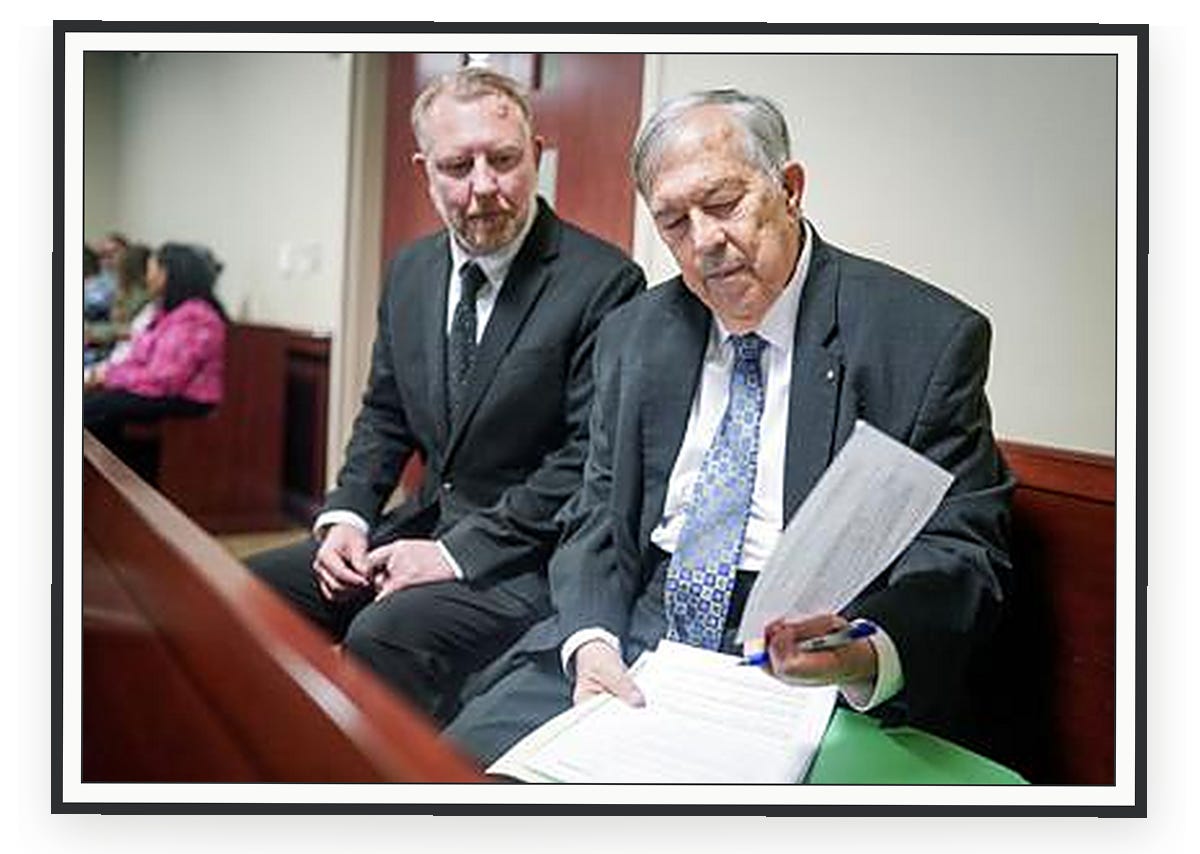
The tale began about two years ago. Oscar Renee Sandoval, 57, of Chaparral, New Mexico, was convicted back in January 2025 of first-degree murder and aggravated assault for the April 1, 2024 killing of his wife, Shiereen Al-Jibury, the mother of his children. It wasn’t hard for the jury. He chased his wife/partner Shiereen Al-Jibury across a busy highway. Shiereen desperately tried to flag someone down, but Oscar caught up and shot her four times in front of passing motorists. Some stopped to administer CPR. Making his situation worse, and ensuring they’d remember him in the lineup, Oscar threatened the witnesses before running off.
Oscar is not the crunchiest taco in the street cart. In his haste, he abandoned his SUV, which had been parked nearby. It had a bullet hole, a 9mm casing on the passenger-side floor mat, an unspent round in a cup holder, and his wallet— which held his driver’s license and credit cards. Cracking the case did not require New Mexico’s dream team. It only needed a warrant, a flashlight, and the specialized forensic technique of reading the name on the driver’s license.
After employing the clever distraction of leaving his wallet in the murder vehicle, Oscar fled to Mexico, was picked up in Ciudad Juárez eight days later, extradited, tried, and got life plus 4.5 years. (Just to make sure.)
Local news later reported that Oscar had an “unexpected” reaction to hearing the verdict. After listening to the jury’s decision, he grinned, danced in the courtroom, and exclaimed, “¡Viva Mexico!” (Literally, “I am a maniac.”) I did not make that up. None of the reports I saw stated his immigration status. I’d only be guessing. But they did say he doesn’t speak any English.
All we know for sure is that Carlso is a deeply unsympathetic character who loves Mexico.
🔥 After his sentence, presumably now dissatisfied with his free public defender’s performance of getting him life plus a few more, Oscar hired a private lawyer to handle the appeal. Enter our (non) hero, Santa Fe solo criminal defense attorney Stephen Aarons, who took the case. Aarons has been practicing law in New Mexico since 1985. His fee wasn’t in the record, but a murder appeal generally runs $20,000-$40,000, and up.
To earn that fee, attorney Aarons asked ChatGPT to review the trial transcript and write the brief. The brief was excellent. The brief clearly explained why Oscar had been falsely convicted when there was clear evidence that a different shooter wearing dark pants and a white shirt was spotted by the other drivers. The brief quoted key witnesses in Oscar’s favor, including Officer Michelle Amarillo, Officer Sanchez (no first name given), Manal Al-Jibury, and Teresa Marquez.
There was only one problem. The brief was fictional.
Nobody at the trial had actually mentioned a differently dressed shooter. The police department didn’t employ any Michelle Amarillo or an “Officer Sanchez.” Nobody knows who ‘Manal’ or ‘Teresa’ are. They were more of a mythical theater troupe than real people. The brief also fabricated testimony, described a completely different episode, and included facts that didn’t exist.
Not too good, Chat. Anyway, Aarons didn’t notice his own appellate brief was more like fan fiction. But the prosecutors did. They noticed immediately.
🔥 After he was hauled before New Mexico’s Supreme Court to account for filing a fake brief in a murder appeal, attorney Aarons threw himself on the mercy of the court using the worst of all possible defenses. I’m not guilty; I’m just retarded. “It’s of little comfort to know that my stupidity is what brings us together this afternoon,” he began. Laughably —and I bet the justices did laugh— attorney Aarons claimed he did not know AI could hallucinate stuff. This is not a strong defense.
Every lawyer involved knows what really happened. Aarons took his client’s fee and let ChatGPT do all the work. He probably even used the free version.
Remember this part for later: Supreme Court Justice Michael Vigil did not criticize Aaron for using AI. He compared it to using an intern. “There’s nothing wrong with using a law student to help you write a brief,” he admonished. “But when you put your name on that brief, and you file it, you’re attesting that you have checked that brief and it is accurate.”
That is true. Bar rules make lawyers responsible for whatever is in what we file. That’s why we must sign everything that goes in the record. It’s not because we want to.
Justice C. Shannon Bacon asked the questions now destined for every law-school ethics PowerPoint until the sun becomes a blackened cinder: “Counsel, do you watch the news? Do you listen to the radio? Do you read anything about what’s going on in the world?” She added, “Because the problem with lawyers relying on AI hallucinations is an above-the-fold story every single day.”
But then, and this is the main point, Justice Vigil added, “The issue is not AI per se. The remedy is not with AI; the remedy is with a lawyer.”
In one sense, Justice Vigil was perfectly correct. Humans have fretted about technology since before Christ. Socrates, for one famous example, warned about over-reliance on writing. The written word would make students lazy, the great philosopher cautioned, since they won’t have to memorize things. They can just write it down.
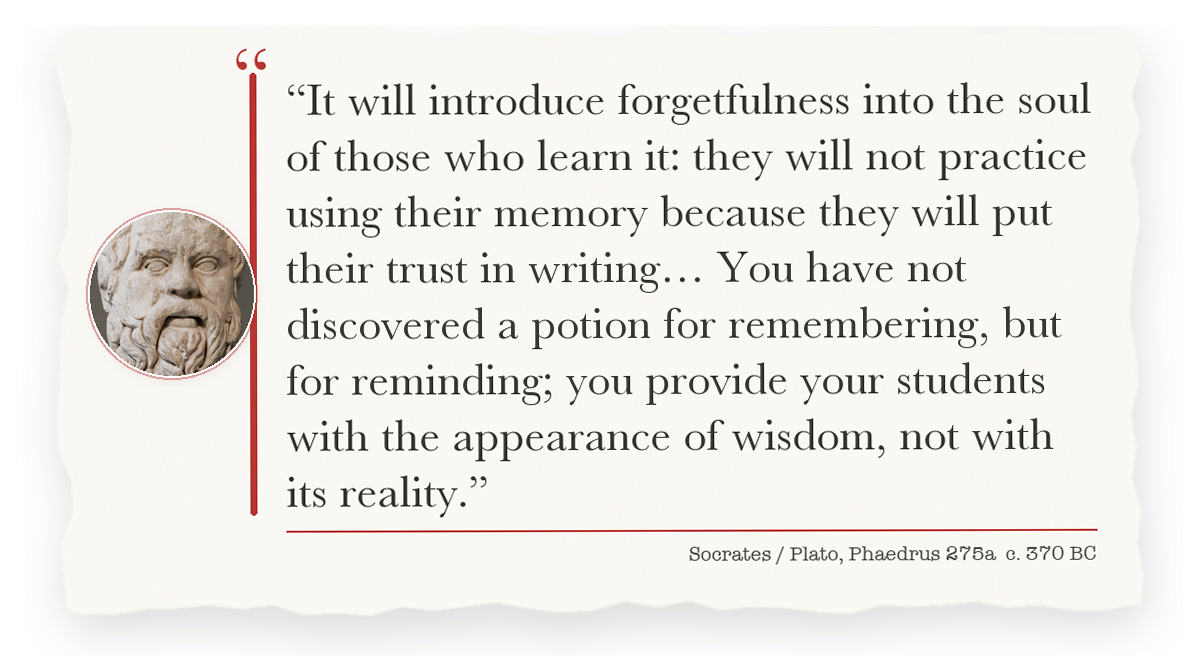
It’s a good thing Socrates never saw Twitter.
Anyway, the state high court found Aarons in contempt, referred him to the bar for discipline, barred him from appearing before the New Mexico Supreme Court while that process is pending, fined him $5,000, gave Oscar back to the public defender, and struck all Aarons’s briefing in the appeal.
Oscar will probably want his money back. It’s not a good look for Aarons’ law practice, either. It’s the digital version of being tarred and feathered.
🔥 I had lunch with a lawyer friend yesterday. Only slightly ironically, he mentioned using ChatGPT to help him draft an appellate brief. I didn’t tell him about the Aarons case. (It wasn’t the right time to bring it up.) But I wasn’t particularly surprised. At this point, using AI is not optional in litigation. Your adversaries are using it. So must you.
As of this month, September 2026, every legal database service that law offices and courts rely on —Westlaw, LexisNexis, and all their smaller competitors— offers their own built-in AI bots that find cases and draft briefs.
The attorneys at my office use AI every single day. My paralegals are required to double-check every case and statute cited in their briefs before filing. My attorneys are not allowed to file things themselves. Not because I don’t trust them. But because I don’t trust human nature. Not only was attorney Aarons lazy, he was cheap. He didn’t pay a paralegal to double-check his brief. He didn’t even use a specialized legal AI to draft it.
He did save time and money, though. But now attorney Aarons is learning an expensive and time-consuming lesson.
In my experience, when used properly, AI does not save time. Sometimes it even takes longer than the same job without AI. But when used properly, AI improves the quality of the work product. It can surface deeply buried facts. It can serve as a brainstorming partner. It can do tedious work attorneys often skip, gloss over, or pretend to do while sipping a suspicious-looking beverage poured over a whiskey rock.
It can do all those things (except sipping). And also AI can make stuff up.
So, working well with AI requires double-checking it— the same way you’d check the work of a young associate. And that usually means involving more than one human, like a lawyer and a paralegal. Proper AI use means prompting it for higher quality and precision. Smart lawyers should buy more than one service, use specialized tools, and have one AI double-check another.
But here’s the thing: month by month, AI keeps improving. It’s already better and more reliable than any second-year associate. It hallucinates far less than it did this time last year. The specialized versions almost never hallucinate. Soon, manufacturers will solve that particular problem for good.
Soon, AI will draft better and more reliably than the average experienced lawyer, and then what?
🔥 Don’t mistake me. I am not personally worried about job security. Not anytime soon. Lawyers pretty much run everything. We help write the rules. We won’t go down without a fight. More seriously, above-average lawyers will rise with AI, tame it, and use it to help their clients get better results than they can get without legal help.
In September, 2026, what I wonder about most is: what happens when all the briefs on both sides of a case are argued by AI? Then it will just be ChatGPT vs. ChatGPT. Who wins that one? As we pass some point of AI intelligence, a point we are soon approaching, there won’t be much visible difference between one AI and another. When they are all “smarter” than people, extra smarts probably doesn’t add much to a brief that maybe no human will ever read.
Which brings us to judges.
🔥 The New Mexico Supreme Court justices gave attorney Aarons a pretty hard time. They mocked him for “not knowing” that AI could hallucinate. And rightly so. Of course he knew. He just lied about being lazy, apparently hoping everyone would believe he’s mentally defective rather than slothful. The truth is worse. Even judges are doing it now. Meet Federal District Judge Henry T. Wingate of the Southern District of Mississippi.
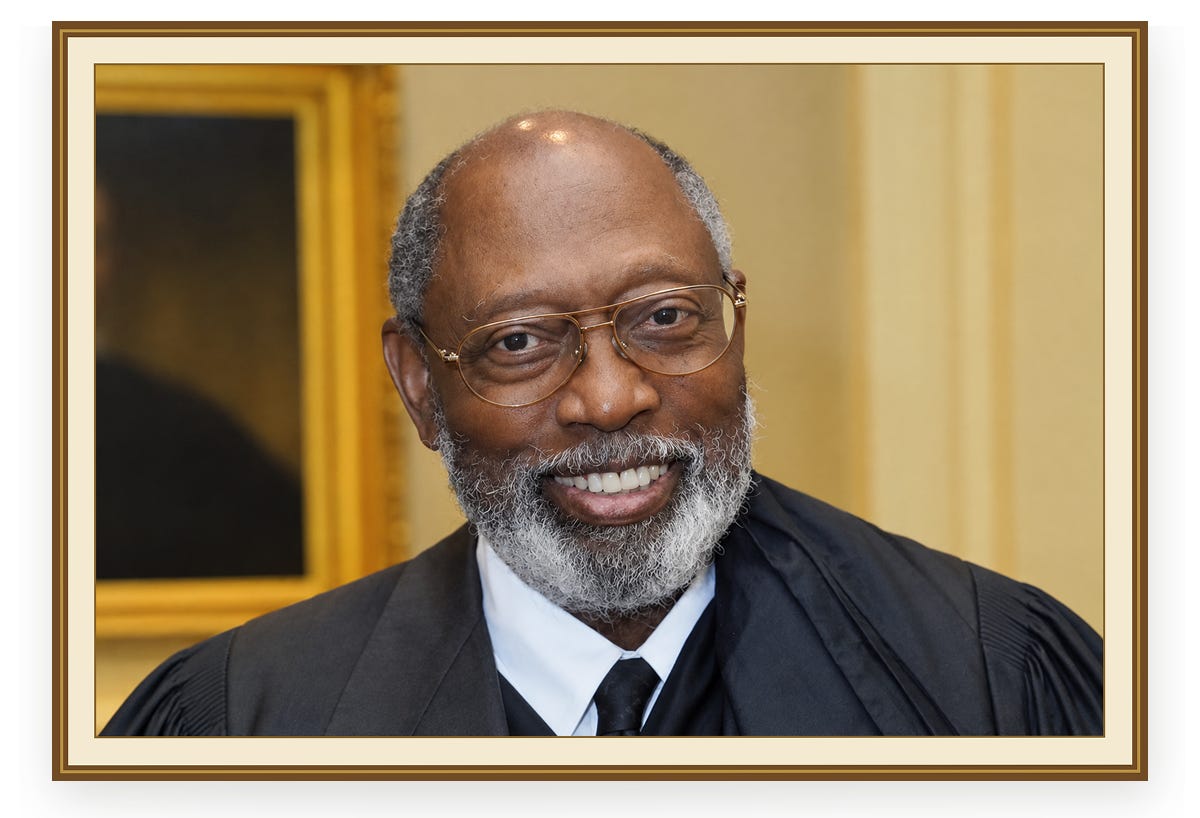
Eleven days ago, the ABA Journal ran a story headlined, “Judge’s release of order with AI errors is ‘pretty serious matter,’ 5th Circuit says.” Ironically, the case involved a challenge to a Mississippi law barring DEI programs. Keep that in mind.
Last summer, Judge Wingate issued a TRO blocking Mississippi’s anti-DEI law. That was not surprising. The problem was that his TRO “referenced allegations and parties not in the lawsuit, nonexistent declarations by four people, and language not found in the state law being challenged,” the ABA said.
After being called out, Judge Wingate stepped up and took responsibility like a man by blaming it all on his law clerk. He said it had been filed by accident. He said it was only “an early draft that had not gone through the standard review process, which involves several layers of review.” He withdrew the TRO and issued an amended one.
Then, making the story a thousand times better, Judge Wingate’s amended TRO cited a non-existent case. I am not making that up. At his conduct hearing, one of Judge Wingate’s judicial bosses, Fifth Circuit Judge Jerry Smith, asked him, “Don’t you think that’s a pretty serious matter? If after all that had happened with getting rid of the initial order, that there still would be an AI hallucination in what was finally issued?”
Deputy Mississippi Solicitor General Anthony M. Shults is now asking the Fifth Circuit to reassign the case to a different judge. “The court didn’t disclaim the TRO, and actually embraced it, and relied on the legal reasoning in the flawed TRO, which we think is very concerning,” Shults said. He’s right. That is concerning.
Don’t miss that. AG Shults accused Judge Wingate of relying on ChatGPT’s reasoning— rather than the other way around. In other words, he’s hinting that Judge Wingate didn’t do the judging. He didn’t tell ChatGPT how to draft the order. He just told ChatGPT who should win, and then let ChatGPT explain why.
It looks like classic outcome-driven judging with a judge who wasn’t even trying, or else he would have caught the AI errors.
Soon AI won’t make errors that give lawyers and judges away. And then we won’t be able to tell when DEI rulings are 100% silicon and 0% grey matter. Here’s the thing: I will bet a GM SUV that judges are using AI just as much as lawyers are at this point. It’s human nature. Like lawyers, judges should also have to disclose when they use AI. But we can pretty much assume they all are.
🔥 Let’s see what you think. Pretend you are a busy judge. Lawyers continue filing briefs in your cases with swelling page counts. The briefs are getting smarter and more complex. They look increasingly identical in quality. And it is getting harder and harder to tell which brief should win— because AI is helping write all the briefs the lawyers keep filing in your docket.
Now. Knowing that the lawyers are using their AIs to generate all these long briefs, do you block out most of your day to sit down with a tall stack of similar-looking briefs, start reading, pull the cases, and try to reach a measured judicial decision? Or do you just feed the AI-generated briefs to your own AI, and ask ChatGPT to decide who won? (Then ChatGPT will say, “would you like me to draft the order?”)
I think you know the answer. Surely, not all judges are there yet. Especially not the good ones. But, like with the lawyers, I’d be shocked if most below-average judges weren’t already doing this. Remember Judge Wingate?
The most troubling thing is that I’m not sure whether this is a bad development or not. If the judges are actually letting ChatGPT decide, then an AI decision might be an improvement over what a below-average judge could come up with on his or her own. My concern is rather judges who tell their AI who should win based on their personal preferences, then ask the AI to help disguise that as a reasoned decision.
The problems in dealing with these issues are phenomenal. By the time you can get an AI standards committee together for its first meeting, the technology target has moved miles further away. It’s like we’re on the roller coaster ride at Islands of Adventure, but we need to talk about safety standards for roller coasters.
We must wait until the ride is over to hold the meeting. But the ride is still going, and another loop-de-loop is coming up.
Have a super Saturday! C&C will return Monday morning with an all-new roundup of essential news and commentary.
Don’t race off! We cannot do it alone. Consider joining up with C&C to help move the nation’s needle and change minds. I could sure use your help getting the truth out and spreading optimism and hope, if you can: ☕ Learn How to Get Involved 🦠
How to Donate to Coffee & Covid
Twitter: jchilders98.
Truth Social: jchilders98.
MeWe: mewe.com/i/coffee_and_covid.
Telegram: t.me/coffeecovidnews
C&C Swag! www.shopcoffeeandcovid.com
So the attorney’s and Judge’s lie and there are zero consequences beyond a small fee. But miss remember something you told the FBI about something years ago and you end up in jail for a long time.
It’s very clear that the last thing the justice system is about is actual justice. It’s all about protecting the system from we the people.
"I am not personally worried about job security. Not anytime soon. Lawyers pretty much run everything. We help write the rules. We won’t go down without a fight."
My Dad ... Harvard Law graduate ... used to say, "If it weren't for lawyers, we wouldn't need them."