

Good morning, C&C, it’s Tuesday! Your fast-breaking roundup includes: the New York Times finally notices the vaccine industry is a smoking crater and can barely contain its surprise; Big Pharma’s TV ad addiction faces a bipartisan intervention; AI is coming for your doctor’s job (and your doctor knows it) but patients may benefit most; Chinese AI video gets scary good, Hollywood should be terrified, but we have a lot to look forward to; and twenty-year veteran Anderson Cooper rage-quits 60 Minutes for committing journalism.
🌍🇺🇸 ESSENTIAL NEWS AND COMMENTARY 🇺🇸🌍
💉💉💉
We’ve waited a painfully long time to see this story. The New York Times, which spent the last four years labeling anyone who questioned mRNA vaccines as anti-science conspiracy theorists, ran a lusciously ironic story yesterday headlined, “Vaccine Makers Curtail Research and Cut Jobs.“ The sub-headline was even better: RFK’s policies have “sent a chill through the entire industry,” one scientist moaned. You know what else sent a chill? Getting fired from your nursing job for declining a shot that —as it turns out— everyone now agrees doesn’t prevent infection. At best.
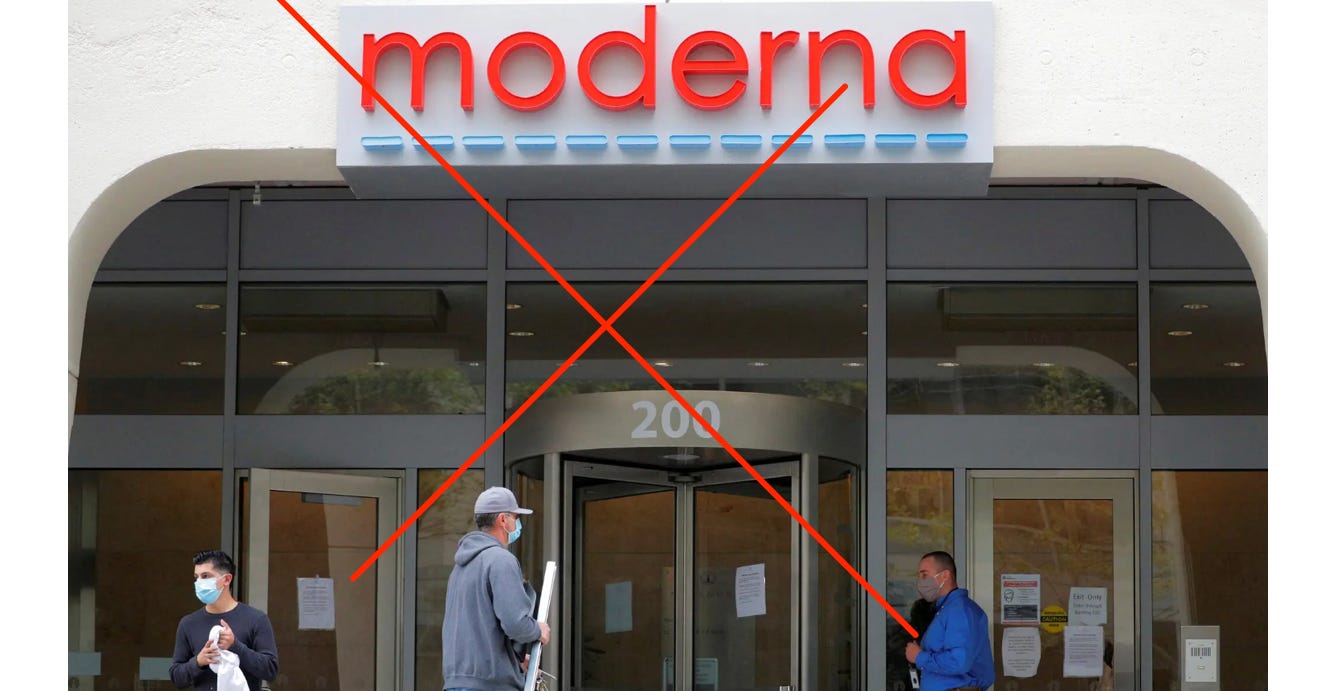
It’s a bloodbath of red ink, spilling out of a giant needle.
In Massachusetts, mRNA darling Moderna is pulling back on vaccine studies after Secretary Kennedy nixed all its mRNA grants. In Texas, a small jab company canceled all plans to build a new factory. In San Diego, another vaccine manufacturing company laid off workers. Moderna’s own president, Dr. Stephen Hoge, complained to the Times, “There will be less invention, investment, and innovation in vaccines generally, across all the companies.”
That sounds like a complaint, but I take it as a promise.
Meanwhile, Pfizer CEO Albert Bourla, projecting, ironically told reporters there is “almost like a religion” around vaccines in Washington. When reporters asked Bourla what needs to change, the CEO snipped, “The health secretary.” Very subtle. Maybe he should try that approach on his next earnings call— “You know what would really help Pfizer’s stock price? A different electorate.”
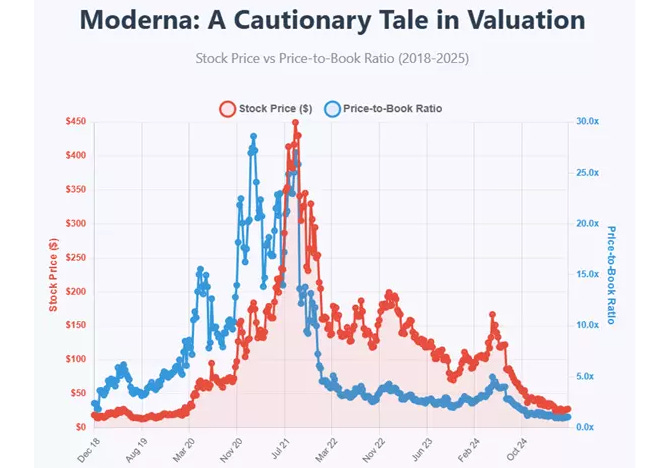
Consider the delectable wreckage. Moderna’s stock has cratered more than 90% from its August 2021 peak— erasing roughly $180 billion in market value. The company laid off over 800 workers, lost $700 million in bird-flu contracts after the administration canceled them, and shelved vaccines for herpes, shingles, and chickenpox. (Cutting the herpes jab was particularly fitting, since Moderna is also an embarrassing rash that won’t go away.)
Last week, the FDA refused to even review Moderna’s mRNA flu vaccine, which caused the Alliance for mRNA Medicines to accuse the agency of having “arbitrarily moved the goal post.” Wild: The people who re-defined “vaccine” mid-pandemic dare to lecture us about moving goalposts. At Davos, Moderna CEO Stéphane Bancel announced the company would stop investing in late-stage vaccine trials in the United States entirely. “You cannot make a return on investment,” Bancel explained, “if you don’t have access to the U.S. market.”
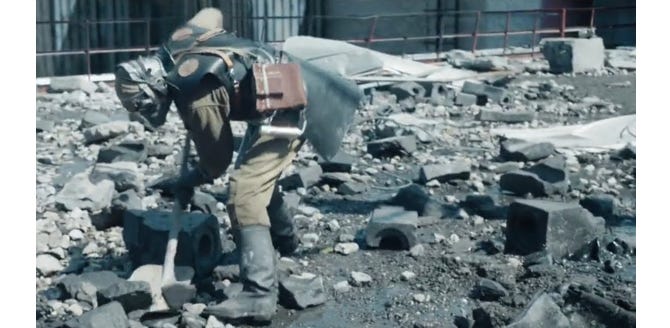
This is Big Pharma’s Chernobyl moment. For years, they told everyone the reactor was stable and anyone who questioned safety was a conspiracy theorist. Now the graphite is scattered across the parking lot, and Moderna’s CEO is explaining from Switzerland why he won’t run tests in America anymore. The story is practically made for streaming.
For its part, the New York Times, which spent the last four years lecturing everybody about how wonderful mRNA vaccines were, ran this story at the top of its home page. Translated from Times-speak into English, the headline means: “The people who told you to shut up were wrong, the people you were told to shut up about were right, and now nobody wants to invest in the thing we promised would save civilization.” So.
The anti-vaxxer movement has been around for a long time, laboring in the wilderness. They just couldn’t get much traction; Pharma successfully framed them as kooks and cranks. Sure, they wrote volumes of books, delivered fiery lectures to each other, and otherwise created as much of a nuisance as they could. Until the pandemic. Whoever unleashed covid from the lab in Wuhan unleashed a lot more than a virus.
The pharmaceutical chickens have come home to roost. Over on BlueSky, progressives point at measles cases and cry buckets about how conservatives don’t care about health. But they have it exactly backwards. We care about health. And we are paying a whole lot more attention to it now, junior.
🔥🔥🔥
The walls of the Overton box are closing in. Speaking of times changing, the New York Times ran a companion story yesterday, headlined, “Should Drug Companies Be Advertising to Consumers?” I probably don’t need to tell you this again, but as usual, when the headline asks a question, it never answers.

In 1997, the FDA loosened previous restrictions and allowed prescription drug ads on television, so long as they included a fast-talking summary of major risks and gave a source for further information. Now, you can’t watch an hour of broadcast TV without watching a dozen ads featuring happy, attractive people playing beach badminton in yachtwear while afflicted with diseases that would curl your hair. “Now I’m enjoying life! And not worrying about my genital herpes! Thanks, Frēdongza!”
Direct-to-consumer drug ads are allowed by only one other country in the world, a tiny island nation that explicitly compares its own citizens to fruit (New Zealand’s kiwis). Just. Saying.
The problem for the Times is that, for once, the paper’s go-to progressive darlings agree with President Trump’s position. Last June, archaic Senator Bernie Sanders (I-VT) co-sponsored a bill to outlaw drug ads. President Trump roped-a-dope, and in September, signed an executive memo calling for the same thing (in Trump’s version, a return to pre-1997 FDA advertising rules).
So … now what? Oppose banning drug ads? Right after Bernie just came out against them? Just because Trump is for it? It was a perplexing conundrum. The Times solved it by fairly reporting on how everyone in politics and the industry oppose direct drug ads, but bookended the article with Tara’s emotional tale: a 270-pound retiree who found relief after she heard an Ozempic jingle. Ooooo-zempick!
“If I hadn’t asked my new doctor about it, would she have suggested Ozempic?” Ms. Abrams querulously wondered. “Or would I still weigh 270 pounds?” Good thing for that commercial. The Times didn’t mention how it found Tara; I’m betting it was with a little behind-the-scenes help from an advertiser (I’m looking at you, Novo Nordisk.)
🤖🤖🤖
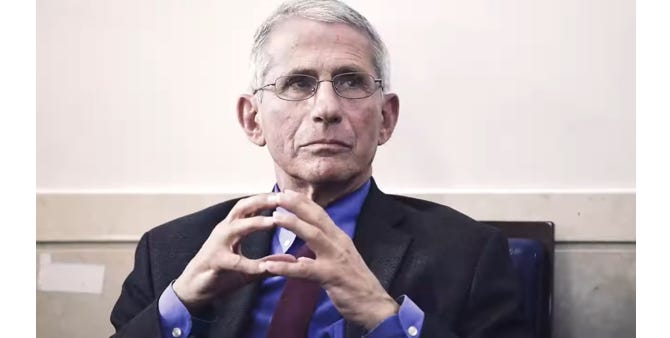
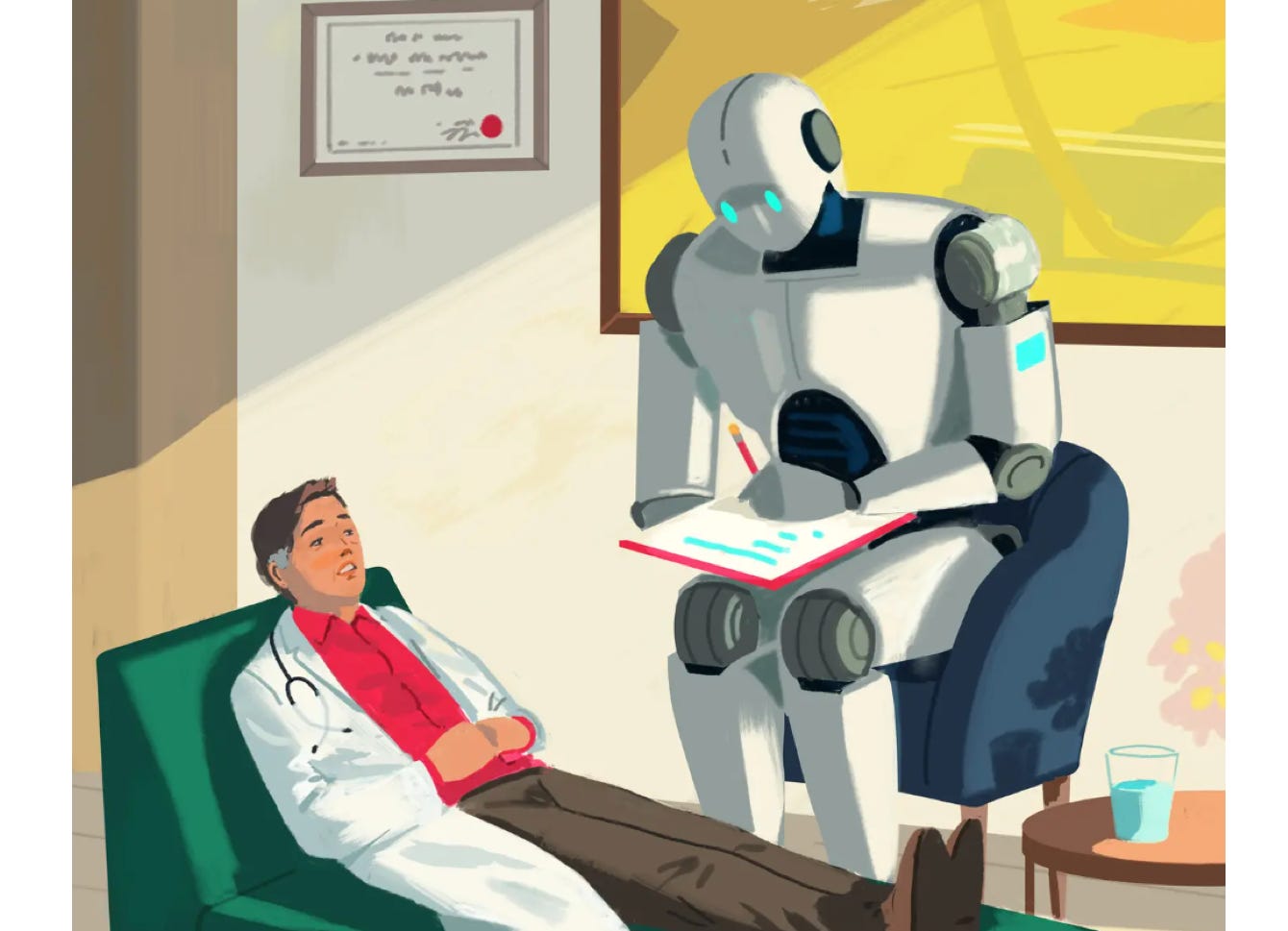
Our first entry in today’s AI roundup tracks the health theme, and more pandemic carnage. Last week, the New York Times ran a cutting-edge story headlined, “A.I. Is Making Doctors Answer a Question: What Are They Really Good For?” Funny— we’ve been asking the very same question. Through painful experience, we have learned that some doctors make us feel better by going away. Exhibit A:
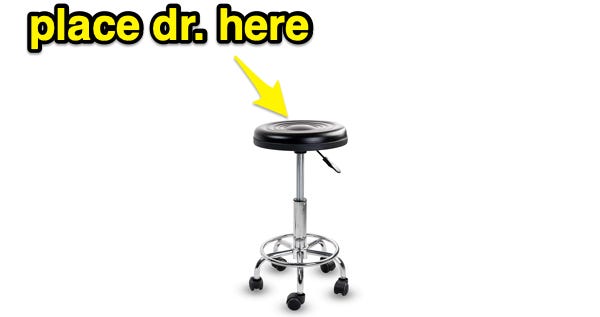
I’ll start with the obvious and encouraging answer. AI should create lots more face-to-face time for doctors to spend with their patients, who are arguably the reason doctors got into the gig in the first place. The article finally got there, after pages of hilarious hand-wringing, and only with a single quote pinned at the rump-end of the story. “Even if an A.I. has read all the medical literature, I will still be the expert on my patients,” Dr. Josh Steinberg said. “Our doctoring role may look a little different, but I will still be sitting on a little rolling stool, talking to the patient.”
The story could have started and ended with that quote. But let’s indulge in a little schadenfreude. Junior engineers get all the headlines, but doctors are right in the middle of AI crosshairs. They are getting nervous. Consider this headline from Mobi Health News, last month:
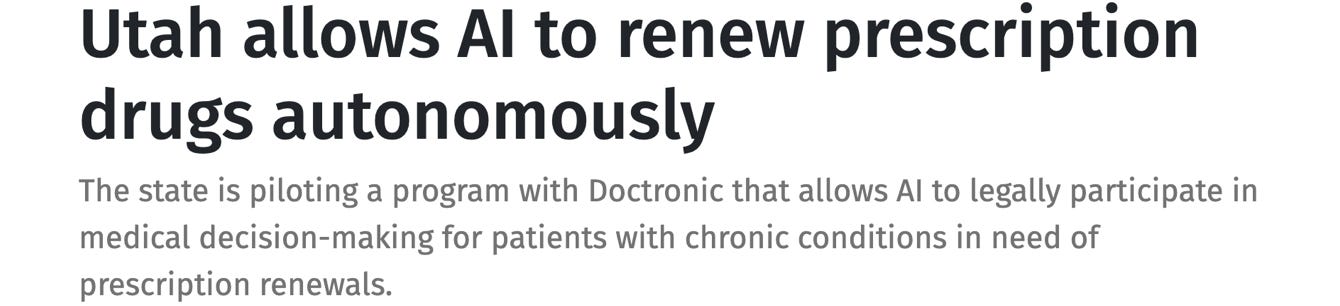
It raises a really good question. If everything is going fine, why shouldn’t patients be able to get a quick refill without having to navigate a four-hour office wait for a three-minute consult? Refills are low-hanging kiwi.
Or, how about this headline, published in Stat News, also last month:

Obviously, they have to do something after that baffling surge in post-pandemic heart problems. Weird. Anyway: hello, Dr. Albert Ignatius! (Portlanders: ‘AI’.)
The Times rounded up a bunch of actual human doctors who can see the freight train speeding down the tracks. They are starting to feel a little under the weather.
🩺 Allow me to share a little personal story. Back in November, I noticed a little smudge on my left calf. It was hard to see through the thicket of leg hair, but I could just make it out. A darker patch. I ignored it (of course) since it didn’t hurt, wasn’t itchy, and wasn’t asking me for $50 to go to the movies with its friends.
A few weeks later, I glanced down in the shower to retrieve a loose loofa, and was shocked to find the discolored patch was three times as big, about 9 inches long and three inches wide, and troublingly turning black in the middle. I’ll admit to feeling a little alarmed. The last thing I wanted to do was admit to anyone I’d let it go.
So I dried off, nervously took a blurry cell phone pic, and, while still in a state of nature, plopped it into the ChatGPT app.
I didn’t expect much. You could hardly see the dark patch through my gorilla-like leg hair. With damp fingers, I ponderously typed, “What’s this??” The chatbot was unfazed. “Ringworms,” it immediately and confidently diagnosed. What? Ringworms? How? When? “Get some Lamisil,” it suggested, helpfully urging, “quickly, before it spreads. Want me to find you the nearest CVS?”
I followed Dr. Chat’s orders. The fungal rash (or whatever) cleared up. After a careful and diligent investigation —I asked Michelle— we suspect the source was some cheap sheep-fur Croc boots that I’d shamefully ordered to keep my feet warm while blogging in the wee hours. (Michelle: “it’s probably those ridiculous boots you wear all the time.”)
The point is, under the old way, I’d have waited six weeks for an appointment, spent a half-day seeing the doctor for ninety seconds, and been told to buy the same over-the-counter remedy that high-school wrestlers are intimately familiar with (retail: $7.99).

🩺 The article accurately summarized the problem. “Today’s patients,” MIT Dr. Leo Celi said, “may not realize how badly the current system is failing them.” It’s fairly said, but I still take issue with that. Many of us do realize how badly the current system is failing us. We just haven’t had any better options.
Dr. John Pandolfino is a specialist in gastroesophageal reflux disease (GERD) at the Feinberg School of Medicine at Northwestern University. Because he’s so backlogged that new patients can’t get in to see him for weeks or months, he’s pioneering an AI tool to help hime diagnose and advise. It’s working well— too well. “Eventually, when the algorithm is working better than a human, I will have to find something different to do,” Dr. Pandolfino said. AI, he said, “will make people like me less and less valuable.”
Dr. Lee Schwamm is a neurologist and associate dean for digital strategy and transformation at the Yale School of Medicine. Already, Dr. Schwamm said, AI can outperform doctors in some situations, like reading an electrocardiogram. AI can detect heart conditions by identifying patterns cardiologists can’t see, which would otherwise require an expensive echocardiogram. A job once reserved for cardiologists can now be performed by general practitioners.
Still, Dr. Schwamm is no doomer. He pointed out that patients often don’t even know what to ask AI, so doctors remain an important part of the equation. For example, a patient might say they felt “dizzy.” What does that even mean? The room was spinning? Did they feel faint? Or just unsteady?
The doctor thinks AI can’t navigate those kinds of nuances. I’m not so sure. But either way, AI could free doctors to devote more face-to-face time to diagnosing and treating, rather than trying to squeeze ten appointments into each billing hour (average six minutes per).
🤖 Now let’s switch gears. Yesterday’s social media churn delivered viral chatter about some new AI video clips making the rounds. TikTok’s parent company, ByteDance, released a new version of Seedance, which can produce longer videos with consistent characters, background music, sound effects, and dialog. We knew this day was coming soon, and it’s almost here. People just thought it would take longer.
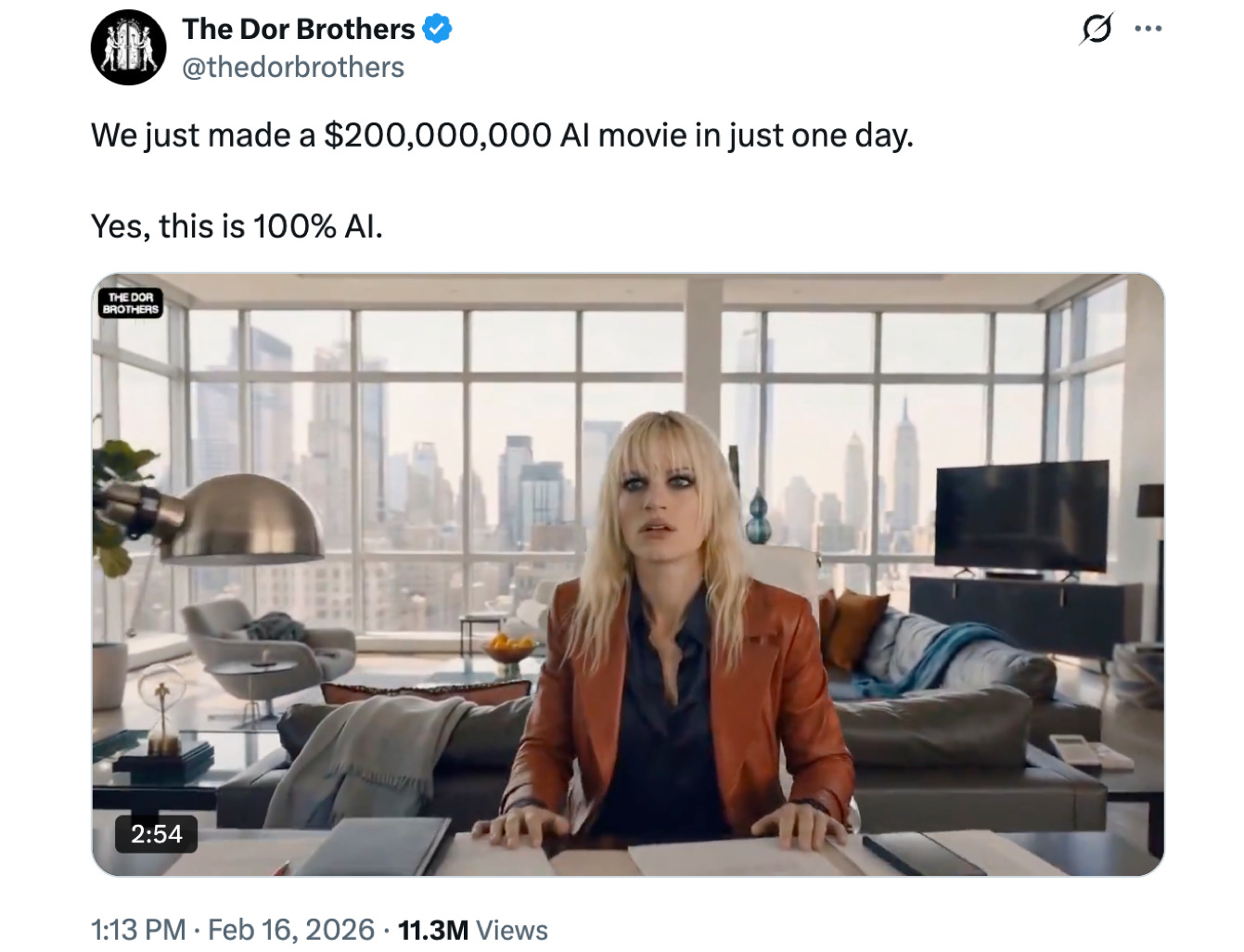
It’s not perfect yet. The AI still can’t keep it together for a full feature length movie. But the examples making the rounds yesterday —the Dor Brothers clip being only one of several— herald the end of Hollywood’s overlong Studio Age.
The ubiquitous online debate revolves around whether fake video can ever replace real human actors, whether only seasoned directors have “the eye” for effective storytelling, whether the vines of intellectual property ownership will strangle video production, and so on. Those are all fair questions, and I say let the fur of debate fly. (Just keep it out of your boots.)
But consider this. There is a vast library of terrific media that is long out of copyright. Take one of your favorite oldies. Take Mark Twain’s classic, The Adventures of Huckleberry Finn. No copyright issues there. Soon, nothing will stop intrepid young AI pioneers from making that beloved book into an AI feature film that is true to the source material.
If today’s Hollywood made Huckleberry Finn, it would be updated for “modern audiences” and revolve around the lead character coming out as gay and leading a slave rebellion. Soon, very soon, Hollywood’s massive studios and onsite teams will be forced to compete with garage producers in Akron, Ohio, who only have six Mac Minis, twelve monitors, and a green screen tacked to the wall next to their Manga pinup calendar.

Imagine just the possibilities of people remaking classic literature into modern films without wokeness. How about all the Old Testament stories? Or, for that matter, the New Testament stories? And that’s just from existing source material. They’ll be coming up with all sorts of ideas for media that would make Hollywood throw up its multigrain heirloom tomato sandwiches.
To me, the real story about the frantic pace of AI video development isn’t disruption. It’s opportunity. What will happen when the gatekeepers of wokeness are shoved aside and filmmaking becomes a wide-open field inviting all comers? It could be really great. It could be a whole new age of new media.
🔥🔥🔥
Buh-bye. One day after the 60 Minutes special ran, the one with a pro-MAHA food message and an unbiased interview with the HHS Secretary, this happens. The Washington Post ran the story, headlined, “Anderson Cooper is leaving ‘60 Minutes’ after two decades.” He said that, after 20 years with the Sunday news serial, Anderson, 58, is stepping back to spend more time with his young children, but everybody knows he just rage-quit. (He’s sticking to CNN, though.)
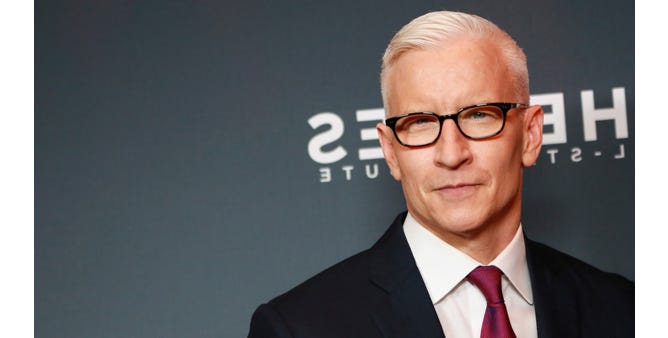
In a sense, Anderson’s warmly intended cover story was true. His kids are also single and underemployed. He probably will be spending a lot more time with them, and the nanny.
First, CBS hired the classically liberal free-speech crusader Bari Weiss as editor in chief, who opened the dusty history books and set about reintroducing the news organization to the long-lost journalistic concept of avoiding bias. Then there was that dustup about CBS’s temporary hold on a 60 Minutes hit job arguing that Trump was deporting American citizens to El Salvador’s SuperMaxx gang prison, CECOT. CBS, under relentless pressure, relented and let it run— but with added comments from Trump Administration figures (the original episode had included no contrary voices).
Now this. Platforming notorious anti-vaxxer Robert F. Kennedy, Jr.? Instead of silencing him? And attacking ultraprocessed food?? It was just too much for Anderson. That was it. They could take this dumb side job and shove it. CBS viewers will no longer enjoy the silver-haired surrogate dad’s fresh takes anymore.
Anderson Cooper survived a career in war zones, Hurricane Katrina, unhinged pandemic takes, and Anderson Cooper 360°. But apparently he couldn’t survive a 60 Minutes segment that asked fair questions about big food.
Anderson, 60 Minutes will struggle on without you. Bye, Felicia.
Have a terrific Tuesday! Sail back here tomorrow morning, for another educational and whimsical episode of C&C essential news and commentary.
Don’t race off! We cannot do it alone. Consider joining up with C&C to help move the nation’s needle and change minds. I could sure use your help getting the truth out and spreading optimism and hope, if you can: ☕ Learn How to Get Involved 🦠
How to Donate to Coffee & Covid
Twitter: jchilders98.
Truth Social: jchilders98.
MeWe: mewe.com/i/coffee_and_covid.
Telegram: t.me/coffeecovidnews
C&C Swag! www.shopcoffeeandcovid.com
The reason AI can so easily take our doctors and dentists jobs is because they already weren’t human centered anymore, anyhow. Most medical professionals have Big Pharma and Big Insurance as their customers, not their patients.
In that sense, AI would be an improvement (and I don’t like AI).
But the doctors in it for the love of healing - they will likely always have patients. They may not grow rich off their practice anymore (ready to trade some chickens or eggs for services again?) but they’ll always be in demand because they see the whole patient personally.
✝️✝️✝️
A voice is calling,
“Prepare the way for Yahweh in the wilderness;
Make smooth in the desert a highway for our God.
Let every valley be lifted up,
And every mountain and hill be made low;
And let the rough ground become a plain,
And the rugged terrain a broad valley;
Then the glory of Yahweh will be revealed,
And all flesh will see it together;
For the mouth of Yahweh has spoken.”
— Isaiah 40:3-5 NAS95
✝️✝️✝️