

Good morning, C&C, it’s Labor Day Monday! First, warm wishes for the quintessentially progressive holiday where we celebrate labor by taking a day off. I hope everyone is enjoying the extra-long weekend in whatever way you prefer, so long as you stay out of jail. Today’s Labor Day roundup includes: proof that the fastest-shrinking labor force in America is the one that never worked, as food-stamp enrollment plunges 5.7 million in one year and even the Wall Street Journal has to apologize for the good news; the Boston “supermarket empire” that turned out to be a 150-square-foot store run by a guy on food stamps; carmakers solve electric-car range anxiety with a daring new technology called gasoline; Tesla puts the first driverless, steering-wheel-less, mirror-less cab on public roads and analysts complain about the lack of a livestream; the robotaxi safety data and what it means when the car becomes a room that moves; and Germany’s AfD wins a state election with a turnout record and 44% of the vote, prompting the entire European press corps to reach for the same adjective.
🌍🇺🇸 ESSENTIAL NEWS AND COMMENTARY 🇺🇸🌍
📈📈📈
Last week, the Wall Street Journal’s Editorial Board —after first apologizing for presenting good news— published an encouraging op-ed headlined, “The Food Stamp Reform Is Working.” The piece began, “Sorry to be the bearer of good news in these ill-tempered times, but fewer Americans are using food stamps.”
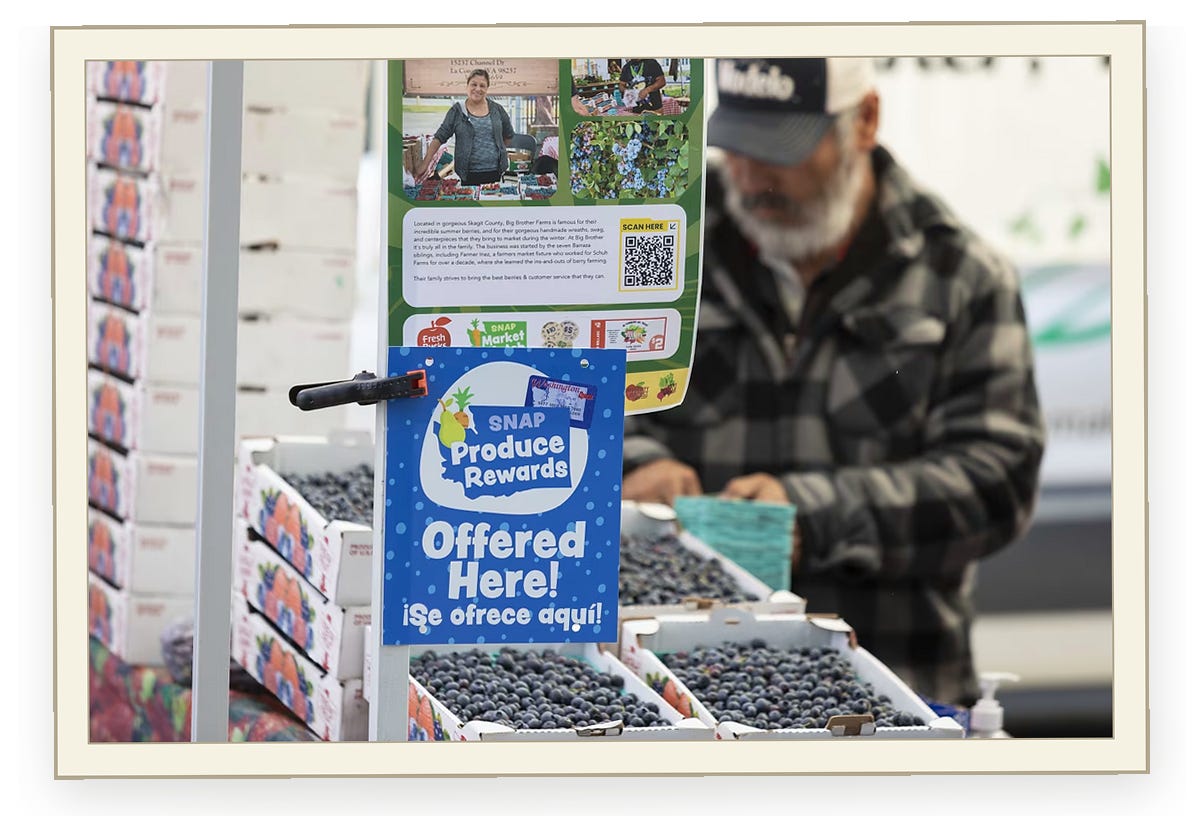
According to new USDA data, food-stamp enrollment crashed from 42.3 million to 36.6 million in the 12 months between May 2025 and May 2026. Nearly half of states saw enrollment declines of more than 10%, including Florida (-22%) and Arizona (-54%). “Republicans,” the Editors snarkily noted, “have ended the literal free lunch for able-bodied beneficiaries and states.”
Catching SNAP scammers one by one is important. It provides helpful deterrence and adds a much-needed “FO” to the educational acronyms of food-stamp fraudsters. For instance, earlier this year the Massachusetts DOJ office reported snagging an entrepreneurial swindler who billed SNAP up to $500,000 a month from his supermarket empire in Boston. How altruistic.
Showing levels of diligence ordinarily seen in month-old white bread, our alert public servants failed to notice that the ‘empire of fraud’ operated from a single 150-square-foot store named “Jesula Variety Store.” Apparently, the ‘variety’ was his keen marketing techniques that netted a cool half million in food stamp redemptions monthly, whereas full-service mega-supermarkets only scraped up around $82,000 a month on average.
Just saying, but the Jesula Variety Store was slightly short of being a full-service supermarket. 150 square feet is about the size of a below-average room in an Eastern European hostel with no closet and where the ironing board drops out of the wall over the bed.
Not only that! But the auditors also missed the small but critical fact that the empire-building owner, Antonio Bonheur, was himself on food stamps. That is heartwarming. Americans are a loving people who want every immigrant to experience the same opportunity for self-improvement and free liquor that we all enjoy. “Bonheur maintained numerous secondary bank accounts through which SNAP proceeds were transferred,” the DOJ’s statement explained, “withdrawn as cash and redeposited to create the appearance of legitimate business activity while obscuring the true source of funds.”
He pleaded guilty in late March— carving another notch into the DOJ’s convictions belt. But let’s be honest. While always entertaining, pinching fraudsters individually after, like Mr. Bonheur, they have milked taxpayers for over $7 million, is a painfully slow way to fix the broken welfare system. Fortunately, Republicans in Congress took action last year.

🔥 The Journal explained that the GOP’s 2025 budget did two pivotal things. First, it increased SNAP’s monthly work requirements and closed a “work requirement waiver” loophole. Second, it started charging states a higher share if their “error rates” were above the pre-pandemic average. Nothing shrinks a state bureaucracy’s enthusiasm for “equity” and careless generosity like learning that, starting soon, “federal money” will include some of its money.
As a result, food-stamp enrollment has fallen by -5.7 million in one year —20% below forecast— proving that government programs can shrink without first being struck by a giant asteroid. The Trump 2.0 reforms worked before Democrats had finished explaining why they could not possibly work.
For decades, Washington’s anti-fraud strategy has consisted of sternly announcing that fraud would not be tolerated and then tolerating it at scale. It’s all about a radical conservative concept largely unknown to progressive economists called incentives.
The DOJ’s Fraud Task Force is reducing fraudsters’ incentives for doing the fraud. The much maligned GOP Congress is reducing the states’ incentives for tolerating the fraud. Win-win.
🚗🚗🚗
This year, we’ve invested a substantial amount of thought and discussion into artificial intelligence, but there is another radical technology story quietly reaching a boiling point. Let’s begin with a Babylon Bee-style headline, also from the Journal, announcing carmakers’ brilliant new innovation in electric cars: putting the gas engines back. Yesterday, the WSJ reported, “Carmakers Have a New Idea to Boost EV Range: Add a Gas Engine.”
Somehow, Tesla —a company with no revenue and no market share— was able to build a nationwide network of charging stations that solved drivers’ thorniest EV problem: range anxiety. But the traditional carmakers who already owned the auto market relied on a $7.5 billion Biden grant to build out their networks— hoping to use ‘free’ taxpayer money.
Shockingly, even with Tesla’s example to follow, Transportation Secretary Pete Buttigieg couldn’t pull it off and built only about 68 chargers in total, at around $110 million per charger. That was a problem. Automakers experienced what the Journal euphemistically called a “painful retrenchment,” leaving “billions of dollars in stranded investments as customers failed to make the switch at levels once projected.”
Worse, the new Administration stopped pushing everyone toward electric cars. “EV sales remain depressed,” the article explained, “since the Trump administration removed a $7,500 incentive last year and rolled back regulations driving a more electric market.”
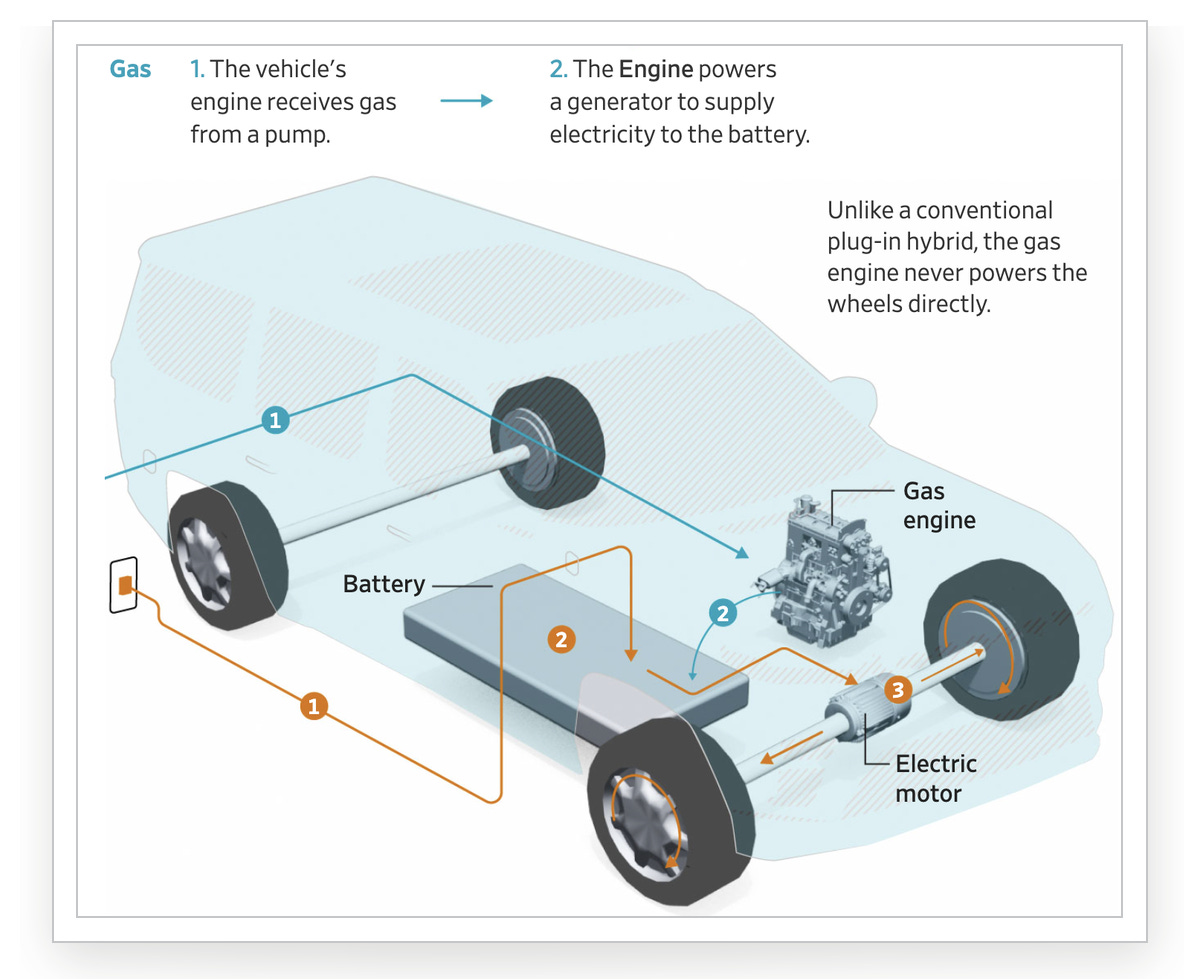
So, desperate automakers, lacking a necessary way to power customers’ batteries, had a flash of inspiration —eureka! What if they put the charging station right in the car? They are calling them Extended Range Electric Vehicles (EREV). EREVs are not hybrids (which everyone hates). Hybrids combine two propulsion systems in the same vehicle, doubling the number of things that will probably break as soon as the warranty expires.
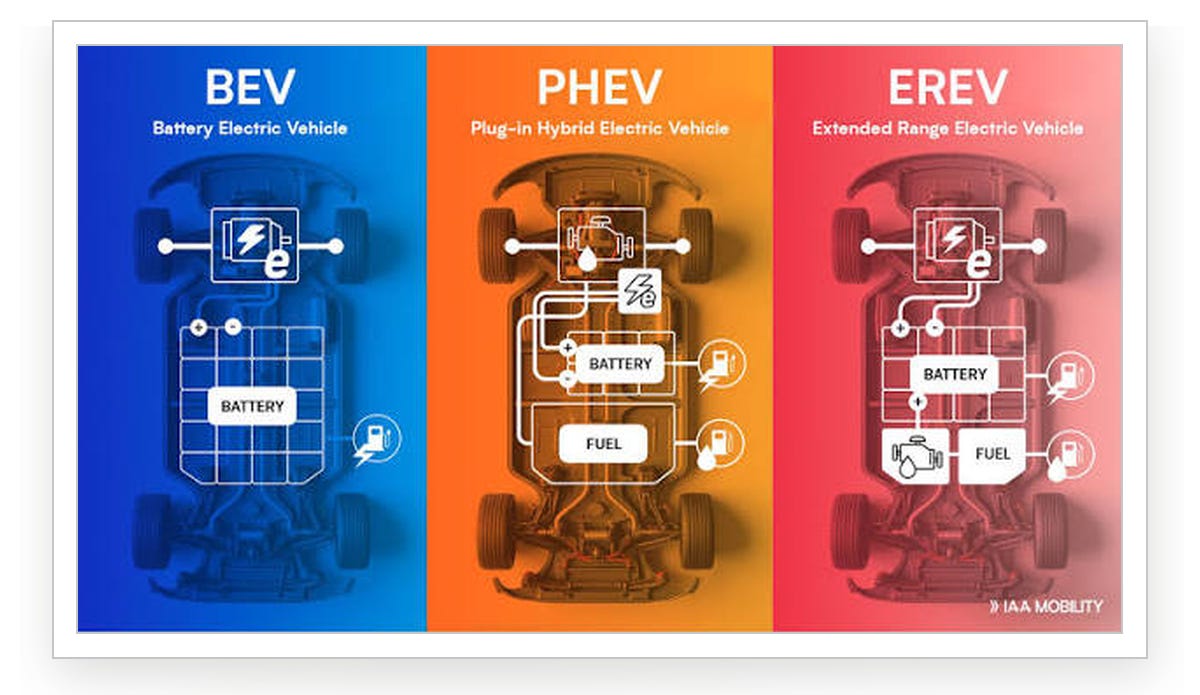
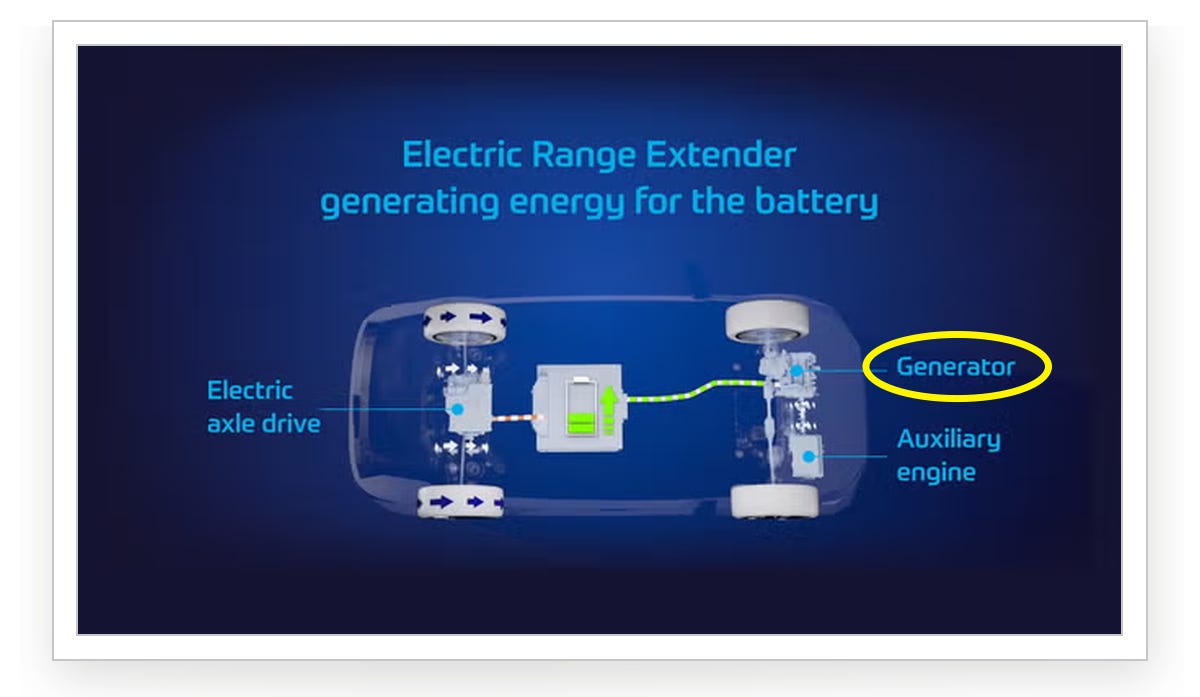
EREVs will still be all-electric vehicles, but with a gas generator —not a motor— added to charge the battery when it runs low. Do not call it a hybrid. It is an electric vehicle with a battery, a gas tank, an exhaust system, and a 250hp V6 gasoline engine. Please try to keep up. Admittedly, the distinction is not completely obvious. The point is, carmakers have solved the electric-vehicle range problem with a daring new technology called fossil fuel.
“Now we’re throwing in another layer of complexity and oddity,” grumbled Ivan Drury, director of insights at the car-shopping website Edmunds. He wasn’t wrong.
In short, the brilliant new plan involves making all-electric cars where the drivers still have to stop for gas and don’t save any polar bears. What could go wrong? And they have to start over with another brand-new design.
There are many morals to this story. First, whenever you see a distortion in the market —like electric cars without a charging network— look for the withered, interfering hand of government. Second, relying on the government to support your business is probably on the reckless side. So.
After ten years of announcing the death of the gasoline engine, carmakers have invited it back to rescue their electric vehicles. Irony.
But wait. There’s a flip side to this story. The carmakers are chasing a design that is already obsolete. Get ready to have your mind blown.
🚗 The technological revolution began without ceremony or notice. On Friday, Axios reported, “Tesla’s Cybercab triggers regulatory game of chicken.” This story is so much bigger. Hint: Tesla’s newest production vehicle doesn’t have a gas engine. Or steering wheel. Or a brake pedal. Or mirrors. And it is now picking up passengers in Austin.
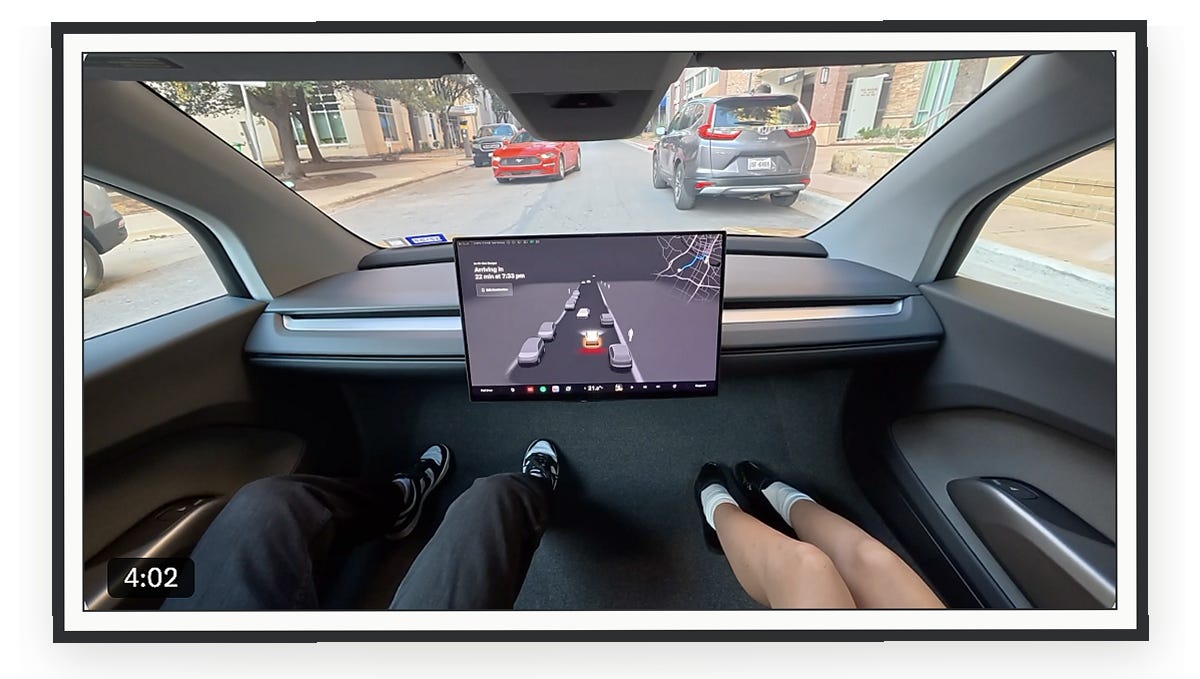
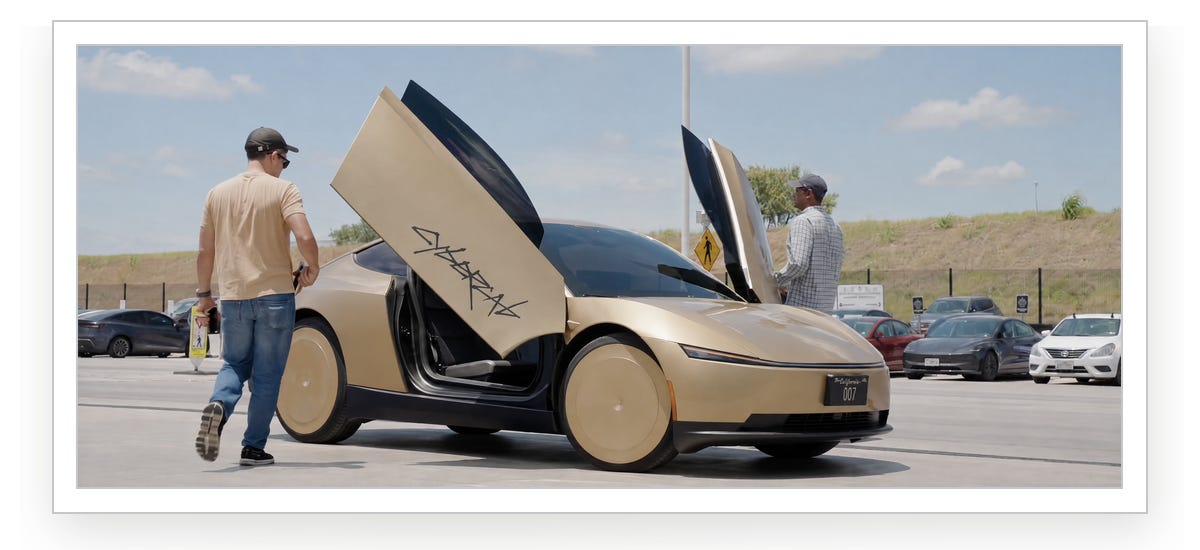
One of the most astonishing signs of the times is the lack of excitement about this civilization-changing development. Ho hum. We’re so used to magical technological breakthroughs at this point that a completely new kind of vehicle barely moves the needle. Each gold-colored cab has only two passenger seats, a big screen, butterfly doors, and a trunk roomy enough for two carry-ons or one panicked ACLU lawyer.
But corporate media remained skeptical.
Despite just making history, Tesla stock dropped -6% after the first all-computer cars hit the roads in Austin last week. Future Fund co-founder Gary Black sneered, “The Cybercab event was largely a bust.” Barclays analyst Dan Levy complained, and I am not making this up, that Tesla did not livestream the event or supply new financial projections.
Imagine standing beside the Wright brothers at Kitty Hawk and saying, “Sure, it flew, but management offered no updated guidance on seat-mile revenue.” Or watching Alexander Graham Bell make the first telephone call— and downgrading the stock because the device lacked three-way calling and the first call in history wasn’t live-streamed.
The Cybercab does not merely use self-driving software. It has been physically built around the assumption that no human will ever drive it. Tesla AI chief Ashok Elluswamy put it simply: “Cybercab is here. It’s actually here. You can go outside and take rides.”
Axios and the rest of corporate media focused on an NHTSA “Audit Query” —not a defect investigation— looking into whether Tesla’s new driverless Cybercabs comply with industrial-age regulations. Tesla, apparently, decided it was better to ask forgiveness than permission, and launched without full pre-approval.
But just how do analysts expect the regulations to change quickly? Proactive government bureaucrats? Do analysts count boldness and confidence against Tesla? Are they properly pricing in Tesla’s federal government connections?
It’s not possible that driverless cabs will be banned. The only question is how long it takes for full approval. Corporate media pretends that Tesla hasn’t considered regulatory hurdles. But Tesla clearly did not overlook the regulatory hurdles. Axios admitted Tesla planned around them, coordinated with NHTSA, and launched while testing whether the old rulebook can accommodate the technology that everyone —including NHTSA— is already preparing to legalize at scale anyway.
🚗 People understandably distrust cars that drive themselves. The machine feels strangely alien. A lot of people have trust issues. They correctly predict that, sooner or later, the government will probably start remote-controlling the damned things, never mind hackers. Not unfairly, they suspect cars will tattle on them, and a few more freedoms and privacies will be sacrificed on the altar of safety.
But powerful forces push back in the other direction. Robot-driven cars never check out who’s in the car one lane over and accidentally run over a mailbox. They do not get road rage while cursing at the idiot driving slowly in the left lane and leaving his blinker on. They have never said, “hold my beer and watch this.”
The revolution is here. It’s inevitable. Don’t doubt me. The experiment has been running long enough to create compelling data.
Through March, autonomous cab company Waymo (which retained the steering wheel) logged 220.6 million miles with no human drivers in control. Compared with human-driven benchmarks in the same cities, its vehicles were involved in 94% fewer crashes causing serious or fatal injuries, 82% fewer airbag-deployment crashes, and 82% fewer injury crashes. The serious-injury-or-worse rate was 0.01 per million miles for Waymo versus 0.23 for humans—a difference of more than twentyfold.
An independent Insurance Institute for Highway Safety study reached a more conservative but still striking result: Waymo’s driverless cars had 68% fewer police-reportable crashes, 85% fewer single-vehicle crashes, and 81% fewer injury crashes per mile than human drivers.
Robotaxis don’t text, drink, nod off, shave, apply eyeliner, or cross four lanes because Waze said “turn right” just as the vehicle entered the intersection. It has never reversed down an I-95 exit ramp, merged while eating a Taco Bell chalupa, or evacuated a hurricane at 84 miles per hour with a queen-sized mattress secured to the roof mostly by the driver’s left arm.
Here on Florida’s I-95, motorists treat the turn signal as a dangerous disclosure of strategic intent. Sunshine State “defensive driving” means assuming every nearby vehicle contains a pet iguana, a lit bottle rocket, and a heavily armed man with a face tattoo named Duane who has just received upsetting news from his stockbroker.
Admittedly, robots do make mistakes. They will make more. There will be grotesquely overcovered accidents, software failures, sensor blind spots, confused emergency responders, burning batteries, cybersecurity scares, and cars that freeze in intersections for reasons explainable only by an astrophysicist with a minor in theology.
But machines have an advantage human drivers lack: SkyNet learns collectively. When one autonomous car encounters a novel hazard, the lesson can eventually propagate throughout the fleet. But when Florida Man encounters a novel hazard, he posts the video to TikTok and tries it again, this time with a boat instead of a jet ski.
As it becomes increasingly obvious that the robot-powered cars are safer by an order of magnitude, people will demand them. I know you still prefer a stick-shift and controlling your own destiny, as do I, but the good old days have numbers on them.
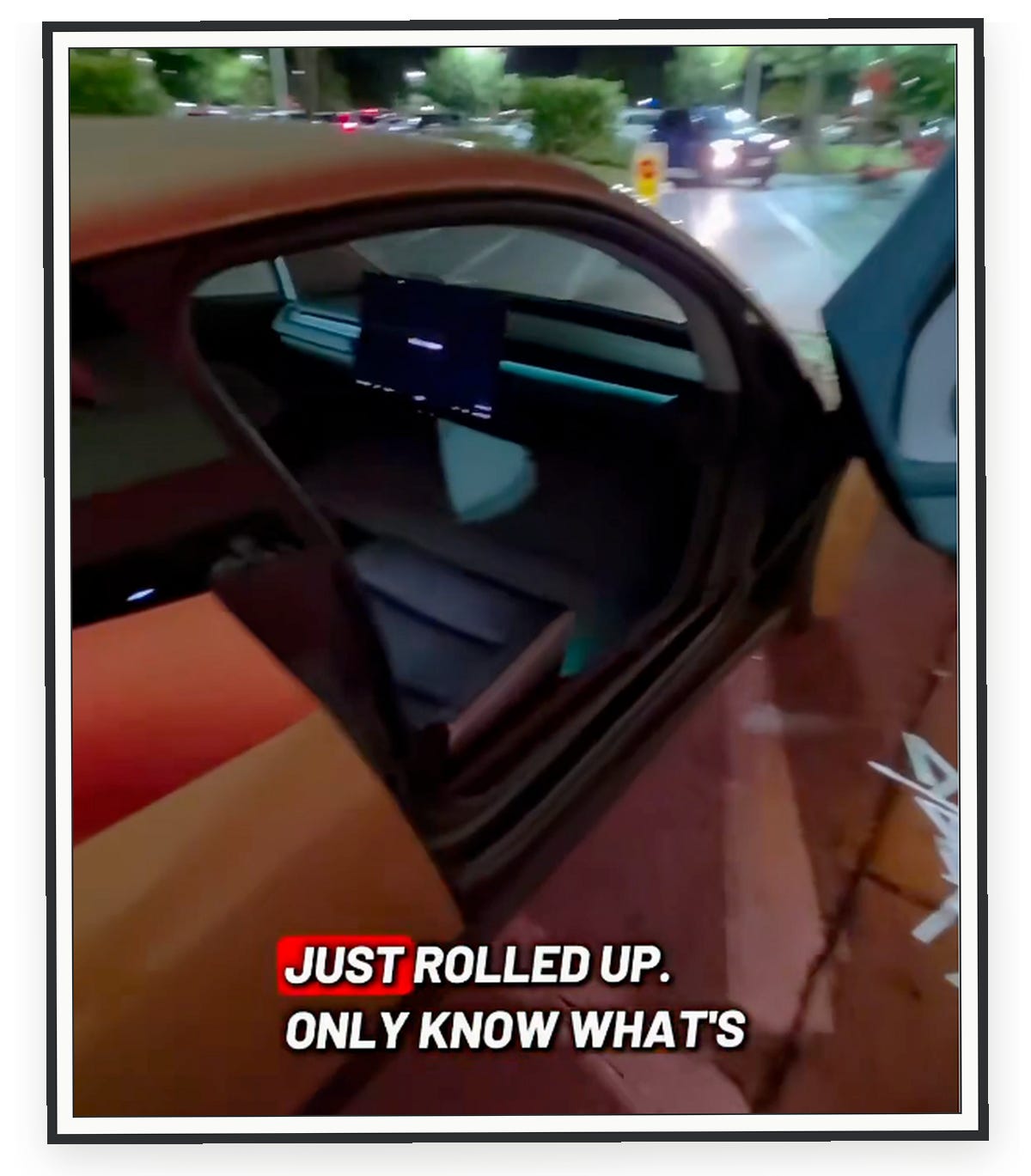
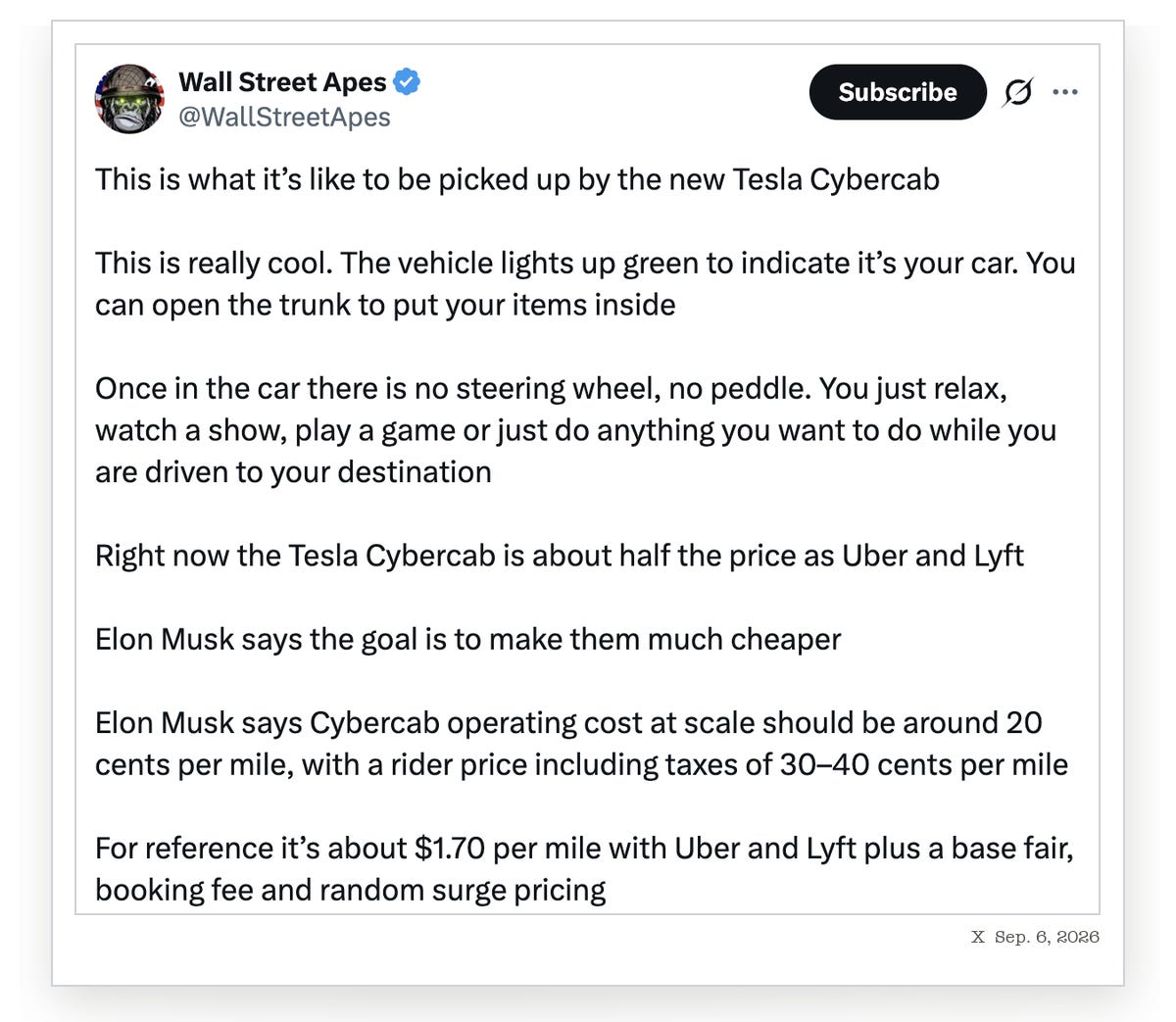
🚗 Only 45 gold Cybercabs are registered in Texas so far, operating alongside several hundred traditional Model Y robotaxis. So the launch is small. But the buried lede is that it is the first widescale commercial deployment of all-robot cars in history. And Tesla has already built manufacturing capacity to produce 125,000 Cybercabs a year, and Elon’s stated ambition is for millions.
That is the real story. Not the fleet size. Not the gold plastic bumpers. Not even the NHTSA audit. Tesla just proved the concept. At this point, the timetable no longer matters. For better or worse, it’s all over but for the fine details.
That’s all well and good, but now I’m asking you to think bigger. Remove the driver, and suddenly the car is no longer a machine that we operate. It becomes a room that moves.
Tesla software chief Silvio Brugada said the company thinks of Cybercab as “a second living room.” Today that living room is a small two-seat pod with mood lighting, a large screen, and enough room to watch Netflix while a neural network negotiates scooters on Sixth Street. But the missing steering wheel opens a much larger design space.
Use your imagination. Think big. Seats no longer need to face forward. A family pod can use face-to-face seating around a table. A commuter pod can become a private office with a desk, display, video wall, and soundproofing— finally enabling Americans to attend meetings while trapped in traffic without pretending they are paying attention to traffic. Vehicles won’t need a front or back. They can become rolling clinics, fitting rooms, barber chairs, conference rooms, restaurants, classrooms, and hotel rooms.
I’m not arguing for or against driverless cars. That isn’t the point. The point is, while clunky traditional automakers are putting gas engines back in electric cars, tech companies like Tesla are literally transforming the basic design. For our entire lives, progress in personal transportation has consisted mostly of additional cupholders, fewer body styles, and shorter drivetrain warranties.
Mark my words: we’re about to experience a transformation so radical that it will change our concept of what a car even is. It might not quite be the Jetsons —the cars aren’t flying yet— but it will soon be the next closest thing. And I’ll bet the robot dog is sitting right around the corner.
🔥🔥🔥
We’ve been enjoying the fruits of the conservative counter-revolution here at home so much we’ve neglected our cousins in Europe. Probably thanks to our shutting down USAID, they are drafting right behind us, and are now this close to turning the corner and leaving the globalists behind. Yesterday, NPR reported, “Germany’s far-right achieves an electoral breakthrough in key state election.” Germany’s Alternative for Germany party (known as AfD) won a stunning victory in Sunday’s election in the eastern state of Saxony-Anhalt. By “stunning,” I mean terrifying for progressives.

Turnout was an astonishing 77.8%, the state’s highest since German reunification. AfD took 43.8% of the vote. The next largest vote-winning party, the governing center-right Christian Democrats (CDU), staggered across the finish line with only 17.2%. AfD more than doubled its previous share, won 39 of 83 seats, and finished only three seats short of full control.
In short, a record number of Germans participated in the electoral process. They peacefully cast lawful ballots in a free and fair election. They did their civic duties.
This, of course, frightened democracy half to death.
NPR reached the first “far-right” label in its headline. It repeated it in the article’s first sentence. By paragraph three, NPR had already arrived at Nazi Germany. The article reported that the result put AfD “within reach of power for the first time since the time of Nazi Germany.”
According to NPR, 44% of the entire state of Saxony-Anhalt are skinheads. Skinheads who vote. Even though it was just one German state (about the size of Nebraska), it sent shockwaves through the battered globalist community throughout Europe.
French Finance Minister Roland Lescure called AfD’s victory part of a worldwide “populist wave” and announced, “We must resist.” France’s Europe Minister Benjamin Haddad called it “a very grave moment for Europe.” Chancellor Merz said the result shook his governing CDU party “to its very foundations.”
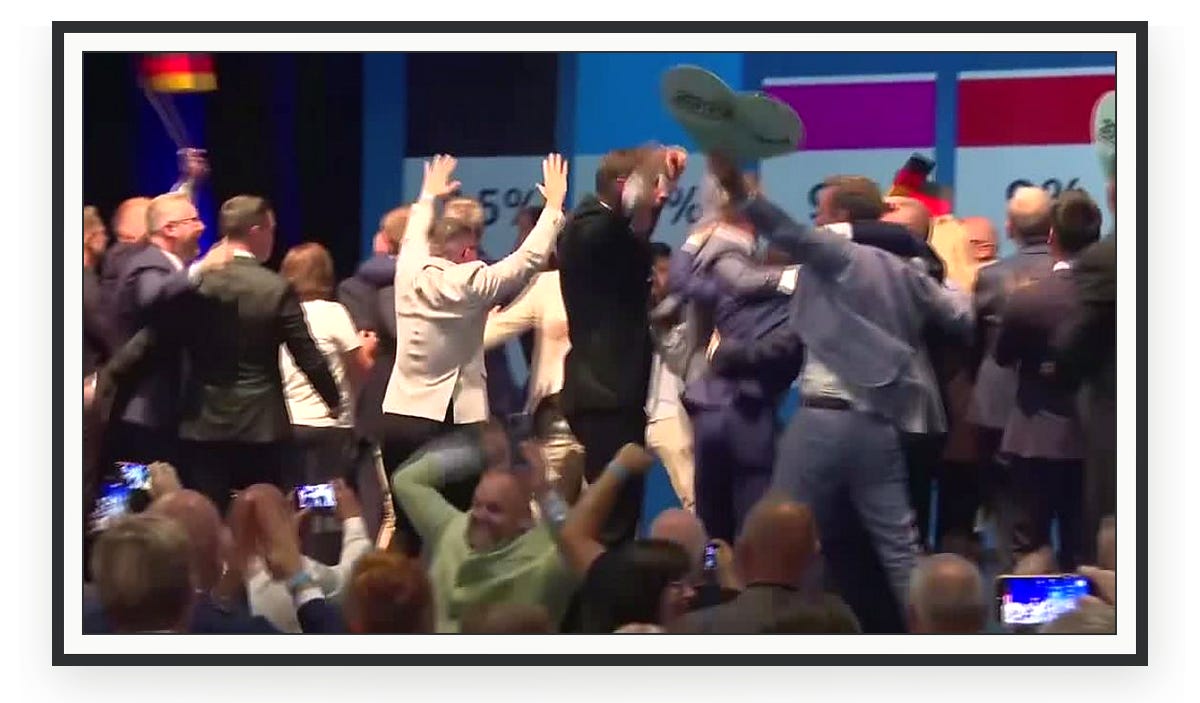
🔥 For some reason, it was even big news here in the US. Nearly every corporate media outlet covered it. They shared stylebooks. BBC: “German far right AfD hails ‘historic’ election victory in east.” AP: “Far-right Alternative for Germany party wins big.” CNN: “Germany’s far-right AfD win historic victory.” CNBC: “Far-right AfD wins historic victory.” Euronews: “German far-right AfD wins by a landslide.” Al Jazeera: “German far-right AfD wins Saxony-Anhalt election.” Deutsche Welle called the democratic result “unsettling” and then applied “far-right” for good measure.
(Every one of them pointed out the win ‘falls short of a majority,’ as though that were some kind of a consolation prize.)
At this point, you might be wondering what sorts of far-right proposals this tsunami of AfD insurgents threatens to put in place. First, and most terrifying of all, they want to close their borders to illegal migrants and start mass deportations. AfD also drew support around immigration, crime, high prices, energy policy, deindustrialization, Ukraine funding, Russia sanctions, and distrust of public broadcasting. Sound familiar? AP reported that the election pulled in many people who had never voted.
German leftists tried to ban AfD. The national intelligence services labeled AfD “confirmed right-wing extremists.” All the other parties —the “moderate” conservatives through the wacky greens and communists— have banded together and promised each other they will never form a government with AfD. They call that remarkable agreement the “firewall.” (The irony completely escapes them: moderate conservatives making coalition deals with communists, deals that voters never signed up for, and calling that “democracy.”) They did everything they could to keep people from voting AfD.
In spite of all those handicaps, AfD still won more than any other party in yesterday’s election.
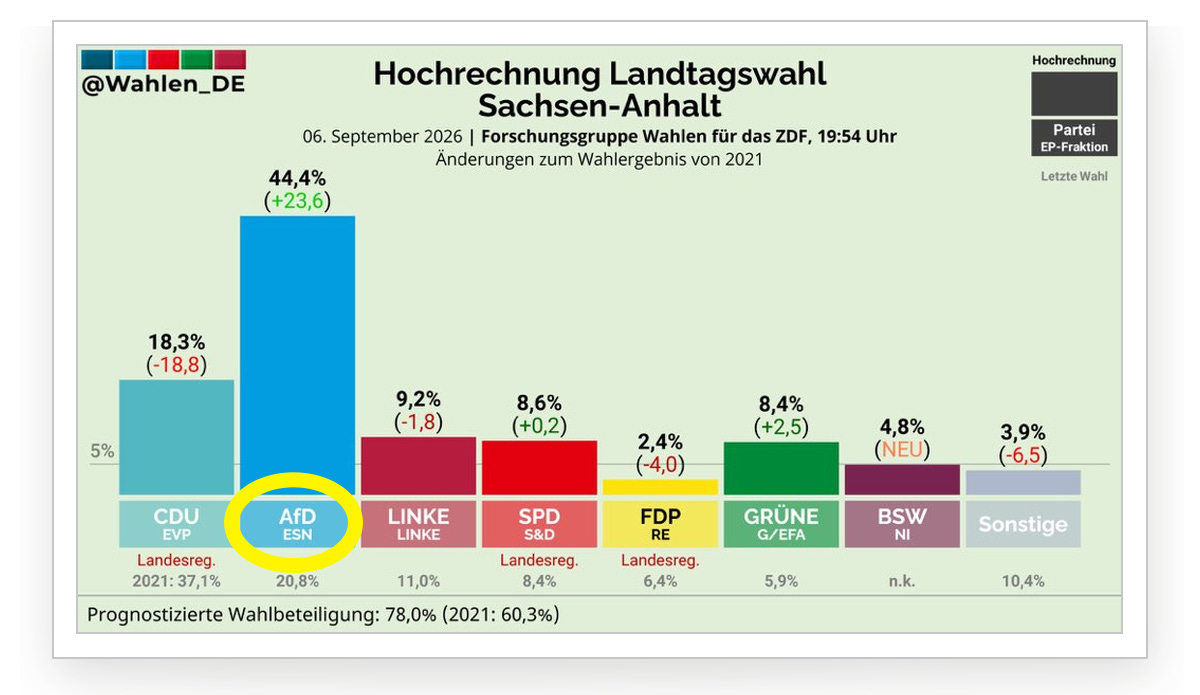
Buried beneath the ideological warning labels was a far more instructive number: almost all (87%) of Saxony-Anhalt voters disapprove of Germany’s current federal government. The globalists know this. But they still won’t change anything. Their only solution to catastrophic low approval rates is to call 44% of their voters “Nazis.”
The most sensible comment in NPR’s article came from a CDU candidate who lost. Sven Schulze, the state’s governor, took the stage, graciously conceded, congratulated AfD on its win, and said, “Some say this is a dark day for Saxony-Anhalt. I say this is democracy.”
But I say this is a bright day for civilization. Now that we’re winning the conservative counter-revolution and excising globalists in the Western Hemisphere, hope is blooming in the least expected place: Europe.
Have a magnificent Monday and a peaceful and rewarding Labor Day! Roll back in here tomorrow morning, for even more essential news and caffeinated commentary.
Don’t race off! We cannot do it alone. Consider joining up with C&C to help move the nation’s needle and change minds. I could sure use your help getting the truth out and spreading optimism and hope, if you can: ☕ Learn How to Get Involved 🦠
How to Donate to Coffee & Covid
Twitter: jchilders98.
Truth Social: jchilders98.
MeWe: mewe.com/i/coffee_and_covid.
Telegram: t.me/coffeecovidnews
C&C Swag! www.shopcoffeeandcovid.com
Good morning, ALL. Jeff, thanks for posting, even on a Holiday. Haven't even begun to read today's Roundup. Just wanted to let you know how much I, and I know I speak for many, appreciate your efforts. Keep on keepin on! All God's Blessings to you and yours.
was not crazy about EV's, and even more skeptical of self-driving EV's until......
a friend's daughter is legally blind, (has no peripheral vision so can't get a license), has a great job in a nearby town making good money, but was spending around $100/day on Uber just to get back & forth to work, & depending on others to get to church, visit family, etc. Enter the self-driving EV. She got it last month, it drops her at her door at work, finds a parking place, & comes gets her at the door when she's ready to go home, then parks itself in the garage. All she does is plug it in. It is a huge win-win for her. Thanks, Elon, for the technology to help her be independent.