

Good morning, C&C, it’s Saturday! It’s also November, and you know what that means: Blink and it will be Christmas. Your Weekend Edition roundup (slightly truncated due to a late bedtime for the spooktacular holiday yesterday) includes: SNAP benefits snapped off this morning even though two federal judges ordered the money train to continue down the welfare tracks; surprising change in status of rap music in the Billboard Top 40; P. Diddy sentenced to prison and dot connections; and help for Nigeria’s persecuted Christians begins finally to assemble for duty.
🌍 WORLD NEWS AND COMMENTARY 🌍
🔥🔥🔥
In totally predictable news, judges have jumped into SNAP. Yesterday, an uncertain New York Times ran a sagging story headlined, “Uncertainty Persists for Americans Waiting for Food Benefits After SNAP Ruling.” Yesterday, two separate federal judges ordered the federal government to pay SNAP benefits— overriding a ban on off-budget payments for anything not specifically authorized. The uncertainty arose because the two judges failed to confer with each other and applied two different legal standards, thereby creating a muddle.
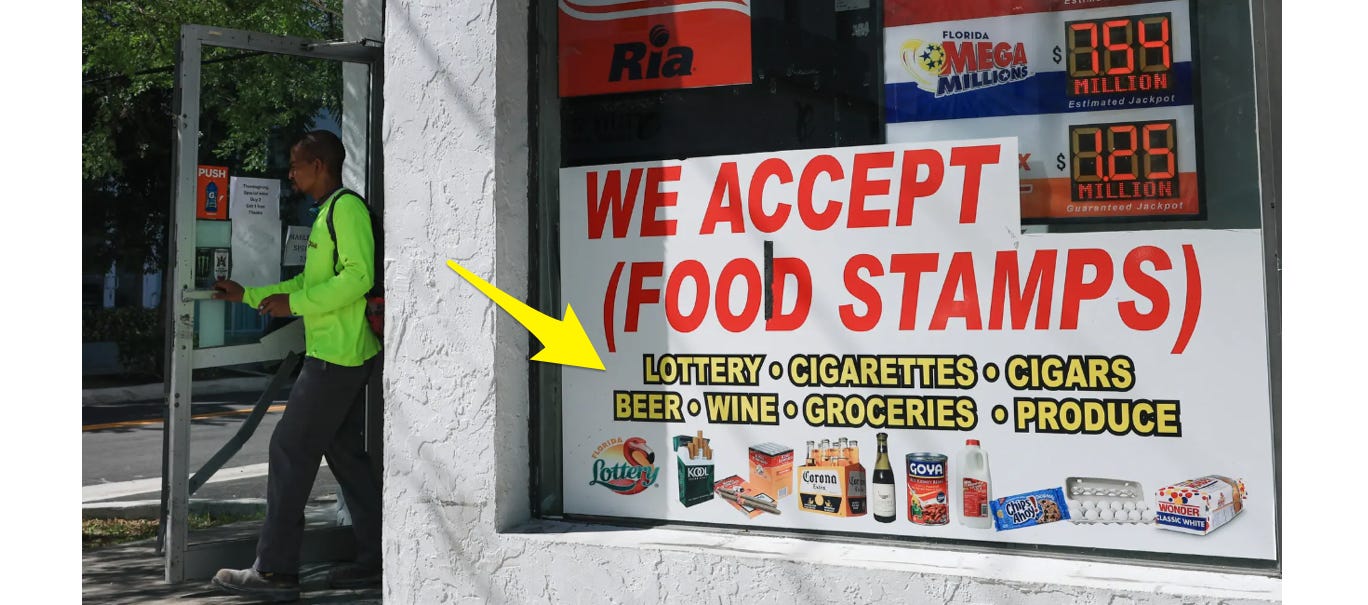
The Democrats had filed scores of lawsuits all over the country, hoping for a strike, and they struck judicial gold in two deep-blue states. First, Rhode Island District Judge John J. McConnell ordered the Administration to promptly pay the EBT benefits. His oral decision from the bench (no written order) was weak; he determined (in his opinion) the decision not to pay SNAP in a shutdown was “arbitrary and capricious” (a legal term under the Administrative Procedures Act), and he found ‘irreparable harm’ was caused by the emotional “terror” that Snappers feel when seeing a zeroed balance on their cards.
Thin, Judge McConnell. Very thin. It may be the first time in history that transient feelings were legally declared to be “irreparable harms.”
Meanwhile, in Massachusetts, District Judge Indira Talwani “expressed skepticism toward the Trump administration’s arguments that legal obstacles and technical hurdles stood in the way.” But —and this is a big one— unlike Judge McConnell, Judge Talwani did not find that the plaintiffs had established “irreparable harm” (an informative fact omitted by the Times). After explaining how she believed continued payments would be legal, Judge Talwani ordered the administration to explain on Monday morning whether it would choose to voluntarily fund “benefits” for November.
My read is Judge Talwani intends to push the government into saying they have no idea when benefits might resume, so she’ll have an excuse to find irreparable harm. We’ll see.
Democrats may have overplayed their hand. Conflicting district court decisions provide a path to immediate review from the Supreme Court. Though it’s not clear that President Trump intends to appeal, maybe because of optics. Instead, he seems to be charting a third way, expressing frustration with all the different legal opinions and wishing he could just pay the stupid bill:
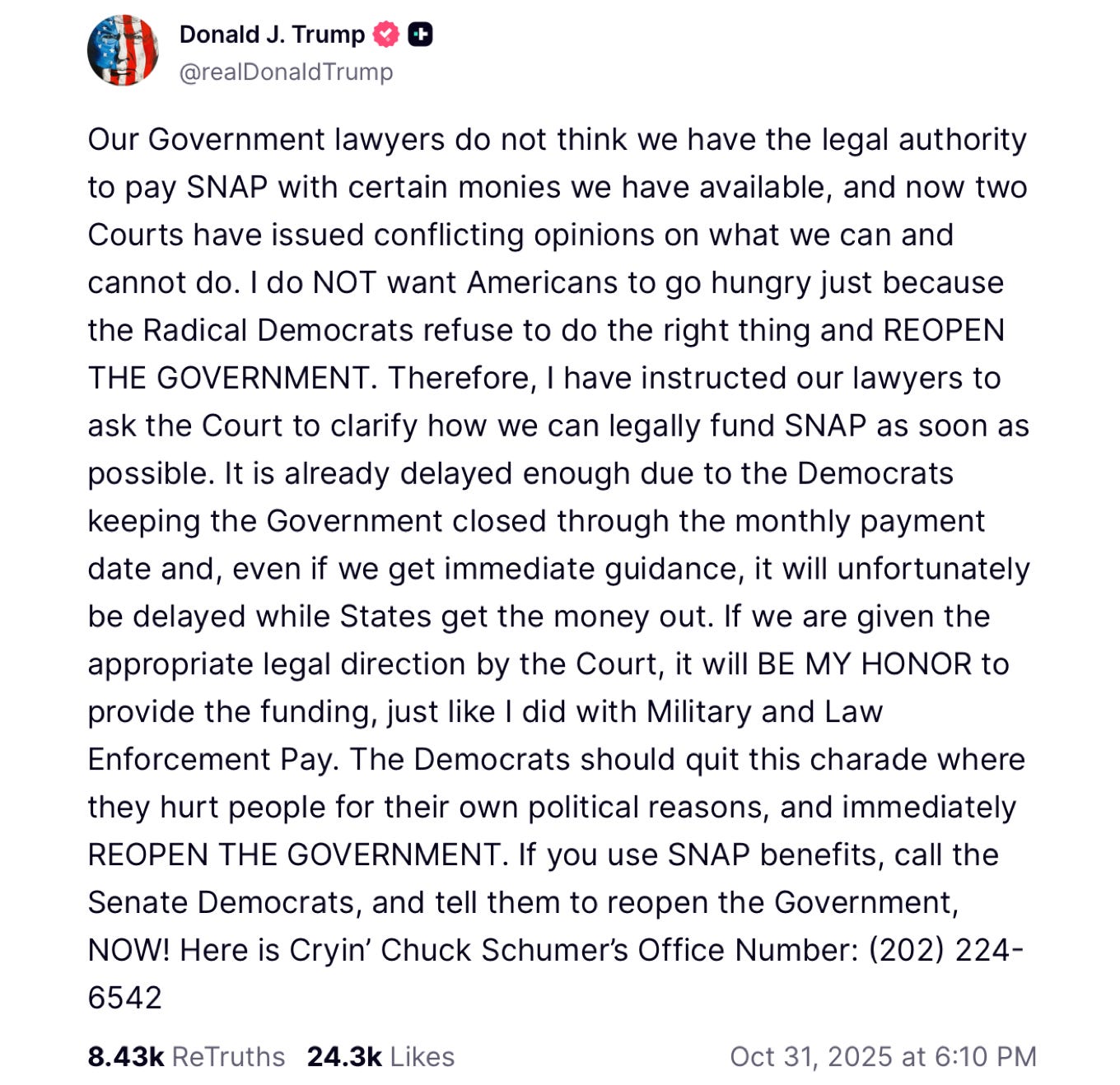
President Trump’s lawyers will ask the court to “clarify” how the government can legally fund SNAP, which is unsurprising given that Judge McConnell did not put his ruling in writing. Clarification means asking the judge for more legal details, which are both necessary for appellate review and will lock the Rhode Island judge into a specific legal position.
The battle is over SNAP’s “emergency fund,” which has several billion dollars in it— still less than one month’s funding. The statute governing the use of the special fund defines “emergencies” as things like hurricanes, pandemics, and stuff that interrupts normal government operations— but not funding freezes caused by lack of an authorized budget. Only two judges out of two dozen found the emergency funds should be used during a government shutdown.
The good news, I suppose, is that 22 or so judges did not order the government to expend its emergency budget.
🔥 A less-reported factor is also at play. The “One Big Beautiful Bill” Republicans passed earlier this year stripped $186 billion from SNAP’s overall budget and imposed new work requirements that take effect today. Headline from yesterday’s San Francisco Chronicle:

According to the story, experts at the NGO California Budget & Policy Center “estimate that over 650,000 residents enrolled in the state’s SNAP risk losing benefits under the stricter work requirements.” And another 74,000 “refugees and asylum-seekers” in California will (eventually) lose SNAP since the OBBB phases out SNAP eligibility for noncitizens.
That’s just a small start. Though the country is not amidst a Great Depression, one in every seven Californians receives SNAP welfare payments.
In other words, a large number of chronic SNAP addicts are poised to begin losing benefits. But, at this point, after all the controversy, once SNAP payments are restored, nobody will listen to Snappers complain about having to document a few hours of work every week.
It may be that President Trump has already won the war. The SNAP controversy has exposed many of the problems with the massive SNAP program, and focused the public’s attention on those problems— watering down the inevitable hard-luck cases the media was probably planning to publish wall-to-wall to make Republicans look bad.
New political options have now been unlocked.
📉📉📉
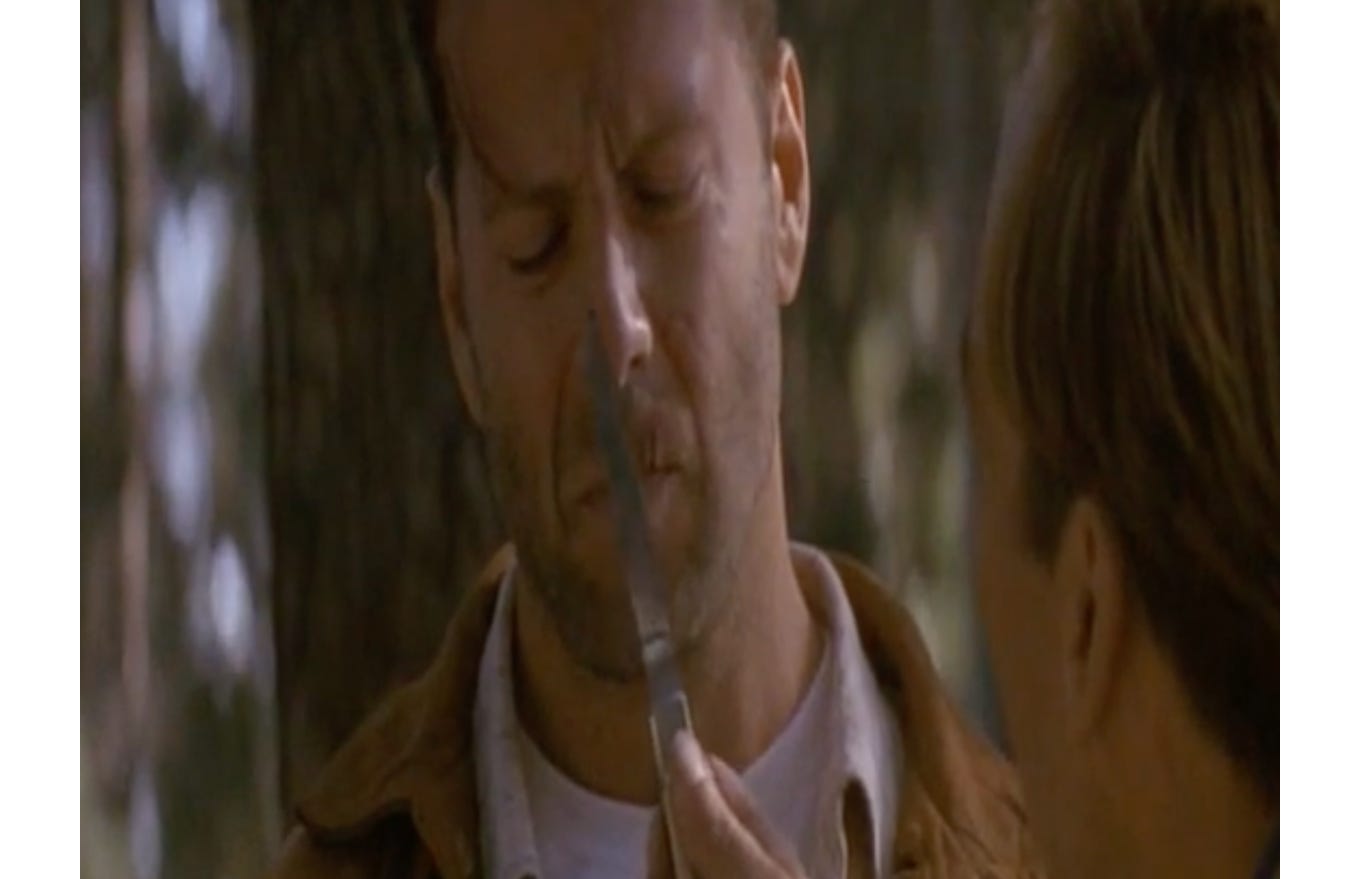
A sign of the times? Or does it perhaps signal something even more interesting? On Thursday, the San Francisco Chronicle ran a surprising story headlined, “Rap music just vanished from the Billboard Top 40 for the first time in 35 years.” It reminded me of the woefully underrated movie The Last Boy Scout (1991), when the villain, Milo, tells Bruce Willis’ character, “You think you’re so f—ing cool. But just once, I would like to hear you scream … in pain.” Willis quipped, “Then play some rap music.”
I instantly apologize to C&C readers who, for whatever reason, enjoy the genre. I freely admit being unqualified to judge, since I have never heard a single Rap song from start to finish. (I did once listen to most of the bass line of “Who Let the Dogs Out?” while waiting at an overlong red light, but mercifully, the light changed.) You may find this claim of complete avoidance hard to believe, but it is true, and it took a superhuman effort to achieve.
Avoiding rap might be even easier now.
“Last week’s Billboard Hot 100 marked the end of a remarkable 35-year streak,” the Chronicle explained, “after Kendrick Lamar and SZA’s Luther —a 13-week No. 1 hit— dropped off the chart.” After that, Billboard’s shocked editors discovered, after searching everywhere (and I mean everywhere), not a single Rap song remained in the top 40.
Thus, we reach the inevitable flatline of a promising post-pandemic trend. Five years ago, in 2020, Rap claimed nearly half (16) of the spots on the Top 40. Two years ago, it halved, sinking to 8. Now, zero. It’s been 35 long, gangsterized years— it was February, 1990, when the Billboard Hot 100 last omitted a rap entry from its upper ranks.
Thirty-five years ago, many of you were not yet born. And some are now deaf.
I’m not sure what, exactly, this development forecasts about America’s evolving musical tastes. I’ll note without comment* that all 12 of the songs from Taylor Swift’s latest album are hogging spots in the Top 40. (* Neither am I qualified to judge Ms. Swift’s artistic contributions.)
📉 In possibly related news, ABC ran a story on the same day, Thursday, headlined “Sean ‘Diddy’ Combs moved to federal prison to begin serving sentence.” The Rap artist began experiencing a real-life Rap song by serving a four-year sentence in federal prison. After a difficult trial, Mr. Diddy was finally convicted of transporting male escorts across state lines “for purposes of prostitution.” Diddy’s defense, and I am not making this up, was that he lacked any financial motive, since he didn’t fly in the escorts for himself, but “he said he wanted to watch them have sex with his girlfriends.”
That was a direct quote from ABC’s article.
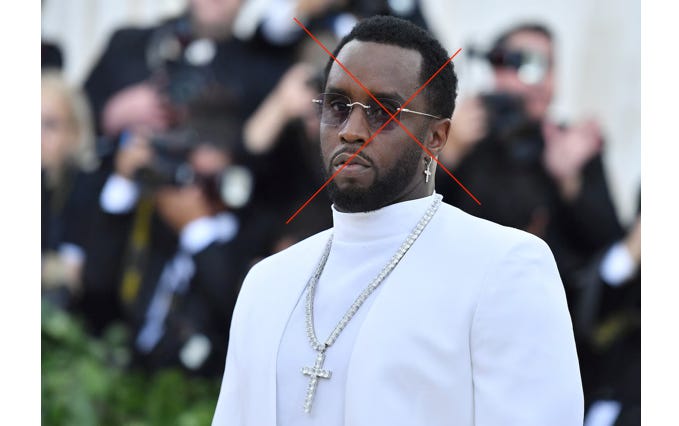
Diddy’s case is, perhaps, a sharp metaphor for “Rap culture” and the low levels of intelligent life that can be detected in the “Rap community” using specialized scientific instruments. Scientists still hotly debate over whether any intelligent life was detected there at all, or whether the barely registering signals were more likely just artifacts from an overly loud speaker system in the car in the next lane.
I hesitate to promote the many goofy conspiracy theories claiming that the CIA devised hip-hop and “gangster rap” as a domestic destabilization psy-op, but USAID and the CIA (I repeat myself) were in fact caught using rap to destabilize other countries, at least, including Cuba, Palestine, and Bangladesh. Headline from Indian newsmag Swarjya, this February:
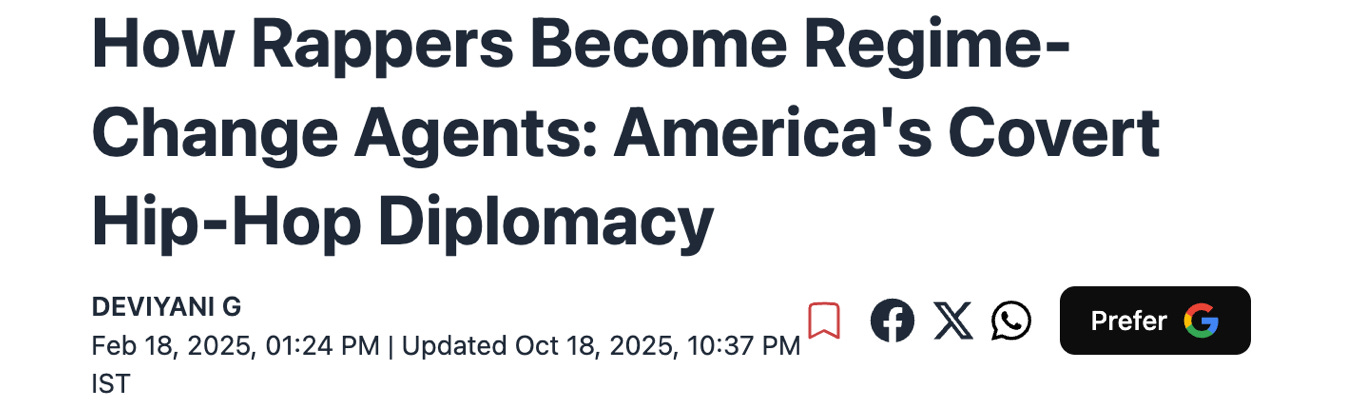
It is undeniable that, over the years, USAID did in fact pay for the production of a lot of poor-quality rap music. One cannot help but wonder about the curious timing of the end of USAID and Rap’s sudden and unexpected disappearance from Billboard’s Top 40. I’m only asking the question. You decide.
Either way, Bruce Willis and I both thank President Trump for pulling the plug on USAID’s rap jukebox.
🚀🚀🚀
In what might be the week’s best but least-appreciated news, Fox ran a story yesterday headlined, “Trump designates Nigeria as ‘country of particular concern’ over widespread Christian persecution, killings.” The sub-headline added, “Open Doors reports nearly 70% of Christians killed worldwide for their faith last year were in Nigeria.”
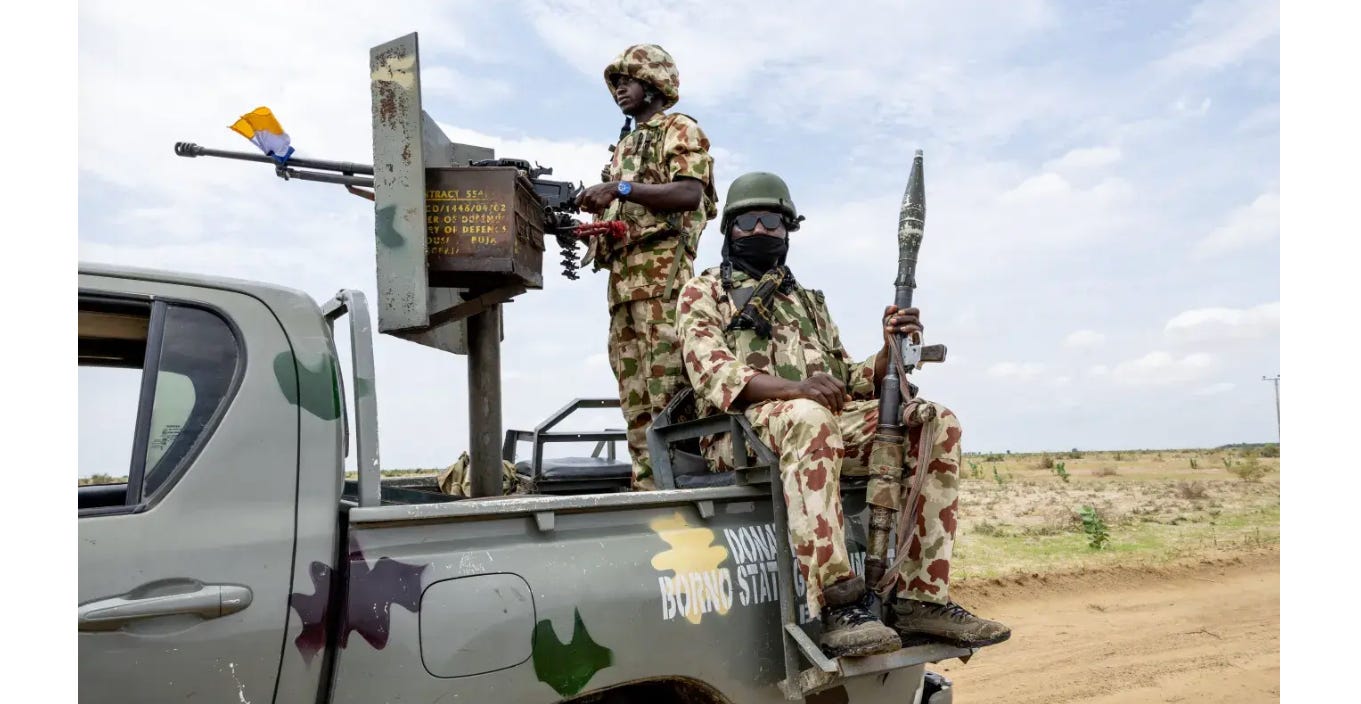
Nigeria is Africa’s giant; a massive nation of dazzling contradictions. Stretching from the lush mangrove swamps of the Niger Delta to the sun-bleached dunes of the Sahel Desert, it hums with restless energy. Over 237 million people —the largest population on the continent— crowd its bustling cities and villages, speaking more than 500 languages and uneasily practicing Christianity, Islam, and weird ancient tribal faiths all alongside each other.
Lagos, Nigeria’s beating commercial heart, is a kinetic sprawl of glass towers, traffic jams, and entrepreneurial frenzy; the north, by contrast, is arid and austere, dotted with mosques and the lingering shadow of extremist insurgencies. Oil wealth gushes from its southern soils, yet much of the country remains poor, improvising, and defiant — a land perpetually on the edge of chaos and greatness, both blessed and burdened by off-the-charts political corruption and its natural abundance, which is perpetually just out of reach.
Top Nigerian exports include the aforementioned oil (Nigeria is Africa’s top oil producer), cashew nuts, limestone, gold, and emails from Nigerian princes seeking help from American seniors with small online problems and offering to speed up their computer.
Nigeria’s Christianization began in the 1800s, not by Europeans— but by Africans freed from slavery. It is now one of the most Christian nations on earth, with over 100 million believers, rivaling or surpassing U.S. numbers. Yet that same vibrant faith has made it a target: what began as salvation delivered by freedmen now faces persecution through homegrown terror.
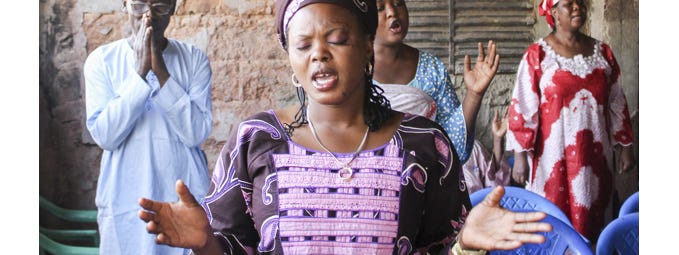
For more than a decade, Nigeria’s Christian communities have been subjected to a brutal and persistent campaign of violence—burned-out villages, congregations cut down, kidnappings, and scores who simply vanish in the night raids. According to Newsweek’s count, an astonishing 125,000 Christians have been martyred in Nigeria since 2009. A UN report added that over two million more have been displaced, as Christians flee Nigeria’s tumultuous north.
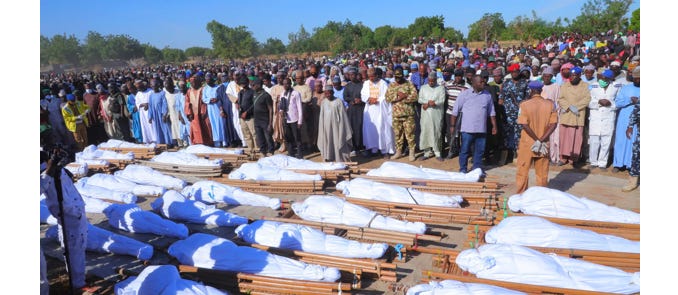
A recent Washington Post editorial called Nigerian Christians “the most persecuted religious group globally, yet are often invisible.” By ‘invisible,’ that means invisible to corporate media, and not in the Halloween, ‘invisible man’ sense, but in the sense that they studiously ignore the entire subject like it was an income tax bill they plan to claim they never received.
The main offender is the Islamic group Boko Haram. Its trademarks are terror and spectacle. In 2014, they kidnapped and enslaved 276 teenage schoolgirls in a single assault on a high-school dormitory. They often arm children —including girls as young as ten— as suicide bombers. They conduct night raids on Christian villages, where entire congregations disappear forever by dawn. They hold actual slave markets in captured territories in the murky badlands where Nigeria’s borders blur with Niger, Chad, and Cameroon.
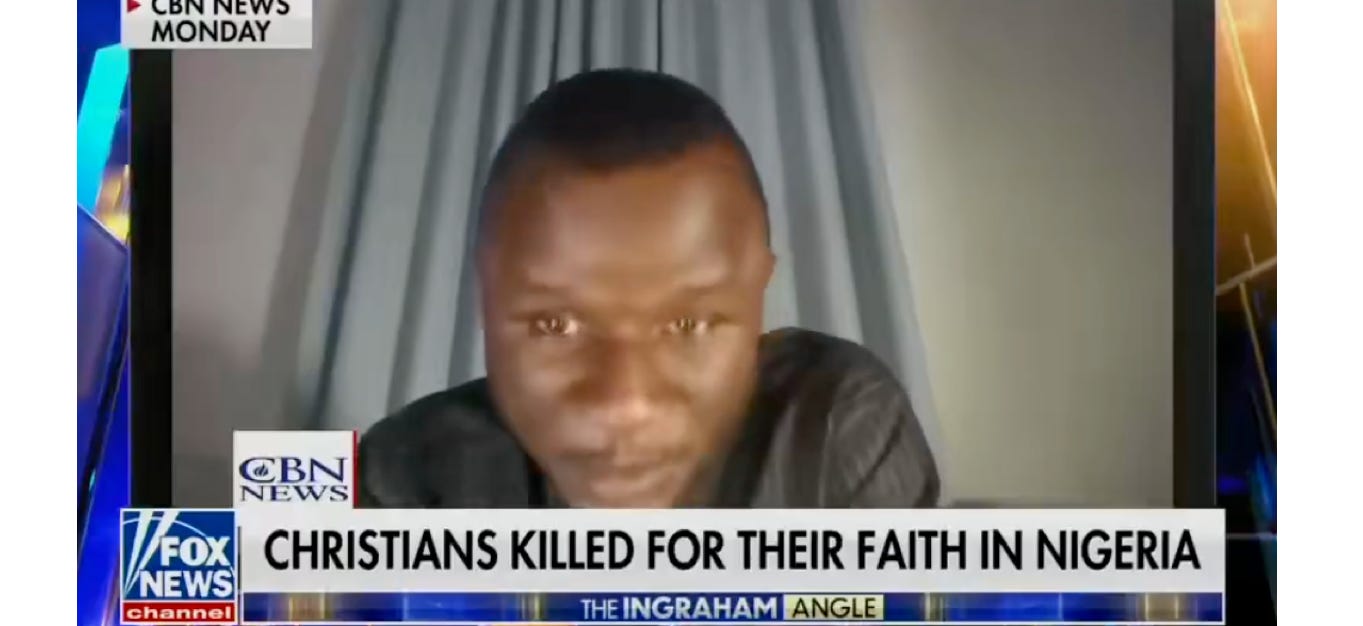
The story is literally made for TV. But the media won’t touch it.
With global attention firmly planted on more sympathetic crises, like the Israeli-Palestinian conflict and Ukraine, the Nigerian persecutions often go maddeningly unreported— or if reported at all, get footnoted in paragraph eighteen of mind-numbing foreign-desk copy. That is in spite of the fact of the staggering scale of Nigerian persecution. In many recent years, the number of Christians killed in Nigeria is “often more than in the rest of the world combined.”
Finally though, after decades of invisibility, social media has been spreading the story that corporate media refuses to cover. As recently as last month, Bill Maher blasted the lack of any protests about Islamic groups persecuting Nigerian Christians. It does make you wonder.
🚀 Yesterday, President Trump entered the chat. He posted a strong message on Truth Social —now the official government newswire— and announced the legal designation of Nigeria as “a Country of Particular Concern.”
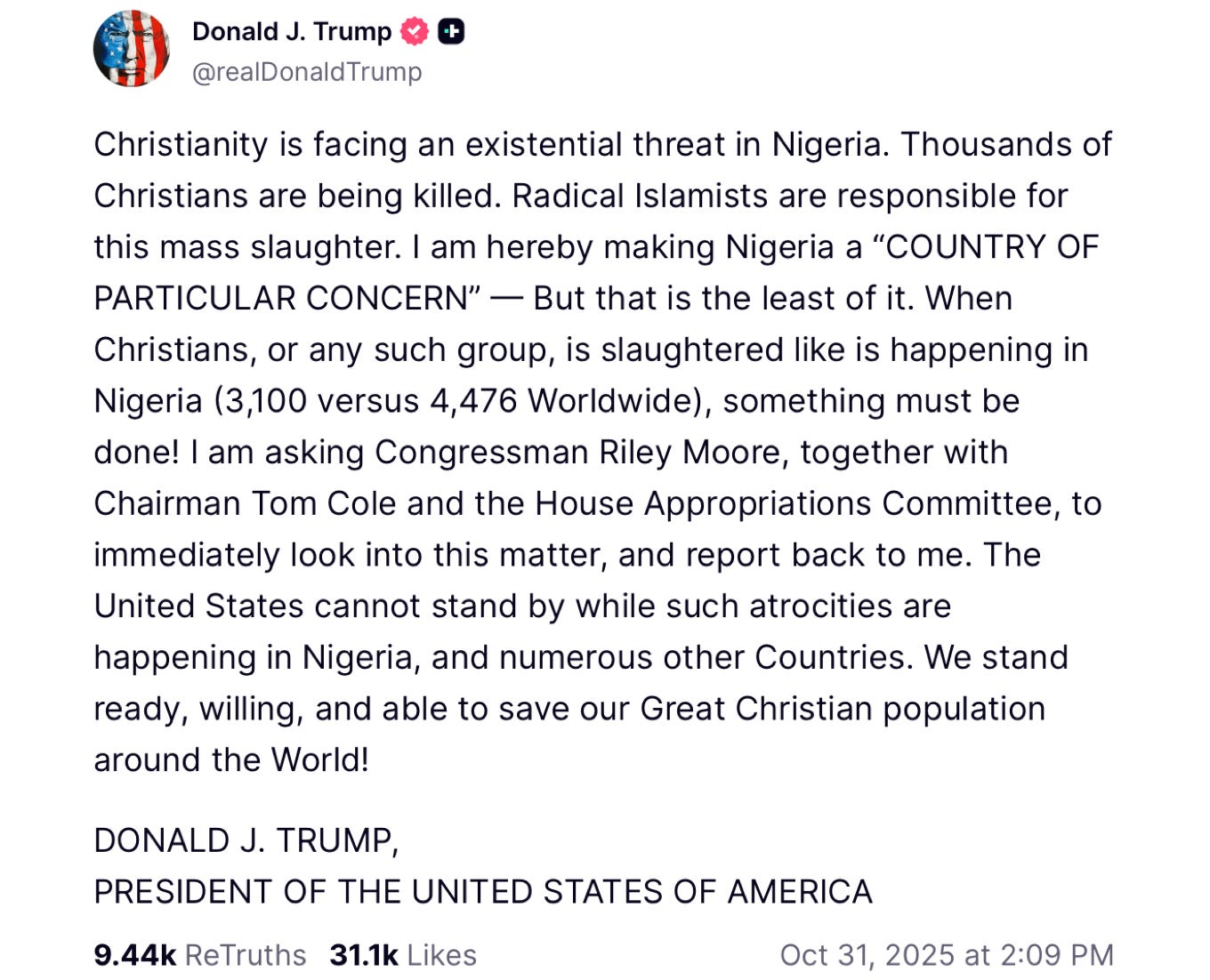
Trump’s “particular concern” designation arises from the International Religious Freedom Act of 1998 (IRFA). IFRA is a federal statute requiring the State Department to identify governments that engage in or tolerate “systematic, ongoing, and egregious violations of religious freedom.”
When a country meets that State Department standard, it becomes a Country of Particular Concern (CPC) — IFRA’s highest warning level. It’s not a symbolic gesture. It unlocks a specific menu of legal consequences, potential sanctions, and foreign-policy tools. The President’s CPC designation placed Nigeria in the unfortunate company of North Korea, China, and Iran.
When the U.S. previously designated Myanmar and Sudan as CPCs, sanctions and aid suspensions followed within months. Options include canceling foreign aid grants, banning travel, and freezing Nigerian assets, including goats. President Trump has asked Congressmen Riley Moore (R-W.V.) and Tom Cole (R-Ok.) to provide recommendations. Both men have long advocated for action. Representative Cole, who chairs the House Appropriations Committee, tweeted yesterday that bills are already drafted and await only the end of the government shutdown.
The official Nigerian government stubbornly denies that any religious genocide is happening. Like Diddy, they seem to be quibbling over Boko Haram’s motives, not denying that Christians are being murdered in droves. Nigeria’s Minister of Foreign Affairs, Yusuf Maitama Tuggar, told Newsweek yesterday, “For the avoidance of any doubt, and out of respect for all the victims and survivors around the world of this unique and appalling crimes against humanity, let the record show that there is no genocide, now or ever, in Nigeria.”
There remains a vast desert between recognition of the problem and any tangible resolution for persecuted Nigerian Christians, but they just received the attention of the world’s most powerful man. At this bitter stage, the survivors have a new reason to hope.
Have a wonderful, if chilly, weekend! We shall meet again on Monday morning, when C&C returns to kick off another exciting week as the holiday season steams ahead. See you then.
Don’t race off! We cannot do it alone. Consider joining up with C&C to help move the nation’s needle and change minds. I could sure use your help getting the truth out and spreading optimism and hope, if you can: ☕ Learn How to Get Involved 🦠
How to Donate to Coffee & Covid
Twitter: jchilders98.
Truth Social: jchilders98.
MeWe: mewe.com/i/coffee_and_covid.
Telegram: t.me/coffeecovidnews
C&C Swag! www.shopcoffeeandcovid.com
Though being represented by an ass is wholly appropriate, or perhaps more accurately - magnificently on point, it’s time to ditch the democrat donkey symbol for an even more befitting image. Stegosaurus had one of the lowest brain-to-body mass ratios of any known dinosaur. Need I say more? Work it up. Have something on my desk by Monday morning. Throw a beard on it, purple hair and perhaps a dime store tutu....something that will send a clear message of confusion and ambiguity that captures the party's legion of twisted ideologies..
As a side note: The four year reign of terror ushered in by the previous administration's mishmash of America hating con artists and racketeers seemed to last a freaking eternity. On the other hand, doesn't it feel like Trump’s will be ending way too soon?
✝️✝️✝️
If your enemy is hungry, give him food to eat;
And if he is thirsty, give him water to drink;
For you will heap burning coals on his head,
And the LORD will reward you.
— Proverbs 25:21-22
✝️✝️✝️