

Good morning, C&C, it’s Saturday! It’s time for the weekend update. Your roundup includes: the Wall Street Journal’s spectacular editorial U-turn on Iran, from “reckless brinksmanship” to “Trump has the right instincts” — in three weeks flat; Trump’s Chokepoint Strategy quietly locking down Hormuz, Malacca, and Gibraltar in 30 days; NATO heroically showing up after the fight is over; AI coming for your doctor (and why that’s actually good news); and Ilhan Omar’s $30 million “accounting error” that didn’t quite jump off the page.
(Thanks to alert readers who called in yesterday to offer eyeball advice. My right eye still feels remarkably like a soft-boiled egg in a Cuisinart, but it is improved from yesterday.)
⛑️ C&C ARMY BRIEFING — IRAN WAR UPDATE ⛑️
The old saw goes: Failure is an orphan— but success has many fathers.
Yesterday, markets jubilantly rallied and social media lit up white-hot after President Trump tweeted that the Iranians had agreed to virtually everything the US demanded. Corporate media remained skeptical, sniping at every seam, and stubbornly refusing to concede that no previous president has ever won a major war, from the sky, with no ‘boots on the ground,’ in only a month. But … Media’s tone is decidedly shifting. The Wall Street Journal’s entire Editorial Board ran a piece this morning headlined, “Hold Off on the Iran Victory Parade.”
Their skepticism has some merit. One of President Trump’s signature strategies is dramatically declaring a deal done before the ink dries. It’s keenly effective, because it jams his adversaries in a tiny box. They feel pressure to agree. If they deny the deal, Trump can just claim they welshed, and turn that against them in the next round.
But this time, Pakistani officials at the peace talks echoed Trump’s optimism — and so did Iran’s top negotiator, who speaks for its secular government. (Complicating the analysis, IRGC officials piled on unpleasant conditions, pointing to a growing schism in Iranian leadership.)
Here’s the thing. Despite the skeptical “hold off on the victory parade” headline, the editorial itself marked a sea-change from all the doomsday predictions excreted by the same editors since the war started a few weeks ago. Believe it or not, they are now publicly supporting President Trump. You aren’t going to believe this.
“Mr. Trump has the right instincts about Iran,” the Editors gushed, “and we will be the first to give him credit if the Iranian concessions turn out to be real.”
But will they? Will they be the first to give Trump credit? Mark that down.
🚀 It got better. Recall that these same editors spent the last few weeks denying the Iranians even had any nuclear material to turn over. When that lie became untenable because Iran refused to agree to let the US look for that material, the editors pivoted to denying it was even possible. Now they are suddenly singing a different tune. “Mr. Trump is right to insist Iran turn over its enriched uranium,” the Editors urged, “and the regime shouldn’t be allowed to keep some in reserve or give it to an unreliable third-party.”
Trump is right! I bet you never thought you’d see those three words in print, much less in the WSJ and the NTY in the same week.
The best was yet to come. Until ten minutes ago, the Editors deplored the war as reckless brinksmanship inviting WWIII, denied Trump knew what he was doing, and called it illegal, darkly hinting about “war crimes.” Now? Behold: “The imperative now is to keep the pressure on,” the Editors recommended. They want more war. “The regime also needs to know the U.S. will strike again if it won’t come to terms.”
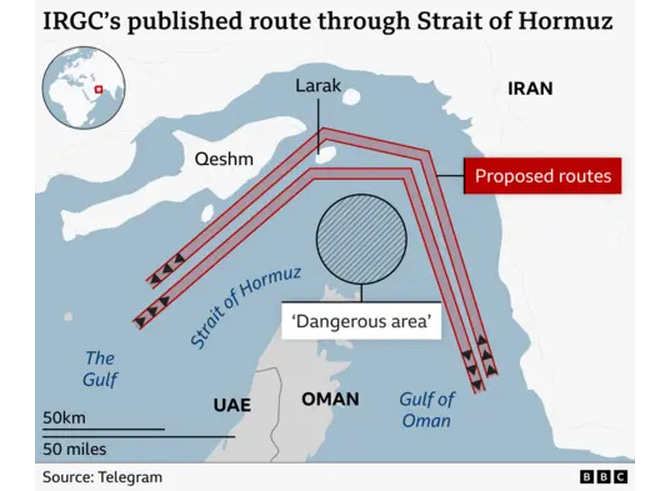
My goodness. But there was more. They even called Trump’s “chaotic” blockade good news. The Editors rousingly said, “The good news is that Mr. Trump said the U.S. blockade of Iranian ports will persist until a deal is reached.” They even called Trump’s blockade “critical to the success of negotiations,” and admitted, “it no doubt had something to do with Iran’s concession on the Strait.”
I guess President Trump had a plan, after all.
🚀 The Editors even listed all the astonishing potential wins Trump accomplished yesterday (assuming the Iranians are smart enough to sign the dotted line):
“Israel will not be bombing Lebanon any longer. They are PROHIBITED from doing so by the U.S.A. Enough is enough,” President Trump wrote yesterday, which the Editors reprinted in full.
He said, “the U.S.A. will get all Nuclear ‘Dust,’” meaning Iran’s enriched uranium.
“No money will exchange hands,” Trump added. No more pallets of cash.
Iran has agreed to remove all mines from the Strait— and never close it again.
Iran will stop backing terrorist groups and proxies like Hamas and Hezbollah.
For once, the Journal is suddenly in lockstep with the President. On Air Force One last night, President Trump said he might not extend the ceasefire with Iran if no deal is reached by Wednesday, and that he may “have to start dropping bombs again.”
It wasn’t just the Journal. President Trump is suddenly enjoying a groundswell of support. In one tweet, Fox’s Never-Trump Brit Hume cited Brett Stephens in the New York Times:

Our reluctant European “allies,” many of whom denied or limited US military access to our own bases during Operation Epic Fury, now suddenly want to help:

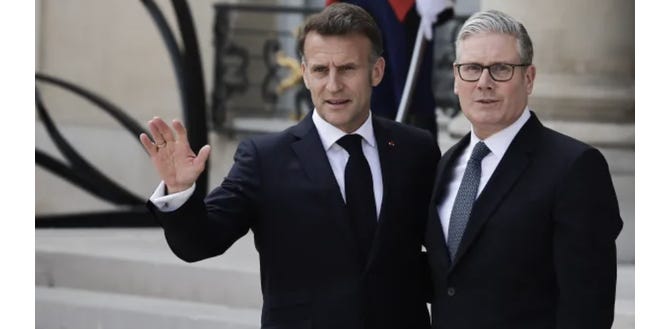
Yesterday, virtually at the same time Trump was announcing the terms of the new deal, UK Prime Minister Keir Starmer and French President Macron held a 49-country summit (including neither the US nor Iran), and jointly announced a multinational force to heroically “open the Strait of Hormuz.” They were mocked mercilessly. A day late and a dollar short.
Starmer said that the new multinational mission could be activated “as soon as conditions allowed.” Weasel word alert. He didn’t explain what the “conditions” were. Fair weather? Calm seas? After it’s already open and all the fighting’s stopped?
Thanks a lot, NATO.
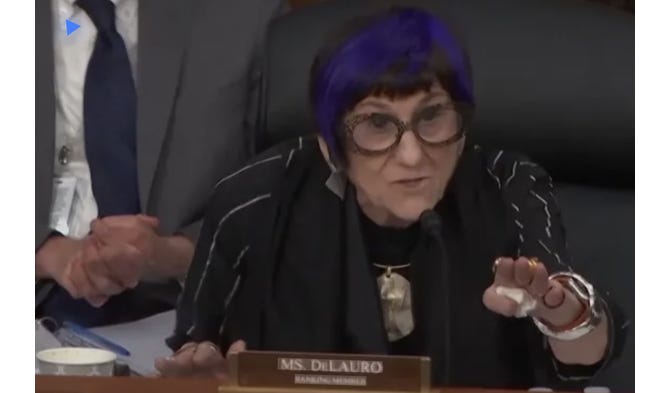
🚀 The Overton window on Iran just slid all the way to the right. Yesterday’s good news, as evidenced by corporate media’s conveniently timed defection from the Narrative, leaves Trump’s domestic adversaries high and dry. House Democrats have been trying to force a vote on a measure to stop the war. Now what?
Democrats spent weeks trying to build momentum around stopping Trump’s reckless escalation in the Middle East. A Lebanon cease-fire announcement —brokered by the same president they were accusing of warmongering— doesn’t just undercut their argument, it inverts it. You can’t simultaneously demand he stop the war and then refuse to credit him when he does. Their legislative maneuvering is now politically radioactive, because voting on it looks like attacking a peace deal.
Yesterday’s news also deflated Trump’s critics on the anti-war right, who were conspicuously quiet all day.
The Rand Paul wing and the MAGA non-interventionists had a coherent critique as long as bombs were falling— Trump was captured by neocons, led by the nose into Israel’s forever wars, and was betraying the base. But that critique requires ongoing conflict to fuel itself. Cease-fires and live Iran nuclear negotiations crack the narrative like a roasted chestnut.
Counting yesterday’s cease-fire announcement between Israel and Lebanon, Trump has now brokered conclusions to nine major conflicts. He resolved some of the thorniest disputes in the world, not least of all the historic Gaza peace plan. Each one individually would have been considered a major foreign policy legacy achievement for prior administrations.
Now he’s standing at the threshold of an equally historic resolution of a chronic, 50-year problem that kept the Middle East constantly burning and flummoxed every previous president. Resolving the Iranian nuclear question verifiably and permanently would arguably be the single most consequential foreign policy achievement since the end of the Cold War.
As I said at the top of this piece, while the Journal Editors pretended to remain dispassionately skeptical (while joining the Trump team), the markets obviously believed the Iran deal is real. Brent crude got absolutely hammered yesterday. April 17th’s settlement price landed around $82.01, with the oil prices plunging sharply on the news of the Strait of Hormuz opening. The WTI was down over 11% on the day at one point.
That’s a massive single-day move. The market essentially priced out the Middle East war in a single session. In other words, President Trump also delivered a direct, immediate economic benefit to every single American consumer —every voter— who buys gasoline, right alongside the geopolitical win.
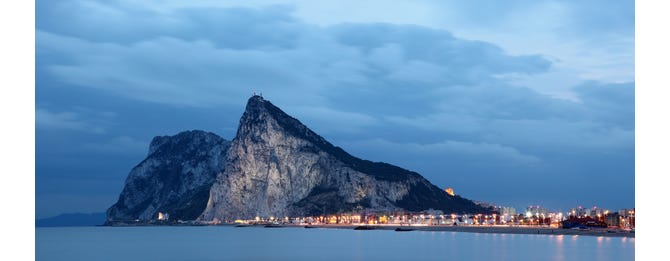
🚀 But wait! There’s more. Within days of announcing new economic and military deals with Indonesia —which critically controls the Strait of Malacca— we now have another Trump deal alongside another critical trade strait. Hespress reported, “Morocco, US strengthen military ties with decade-long defense partnership agreement.” Why Morocco? Morocco’s coastline runs the entire length of the Strait of Gibraltar— a tiny channel that controls all access to the Mediterranean Sea.
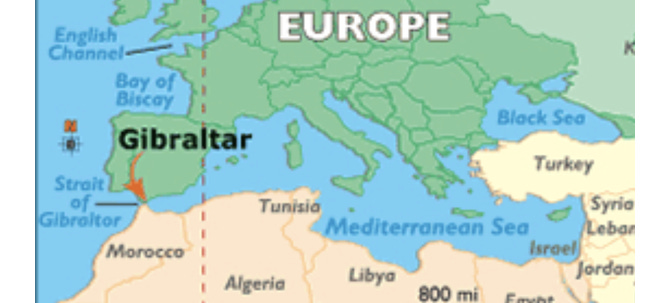
The Gibraltar Strait’s northern border is bounded by Spain, a NATO member. So increased US military ties to Morocco potentially signals bad news for NATO. We don’t need you anymore.
Call it the Chokepoint Strategy. In the same 30-day period, the US has moved on three global arteries: the straits of Hormuz, Malacca (Indonesia), and now Gibraltar. It can’t possibly be a coincidence. It’s not luck. A plan of unimaginable consequences is unfolding right before our eyes.
🌍🇺🇸 ESSENTIAL NEWS AND COMMENTARY 🇺🇸🌍
🔥🔥🔥
We’ve recently discussed the looming tidal wave of health innovations fueled by AI, with biomedical startups leading the way. Now let’s look at a second dimension of the same phenomenon: Doctors. Doctors are starting to freak out. Patients, fueled by post-pandemic distrust and AI chatbots, are arriving at appointments armed with detailed knowledge about their conditions, catching doctors unprepared. Last September, a Substack called The Next Big Idea reviewed Charlotte Blease’s new book, Dr. Bot, in a post titled, “The A.I. Will See You Now: Why Your Doctor’s Days Are Numbered.”

In a viral clip making the rounds this week, a different doctor posted a classic in-car video (who started this trend?) expressing doubts about the continued viability of his selected profession. “I don’t know about other doctors out there,” he began, “but for the first time in the past few weeks, I’m truly feeling that our days are numbered because of AI.”
Instead of being passive recipients, which was true for the entire lifetimes of anyone reading this post, patients are arriving at appointments as active participants in their own healthcare. “My patients are coming in with very, very difficult questions,” Dr. Park explained. “They are high-level, very granular, nuanced type of questions that I’ve never been asked before in previous years.”
Patients are using information to test their doctors’ competence. “For instance, I was asked what the incidence rate was for retinal detachment in the United States,” he said. “I just felt like I was in the hot seat, and I was being interrogated or being pimped by an attending.” He admitted that the patient relationship was already strained to begin with —the covid effect— but “now, with AI, patients realize they can get a lot of stuff they need from their AI chatbot, and with that, the level of expectation from a real, in-person human doctor is just gonna go even higher.”
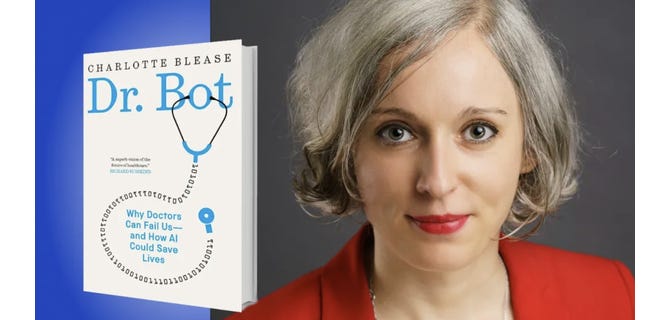
Dr. Blease is a healthcare researcher at Harvard Medical School. In her book, subtitled “How Doctors Can Fail Us—and How AI Could Save Lives,” she argues five points for how AI will democratize healthcare and become the physician we need.
First, AI will reduce misdiagnoses. “Medical error,” Blease said, “is one of the leading causes of death in the United States and is responsible for over a quarter of a million fatalities annually.” Second, doctors are sick. “In the U.S., half of all doctors say they are burned out, with 20 percent reporting they are depressed,” she noted. It’s so hard to keep up! “By graduation, half of what medical students learn is already outdated.”
Third, AI has better access to critical information than doctors do. Comparing AI to “speed-freak bookworms,” Blease pointed out that “AI has a stunning capacity to ingest medical publications and data in seconds, 24/7.” Even if AI sometimes does err, she said, the right question is: who makes fewer mistakes? Fourth, chatbots are less biased. Again, even if AI reflects training bias, “de-biasing AI is likely a more achievable goal than debiasing doctors’ split-second decisions in high-pressure clinics.”
Fifth, she pointed out research showing that “patients tend to be more talkative with machines. They’re more likely to disclose sensitive or embarrassing symptoms, challenge opinions, and ask questions.” What she didn’t say, but which is painfully obvious to anyone who’s tried it, is that AI has infinite patience, a virtue relatively scarce among time-pressed physicians. You can ask ChatGPT the same dumb question ten times in a row, and it will keep trying to answer in a slightly different way.
A now-three-year old JAMA study found that “chatbot responses were preferred over physician responses and rated significantly higher for both quality and empathy.” The bots are even smarter now. JAMA, April 2023:

I am not dunking on doctors (except for the bottom-feeders who swallowed the CDC’s pandemic guidelines hook, line, and sinker, but never mind). Lawyers like me are in the same sinking boat, except that we’re sitting a little further back. My clients are already drafting their own contracts, demand letters, and are sending in cute legal memos which were obviously penned by ChatGPT, Esq.
Still, I have no fear that I will replaced anytime soon, since ChatGPT can’t appear in court (yet). Nor will doctors be replaced soon, since ChatGPT can’t write prescriptions (yet). But the clock is ticking.
As for me, I’m glad my clients have a reasonably reliable way to obtain a baseline dose of legal knowledge. It saves time. I needn’t repeatedly explain basic concepts like it should have been in writing. My clients are arriving at appointments, realizing that their cases are more nuanced than they thought, or already convinced that their cases are dead losers and that the best strategy now is to minimize the damage.
Before AI, those uncomfortable conversations used to take hours and still leave clients unconvinced, skeptical, and sometimes distrusting. So, for me, as a lawyer, AI is improving client trust. Doctors should take notes.
AI has also let me offload work in smaller cases that don’t justify high legal fees. If someone calls the office because their mechanic charged them $4,300 to “fix” their transmission (but they still hear the raccoon). That level of damage doesn’t justify a $10,000 lawyer bill. So we suggest they try self-filing in small claims court, and using ChatGPT to walk them through it— no lawyer needed. We’ll offer to review whatever ChatGPT comes up with, only billing them for one hour instead of a dozen.
Why can’t doctors do the same? If my right eye is mildly inflamed (which it is, dammit), why not just tell me to start with Grok, then spend ten minutes on the phone confirming whatever the LLM suggested actually makes sense? They could add value by helpfully suggesting an extra test to confirm it, or even (for established patients) offering a prescription. Why not integrate AI into the medical practice, instead of crying about their days being numbered?
That’s where I predict all this is headed. For all their angst and self-pity, doctors’ days aren’t actually numbered. It’s going to be great for both patients and doctors. It will change how physicians practice, a lot, but it will be much better for everybody. It will make their practices more like concierge services, and patients more like customers.
There are at least three separate but unstoppable trends forcing modern medicine —stalled in an industrial model for a century or more— to finally change. We see a skeptical, transformative regulatory environment completely occupied by MAHA. We’re watching a revolution in health technology aimed at cures instead of treatments. And, from the bottom up, the democratization of health knowledge casting down the protective gates erected by medical elitism.
What a time to be alive.
🔥🔥🔥
Yesterday, the Wall Street Journal hilariously reported, “Exclusive — Ilhan Omar Says She Isn’t a Multimillionaire, Blames Accounting Error.” I did not make this up.
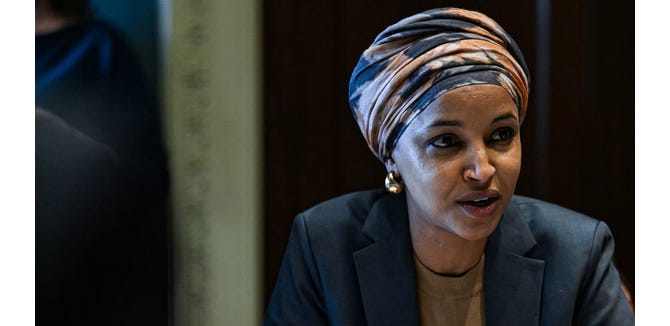
We’ve all been there. If you have ever balanced a checkbook, you know how easy it is to make a simple math error. Maybe you forgot to carry a one. Maybe you accidentally added a zero. Maybe you mistakenly reported to the federal government that you and your husband are worth up to $30 million, only to realize later that you are actually worth $95,000.
It’s basically the same thing as finding a twenty-dollar bill in a coat in the back of the closet, except with a few more commas.
This is the exact relatable situation currently facing Representative Ilhan Omar (D-Minn.). Last year, she filed a financial disclosure form indicating that she and her husband, Tim Mynett, had experienced a sudden, miraculous surge in wealth. Specifically, the disclosure stated that Mynett’s two businesses —a Washington, D.C. venture capital firm called Rose Lake Capital and a California winery called eStCru LLC— were suddenly valued at between $6 million and $30 million.
This represented an eye-watering 3,500% jump in net worth from the previous year, when Tim’s “venture capital firm” had less than $1,000 with which to venture. For those of you keeping score at home, turning less than a thousand bucks into a multi-million dollar venture capital firm in twelve months is the kind of financial wizardry usually reserved for people selling magic beanstalk beans or running for Congress. Or both.
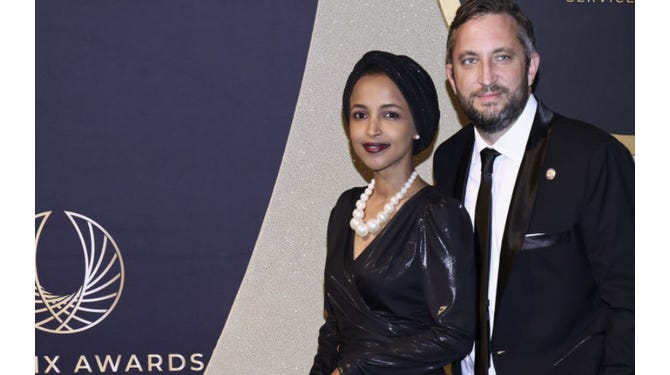
Naturally, this sudden explosion of wealth raised a few eyebrows. Especially since it coincided with a massive, $9 billion federal investigation into welfare fraud in Omar’s Minnesota district. The House Oversight Committee, led by Chairman James Comer, began asking questions. “There are a lot of questions as to how her husband accumulated so much wealth over the past two years,” Comer noted. “It’s not possible.”
But don’t worry! It turns out there is a perfectly innocent explanation. Representative Omar is not, in fact, a secret multimillionaire who somehow managed to explode a $42 venture capital account into $25 million overnight.
No, according to her office, it was just a teensy, weensy little accounting error.
“The amended disclosure confirms what we’ve said all along: The congresswoman is not a millionaire,” Omar’s spokesperson, Jacklyn Rogers, assured the Wall Street Journal. “The congresswoman amended her disclosures voluntarily as soon as the discrepancy was identified.” Identified by Republican critics, but whatever.
“Discrepancy” is a wonderful word. If I ever get pulled over for driving 140 miles per hour in a school zone, I am going to tell the officer it was just a discrepancy between my speedometer and his radar gadget.
How did this $29.9 million discrepancy happen? According to Omar’s aides, she did review her financial disclosure form before she signed it under oath and filed it, but the fact that her net worth had suddenly increased by 3,500% “didn’t jump off the page for her.” In other words, she’s stupid, not criminal.
This is entirely understandable. When you are a busy member of the “Squad,” fighting to dismantle capitalism and complaining about the evils of the billionaire class, it is easy to accidentally overlook a publicly filed document that you know will get intense scrutiny, claiming that you have basically become a capitalist millionaire. Who has time to read all those pesky zeros?

Furthermore, her lawyer explained to the Office of Congressional Conduct, this is totally normal behavior for Very Important People like Ilhan.
“As the busiest of people, it is very common for members and their spouses to rely on learned professionals like accountants to make calculations and determinations that appear on public filings,” Ilhan’s lawyer wrote. “While the error is, of course, unfortunate, there is nothing untoward and nothing illegal has occurred.”
See how that works? It was all her accountant’s fault. The learned professional simply got mixed up, and accidentally valued a winery and a startup venture capital firm at tens of millions of dollars by himself. It’s the kind of simple mistake that could happen to anyone. (He probably graduated from the Quality Learing Academy.)
Ilhan’s newly amended filing now values the couple’s shared assets at a much more modest $18,004 to $95,000. So rest assured. The good news is that Representative Omar is not a multimillionaire profiting off mysterious business ventures while representing a district embroiled in a massive welfare fraud scandal. The bad news is that she apparently employs an accountant who cannot tell the difference between $18,000 and $30,000,000.
I don’t know who this accountant is, but I would strongly advise against hiring him to do your taxes, unless you are hoping to accidentally declare yourself the Emperor of France.
In the meantime, the House Oversight Committee continues investigating. But I’m sure they will find nothing untoward. After all, as her lawyer pointed out, she is “the busiest of people.” She simply doesn’t have time to notice an extra $30 million lying around. After all, these days, with so much greedy capitalism to battle, who does?
Have a wonderful weekend! Rest up, and get back here Monday morning to pick up the threads with another terrific edition of essential news and informative commentary.
Don’t race off! We cannot do it alone. Consider joining up with C&C to help move the nation’s needle and change minds. I could sure use your help getting the truth out and spreading optimism and hope, if you can: ☕ Learn How to Get Involved 🦠
How to Donate to Coffee & Covid
Twitter: jchilders98.
Truth Social: jchilders98.
MeWe: mewe.com/i/coffee_and_covid.”
Telegram: t.me/coffeecovidnews
C&C Swag! www.shopcoffeeandcovid.com
Can we take away Ilhan Omar’s citizenship and deport her already???
All of us as do all countries go through times of darkness. It is in these times, when things aren’t going well, people of faith pray.
During Covid when Joe Biden was president, it seemed we were in the darkest of times, certainly the darkest that I could ever remember. Everyday I would pray that Americans would wake up, stand up, and stop our government from taking away peoples liberties and freedoms. I’d pray that I wasn’t alone. For years it stayed dark. It seemed as though things were not changing.
In times of war, we pray that our soldiers stay safe. That in the darkness of war America will be successful and quickly obtain its goals.
In the Book of Genesis it begins by telling us how God created everything. The world was in darkness, (“darkness was over the face of the deep,” Genesis 1:2) before God created light. Therefore the first day begins in darkness and ends with light. You would think the first day would start with the sunrise but it doesn’t, it starts in the dark. While some may say this is the setting of a 24 hour day others suggest that in the Bibles view light and hope follow darkness.
It’s incredible that in the darkness, if we didn’t know what time it was, things wouldn’t seem to really change. It could be any time of night, there is no sign that change is taking place. But at 12 midnight, at that one instance, when nothing seems any different, it goes from pm to am, a new day begins. On purpose God chose to start a new day in the dark. It’s symbolic of how He works in our lives. He gives us a promise. He says we’ve come into a new day and light will follow.
The moment we pray the tide of the battle turns. The darkness doesn’t mean things haven’t changed. Darkness is not a sign that God is not working, that he didn’t hear our prayer. We have to walk by faith and not by sight. You may not see it but when you prayed you left the pm and came into the am. It’s a new day, the light is on its way. We all have to live by faith. No matter what we’ve been through, if we have faith and we pray, it may not be immediate, but eventually the light of day will shine on you, and you will find your peace. Keep your faith! Happy Saturday!
J.Goodrich