

Good morning, C&C, it’s Thursday! Today brings a massive MAHA development, something that we’ve pined for, and it is finally underway. Everything is about to change for the better — and Phase One just went live. A C&C special edition: the FDA’s brand-new adverse event reporting system. It’s time for disclosure.
⛑️ C&C ARMY POST ⛑️
🪖 My friend and covid-era comrade Captain Seth Keshel —the former Army intelligence officer whose county-level election analysis got so famous that President Trump personally commended him for it— just published his first book, and it immediately hit #1 on Amazon in Elections. It’s titled The American War on Election Corruption: The Crusade to Restore Trust in Voting, and if you’ve ever gotten tired of hearing “there’s no evidence!” this is the book that cures that particular affliction.
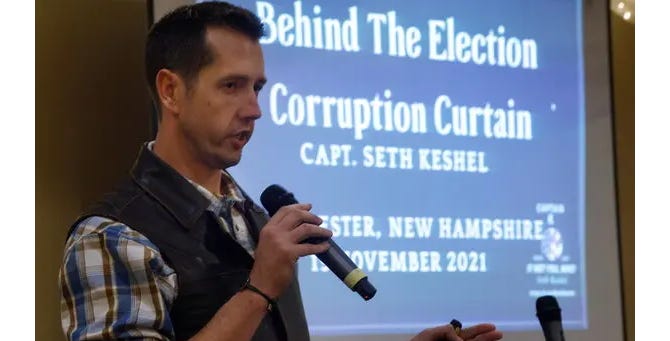
Seth traces the history of American election fraud from Boss Tweed through the 2020 anomalies and offers suggestions for how to fix it, with the kind of razor-sharp, data-heavy analysis you’d expect from a military intelligence officer who spent his career in Afghanistan learning to spot patterns others miss. Newt Gingrich wrote the foreword. It’s available in paperback, Kindle, and audiobook. Seth plugged C&C on his Substack yesterday —so welcome, Captain K readers!— and I’m returning the favor because, if you’re an elections hawk, this one’s worth your time.
🪖 We’ve been getting strong feedback on the Mike Rowe podcast (thanks!). To be honest, I am not surprised, since Mike is a superstar with a gold-plated voice who is just as genuine and nice in person as he seems on camera. The YouTube version went live yesterday, and here is the link. As if all that weren’t enough, my monthly appearance on Pastor Zach Terry’s Code Red Podcast uploaded this week as well. Enjoy!
🌍🇺🇸 ESSENTIAL NEWS AND COMMENTARY 🇺🇸🌍
💉💉💉
VAERS is finally getting a long-overdue replacement — and what’s already live is just the foundation for what’s coming next. Big Pharma should be terrified. Yesterday, Fox quietly ran an explosive story. They daintily headlined it, “FDA launches new AI-powered system to track drug and vaccine side effects nationwide.”

Before this week, the FDA tracked drug- and product-related injuries to American consumers using a patchwork of archaic, separate systems that, intentionally or not, were as unable to communicate with each other as an elderly South Carolinian and a Pakistani Uber driver. Most of us had never heard of any of the seven main reporting systems until six years ago, when we all became intimately familiar with the acronym VAERS— the Vaccine Adverse Event Reporting System.
Ah, the bad old days. Sometimes I even dreamed of VAERS. And by ‘dreamed’ I mean woke up screaming. At a low point in the pandemic, I once considered getting a VAERS face tattoo as a form of protest. (Michelle talked me out of it, thankfully.) The professional insanity of the expert class over VAERS as its database swelled with covid jab injuries exceeded any kind of denialism I’d ever heard about or even imagined possible. It was practically Shakespearean. The experts doth protest too much. I kept expecting Hamlet or Macbeth to pop up out of a trapdoor.
Here’s the story in a nutshell. First, they drained us of more of our money than any population in history to build a vast health bureaucracy. In 1990, having passed the 1986 National Childhood Vaccine Injury Act, they delivered —at an eye-watering cost exceeding anything any private company could ever afford— a fancy computerized system to supposedly track vaccine injuries. It would keep us safe, they said. It would surface any vaccine risk, they said. It was state-of-the-art, they said. Trust us, we’re experts, they said.
Then, the minute their stupid mRNA vaccines began backfiring on them, and actually surfacing injuries, the same experts started attacking their own vaccine tracking system. “Oh, you can’t believe anything that comes out of VAERS,” the experts insisted, “since it’s based on user reports.” They had the gall to brush off the system they forced us to pay for, that they designed and built to keep us safe from the flood of childhood vaccine mandates, and suddenly started treating VAERS like it was an unmonitored Reddit forum or something.
You have no idea how rage-filled I get when I recount these histories. Just wait till I write my book. I’m going to roast the experts until they reach the tender cinder stage.

💉 The trouble about complaining about experts’ dishonesty over their own tracking system is that, in a sense, they aren’t wrong. They’re just right for the wrong reasons. VAERS sucked.
As noted, VAERS was created thirty-six years ago in 1990. For contrast, that was the same year Al Gore invented the World Wide Web, and rich people got separate phone lines installed for calling the internet. Fancy new cell phones startled consumers by weighing only five pounds and being miniaturized to the size of an average air fryer. A 40-megabyte hard drive was “more space than you’ll ever need.” Crinkly fax paper with disappearing ink was state-of-the-art.
As hundreds of billions of FDA budget flowed through the checkbook, VAERS remained mired in 1990s-era technology. Why bother upgrading it? After all, it’s not like SAFETY IS IMPORTANT FOR THE FDA’S MISSION OR ANYTHING. It’s not like more and more vaccines were jammed onto the schedules and tracking was more needed than ever. It’s not like technology was lagging. It’s not like the FDA lacked the budget for upgrades.
The fax machine had a better upgrade path than America’s vaccine safety system.
VAERS was awful. Doctors who even bothered to try described the VAERS reporting form as a bureaucratic ordeal requiring thirty minutes to over an hour per report —pulling up patient records, vaccine lot numbers, dates, symptoms, and medical histories— all fed into a government portal that looked and felt like it was designed by someone who actively hated the internet. If you didn’t finish fast enough, it would time out, and then you had to start over from scratch. So most doctors just didn’t bother with it, and I don’t blame them. Much.

In 2010, Harvard Pilgrim Health Care (the Lazarus study, funded by HHS) found that fewer than 1% of vaccine adverse events are reported to VAERS. One percent.
Even the FDA itself —not some fringe coffee blog, the actual FDA— estimated that 80% of adverse event reports were never entered because the filing system was too complex. Eighty percent! For every vaccine injury report that ever made it through the gauntlet into VAERS, there were potentially four more that died in the doctor’s office. It was a kind of vaccine Russian Roulette that fired only once in five tries.
If the 1990s FDA had been overthrown by a secret cabal of Big Pharma agents, and they decided to sabotage the adverse event reporting system by making it nearly impossible to use, so that it would minimize and obscure the real level of injuries to Americans, it’s hard to imagine what they would have done differently than did the selfless, non-partisan, always-patriotic bureaucrats who actually designed the VAERS system.* (* Supposedly.)
We’ve lived with the awful VAERS system for longer than most people getting vaccinated have been alive. But the cure has finally started.

💉 On Tuesday, FDA Commissioner Marty Makary quietly launched Phase One of the Adverse Event Monitoring System (AEMS). It is described as a unified, AI-powered, real-time searchable public dashboard that consolidates seven separate creaky government databases into one platform. The back-end —the data processing, the AI coding, the unified search, the real-time publication— went live immediately. It currently summarizes reports about drugs, vaccines (from VAERS), cosmetics, and animal products. Starting in May, it will add medical devices, food complaints, and tobacco.
It is a historic accomplishment. There’s no other way to put it. They should make a 12-foot-tall bronze statue of Marty Makary and put it in the middle of the FDA’s employee break room, right next to the chocolate fountain.
“The FDA’s fragmented adverse event systems have wasted taxpayer dollars and created large blind spots in our post-market surveillance,” Commissioner Makary told Fox. “We’re addressing this critical issue by conducting a major modernization initiative on an accelerated timeline.”
An accelerated timeline is right. It was exactly zero minutes from the time we found out they were even working on it until Phase One went online. That’s faster than fast. Still, it was just fast enough to stop Big Pharma from sabotaging the project or getting a pet senator to demand it be frozen in carbonite for further study, for “safety.” It was a lightning-fast assault; the medical version of Maduro’s jefe-napping.
💉 To appreciate the breathtaking scope of what Commissioner Makary just accomplished, you must first understand how six consecutive administrations saw the problem, understood the problem, and reacted to the problem like it was a broken doorbell they kept telling their wives they would fix but never quite got around to.
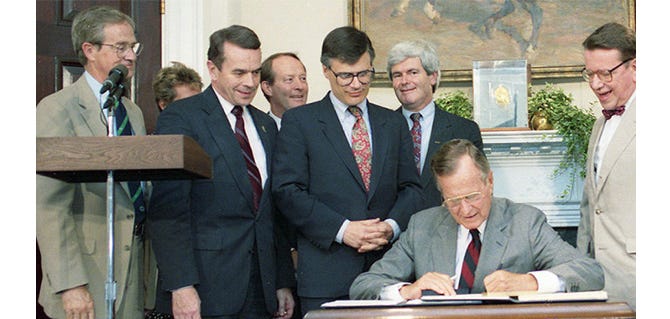
VAERS was born in 1990 under George H.W. Bush “the Elder,” required, as noted, by the 1986 National Childhood Vaccine Injury Act. The concept was simple: create a national database where doctors, patients, and manufacturers could report bad reactions to vaccines. It was a noble idea. The execution made the Los Angeles DMV look like a Silicon Valley startup.
Both the vaccine monitoring system and pharma’s vaccine liability shield were created by the same 1986 law. Pharma got bulletproof legal immunity. America got a reporting system that captured fewer than 1% of injuries.
From day one, the system was designed to be passive. In other words, nobody went looking for problems. They never enforced the requirement for doctors to report vaccine problems. So doctors voluntarily filled out reports when they had time. And, thanks to its design, filing reports felt less like a civic duty and more like an IRS audit.
Under Bill Clinton, the internet revolution transformed every other industry in America. Banking went online. Shopping went online. You could file your taxes from your couch in your underwear. Music and movies streamed with a click. But reporting a vaccine injury was still basically a fax-machine-era process. No upgrades, no modernization proposals, nothing.
George W. Bush’s administration built new active surveillance tools around VAERS— but VAERS itself remained untouched, like a vinyl collection gathering dust in the garage after the streaming age. The online form didn’t change. The interface didn’t change. The quarterly publication schedule —safety signals sat in a drawer for months before anyone could see them— didn’t change.
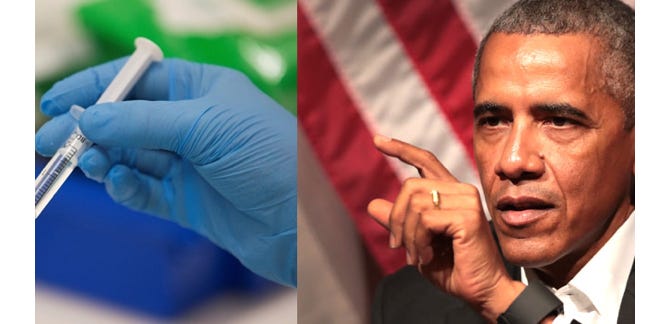
Then came the most offensive chapter of all. Under Barack Obama, around 2007-2010, Harvard Pilgrim Healthcare received a $1 million HHS grant to build exactly what everyone knew VAERS needed: an automated electronic reporting system called ESP:VAERS, that plugged directly into hospitals’ electronic health records. Duh. No more manual forms. No more hour-long paperwork. The system would automatically detect and flag potential adverse events.
It worked beautifully. In testing, it monitored 715,000 patients across 1.4 million vaccine doses and identified over 35,000 possible adverse reactions. This is before AI, mind you.
The final step was connecting that system to VAERS for live data linkup. For some reason, that step just … never happened. According to the grant’s final report, the CDC contacts responsible for receiving the data became “unavailable,” and the consultants who were supposed to set up the data link simply stopped responding.
The government funded the solution, the solution worked, and then the government ghosted its own researchers right before it went live. They all just … forgot about ESP:VAERS. The one serious attempt to fix vaccine safety reporting died, not from technical failure or lack of funding, but from bureaucratic negligence. Or, if you’re feeling less charitable, from something far more sinister.
Under Trump’s first term, VAERS got its first cosmetic update in 27 years: the “VAERS 2.0” form, circa 2017. It included standardized responses and clearer instructions. But it was the same underlying technology, the same quarterly data dumps, and the same passive system. It was nice to see, but it was like putting a fresh coat of paint on the Titanic after it hit the iceberg.
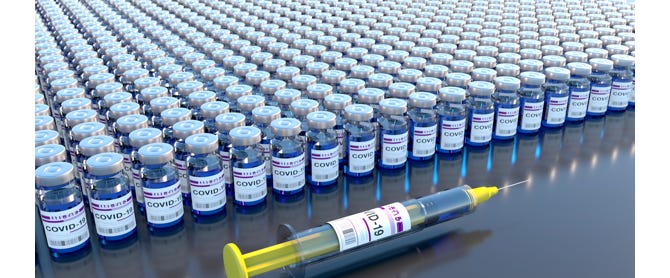
Then covid arrived— and the system collapsed under its own inadequacy. Under Joe Biden, VAERS was flooded with 1.7 million reports from covid vaccines. Processing backlogs stretched to nine to fourteen weeks. Thousands of death reports sat unpublished for months. The system that was already catching only 20% of adverse events was now drowning in the 20% it managed to receive.
During the biggest mass vaccination campaign in American history, the nation’s vaccine safety monitoring system was running at approximately the same technological level as a 1990s suggestion box, except the suggestion box was on fire and nobody called the fire department.
Six administrations. Thirty-six years. Several pandemics. And not one president, not one FDA commissioner, not one HHS secretary fixed it. Until now.
💉 Dr. Makary’s surprising new system isn’t a glow-up. It’s not even a dot-upgrade. It’s a demolition and rebuild. They started from scratch. AI made possible what was previously unimaginable, and on a timeframe that took our enemies —let’s call them enemies— completely by surprise. No leaks.
Once fully deployed, the new ‘AEMS’ will consolidate seven separate and baffling legacy databases into one searchable platform:
VAERS — vaccines
FAERS — drugs and biologics
Two separate veterinary databases — one for animal drugs, and a different one for animal foods — because apparently, cow-feed side effects needed their own system
MAUDE — medical devices, joining May
HFCS — human food complaints, joining May
CTPAE — tobacco and vapes, joining May
Previously, a researcher trying to identify cross-product safety signals had to search all seven databases separately, each with different interfaces, different formats, and different update schedules. It was like trying to solve a jigsaw puzzle where each piece was hidden in a different building in random cities.
From what we know so far, here are the biggest changes:
Real-time reporting replaces quarterly dumps. Under the old system, adverse event data was published in quarterly batches— unless the FDA got behind, like during covid, and it could take years. The lag meant a safety signal could take far too long to surface. AEMS now publishes reports as they come in. That alone might be the single biggest improvement in drug safety monitoring since the FDA started keeping records.
AI-assisted processing. AEMS will use artificial intelligence for automated data entry, coding adverse events, and redacting personal information— eliminating the manual bottleneck that created those monthslong covid-era backlogs.
Simplified public access. The new reporting dashboard is already live. A pilot program launched last September saw a 3,000% increase in users over the old system. That’s not a typo— thirty times more people used it when the interface didn’t feel like an intentional punishment.
$120 million in projected savings over five years. The old patchwork of disconnected software cost taxpayers $37 million a year. Turns out running seven crappy databases is more expensive than running one good one. Who knew.
And another chestnut was buried in the fine print of the FDA’s own description: AEMS won’t just handle adverse events. It will also manage “consumer complaints, regulatory misconduct reports, and whistleblower submissions across all FDA centers.” Translated into English, that describes a whistleblower portal— a significant expansion that goes far beyond what the previous seven databases used to do.
In other words, the same unified system that tracks whether medicine hurts us will now soon accept reports that FDA officials are corrupt. That’s not just a minor database upgrade. It is a structural threat to the pharma-FDA revolving door.
This is a massive technological achievement. It should be front-page news. I don’t know of any other government agency that has ever achieved something like it. “Consolidating the FDA’s adverse event systems and converting to real-time publication was challenging, but made possible by a highly aggressive schedule,” said the FDA’s first-ever Chief AI Officer Jeremy Walsh. “The team executed with perfection and delivered the biggest technical transformation in agency history. This is the new FDA.”
💉 Somehow, even through a beta period running from last September, they managed to keep this quiet and off the radar. It is massive MAHA news. But the FDA’s official Twitter account posted about AEMS only once yesterday, and it only got 58 likes. Fifty-eight. For “the biggest technical transformation in agency history.” (Please give it some love, if you’re a Twitterer or X-user or whatever we’re called. Here’s the link again. Multiply it with comments to encourage them.)
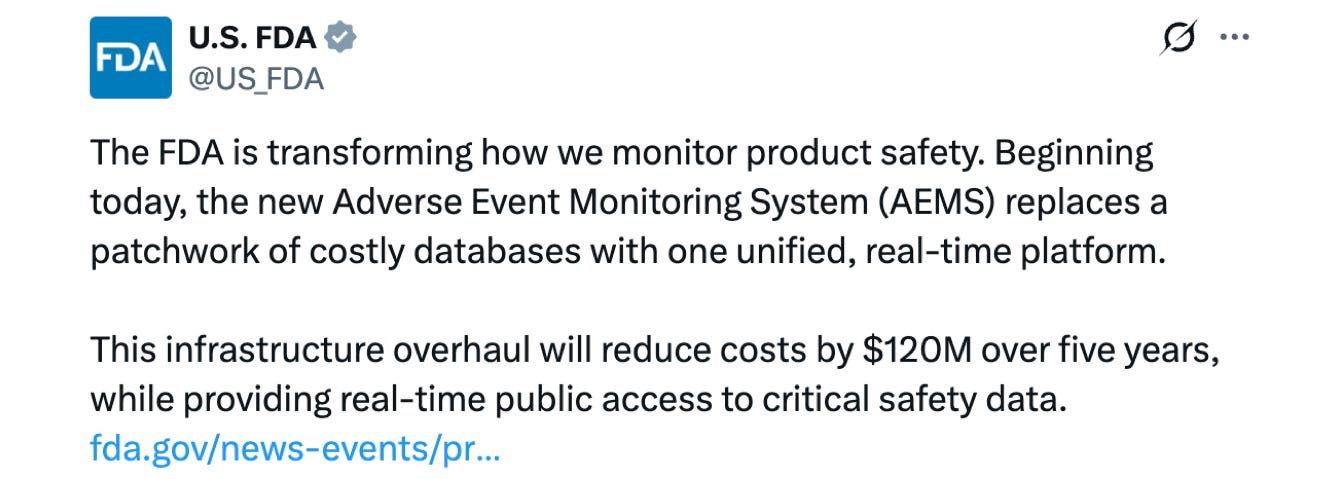
Commissioner Makary’s account said nothing about the biggest technical transformation in agency history. Secretary Kennedy’s feed was all about food dyes and processed foods; not a word about AEMS. The administration just pulled off the first phase of a 36-year overhaul that could reshape drug and vaccine safety monitoring in America, and nobody’s taking a victory lap.
But here’s the thing — I think the quiet rollout makes perfect sense once you understand what Phase One actually is. Phase One is the back-end: the unified dashboard, the AI processing, real-time data publication, the consolidated search. It’s the highway. And it’s already live.
Phase Two is the on-ramps. FDA sources told Fox that the next phase will be “implementing a front-end system that makes it easy for reports to be submitted.” That’s the part that demolishes the 80% underreporting problem. That’s the part that replaces the brain-dead, hour-long, timeout-prone submission forms that have been burying adverse events for 36 years.
In other words, Phase One built the infrastructure. Phase Two is the weapon. And if they’re being quiet about Phase One, it might be because they’re saving the fireworks for the moment that really matters— the moment ordinary doctors and patients can actually use it.
The media’s silence was predictably deafening — if a MAHA tree falls in the forest when nobody’s online, does it make a sound? Not even a short story in the New York Times’ technology section. Only that Fox News exclusive, and that’s it. But this is a story that’s only going to get bigger.
💉 When Phase Two arrives — and the simplified submission portal actually works —if it even partially fixes the 80% underreporting problem— the adverse event numbers for every drug and vaccine on the market are going to spike dramatically. Not because products suddenly got more dangerous, but because the previously brain-dead reporting system finally works.

When you go from catching one in five adverse events to catching two in five, or three in five, or four in five, the raw numbers will look terrifying. Pharma will spin the spike as meaningless —more reports don’t mean more problems— but the public will see numbers jumping 200%, 300%, 500% and draw their own conclusions.
For thirty-six years, the pharmaceutical industry enjoyed the world’s most convenient safety monitoring system— one so broken that most bad reactions vanished into the void, data was published on a schedule slow enough to bury any signal, and the reporting interface was so hostile that doctors gave up in rank frustration.
That wasn’t a bug. That was the best feature VAERS ever had— for pharma.
Dr. Makary just bricked the back end. Phase One demolished the data silos, lit up the real-time dashboard, and wired in a whistleblower portal. Phase Two —the new submission system— will brick the front end. When that goes live, we will have entered a fully new era of pharmaceutical transparency. Everything about drug safety, food safety, and veterinary safety is about to change for the better.
Can you see what’s happening? What the Trump 2.0 Administration is doing? Consider just three recent stories about systems designed not to find things. The FBI hid files from itself in “prohibited access.” Medicare somehow didn’t notice 89 ghost hospice companies in one building, and Minnesota failed to see day care centers with no kids. And the FDA spent 36 years running a safety system that submerged 80% of its reports.
The pattern isn’t incompetence— it’s architecture. It’s willful blindness. The systems were designed to conceal the problems. The cure is disclosure. And, against all odds, with Democrats and RINOs fighting it at every step, disclosure is exactly what we are getting. And I, for one, am here for it. Who’s with me?
Have a terrific Thursday! C&C will return tomorrow morning, with a fresh roundup of all the exciting essential news and scathing commentary. Be here or be square. Or words to that effect.
Don’t race off! We cannot do it alone. Consider joining up with C&C to help move the nation’s needle and change minds. I could sure use your help getting the truth out and spreading optimism and hope, if you can: ☕ Learn How to Get Involved 🦠
How to Donate to Coffee & Covid
Twitter: jchilders98.
Truth Social: jchilders98.
MeWe: mewe.com/i/coffee_and_covid.
Telegram: t.me/coffeecovidnews
C&C Swag! www.shopcoffeeandcovid.com
Mike Rowe - if you’re out there in the comments - thank you for interviewing Jeff.
C&Cers - It’s a must listen! Yes Jeff - one of your bests!
Mike - I love your quote regarding Del Bigtree’s film, An Inconvenient Study: “It’s the smoking gun you knew was out there.” Your interview of Del was also a must listen.
I’d like to make a suggestion for a future interview: Retired Air Force Major and Data Analyst, Thomas Haviland.
Tom just got a shout out by Nicolas Hulscher (who works with Dr. Peter McCullough) during a 6 hour meeting of many big names in the field of medicine talking about vax injuries in DC on Monday (14 seconds):
https://x.com/zenhoneycutt/status/2031082139576308126?s=20
Tom and I write about the clots embalmers started finding shortly after the Covid shots rolled out:
https://laurakasner.substack.com/
Major Tom can bring along an embalmer or two who will confirm what our survey respondents report.
C&C Readers - please give this a “like” to let Mike know that you too would like to see him interview Tom.
And for anyone here who has not viewed Del’s film, it too is a must see:
https://www.aninconvenientstudy.com/
Caught you on Mike’s show this morning. You’ve come a long way, Counselor. I appreciate the walk down memory lane. I sometimes forget the uncharted wilderness you willingly chose to traverse through in those fledgling moments of the Covid Operation was as challenging as it was potentially hazardous. I participated in one of your Zoom calls when trepidation and confusion was just kicking into high gear. (My bride was employed at an Apex Predator Hospital at the time. We braced for the worst. She squeaked by on a religious exemption). You’re the best, dude.
One thing the mask mandates - along with a myriad of other idiotic "expert" decrees - has exemplified to an astonishing degree is that there will always be an exhaustive supply of the population that has been so bamboozled by Establishment dogma, unduly trusting, reactionary, fearful, naive and wholly unenlightened that any evidence that goes against a promulgated narrative is utterly meaningless to them. I read recently that only 15% of the world's denizens refused to inject themselves with even one dose of the poison elixir. (Whether that's accurate or not I cannot say). Consequently, as the fools go, so goes our world. That's one mighty cold bucket of reality ice water, my friend.
Being anti-vaxx AND anti-mainstream news makes one anti-stupid by default....and thus, reasonably sane and quite vertical. Embracing the fundamental tenets of a “well-informed contrarian” keeps paying dividends. And looky here….another Conspiracy Theorist gold medal to add to the collection. Although at this point it's becoming rather a banality.