

Good morning, C&C, it’s Saturday! The second Iranian slipper has finally dropped, the Middle East is in flames, and your social media feed is already a spectacular dumpster fire of takes so hot they could knock out a Patriot missile battery. Anyway, we have much work to do, because the hot takes will be off the charts, we have astonishing dots to connect, and your brain needs nutritious intellectual calories to fight off all the psyops and propaganda (from about fifteen different sides).
Today’s post contains everything you need to put the war into context, which means you can be sure corporate media won’t tell you any of it. Your Weekend Edition roundup is a special edition: the War for Peace in Iran. Pass the falafels.
🌍🇺🇸 ESSENTIAL NEWS AND COMMENTARY 🇺🇸🌍
🚀🚀🚀
In this morning’s wintery wee hours, at 2:30 a.m., President Trump posted an eight-minute video announcing and explaining an all-out missile-based decapitation attack on Iran. The announcement acted as a media starting gun, and the pre-packaged narratives were off and running. Reuters, for example, dishonestly reported, “US and Israel launch “pre-emptive” attack against Iran.”
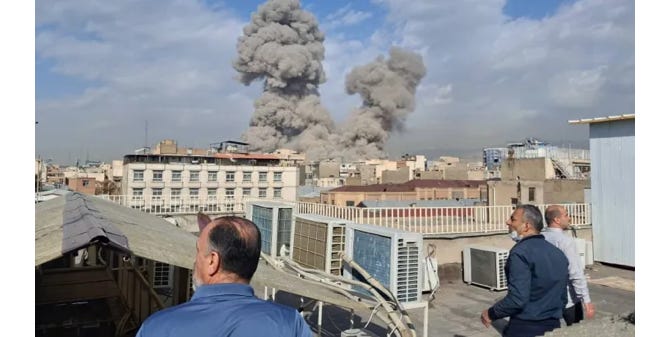
Expect to see that word ‘pre-emptive’ a lot— it’s a progressive dog-whistle for ‘unprovoked,’ implying that President Trump got some bad news about the unemployment rate and, in an uncontrolled fury, thought it would make him feel better to drop a few bombs on somebody. Pre-emptively. The truth is, everybody from Tucson to Tehran could see this coming.
It’s actually post-emptive, or however you say it. To understand just how “post-emptive” it was, let’s rewind ten days. Ten days and six words are the keys. BBC headline, February 20th:

The day before —ten days ago— on February 19th, President Trump delivered a press conference and threw down the gauntlet of ultimatum. He told Iran’s Mad Mullahs they had “probably ten days — ten, fifteen days, pretty much maximum” to agree to stop rebuilding their nuclear program. The President’s proposal was simple and straightforward. He demanded they say only six words: “We will never have nuclear weapons.”
It was that simple— six words in ten days. Even our beloved and very specially-abled Portland readers understood the threat.
Trump wasn’t bluffing, and everybody knew it. If former Venezuelan President Nicolas Maduro’s example weren’t enough, how about two aircraft carrier strike groups —the USS Abraham Lincoln and the USS Gerald R. Ford— which were recently bobbing in Middle East waters? Or how about fourteen major warships bristling with Tomahawk cruise missiles, and a dozen F-22 Raptor stealth fighters that had just touched down in southern Israel?
The largest American naval assembly since 2003 obviously wasn’t there for Fleet Week.
But instead of taking President Trump seriously, the Iranians played a classic Tom-and-Jerry game of delay, vacillating between almost agreeing —we are very close to a deal— and then going on television to angrily denounce America, the Great Satan —and also Israel, of course— and vowing to never ever agree to give up missile production and uranium enrichment.
Back and forth, in and out, hither and thither. We didn’t say we WOULD stop, but we also didn’t say we WOULDN’T stop.
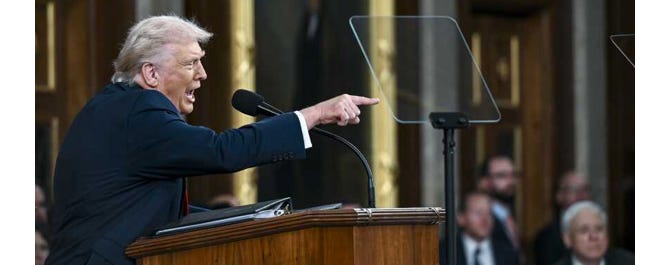
Four days ago, on February 24th, Trump warned them again. Just say it. He reinforced the deadline from the House chamber during his State of the Union address: “We are in negotiations with them. They want to make a deal, but we haven’t heard those secret words: ‘We will never have a nuclear weapon.’” CBS headline, February 24th:

He reminded the mullahs —again— that last June’s Operation Midnight Hammer had already once “obliterated” Iran’s nuclear facilities at Fordow, Natanz, and Isfahan. Or at least, mostly obliterated them.
But the mullahs are stubborn. They resist learning lessons. They stubbornly started rebuilding their nuclear facilities. Trump said Iran was “starting it all over again.”
Diplomacy ensued. The Iranians dispatched negotiators to Geneva for three rounds of talks. The U.S. sent top negotiators Steve Witkoff and Jared Kushner. Oman mediated. America’s terms were clear: destroy the remaining nuclear infrastructure, surrender all enriched uranium, achieve zero enrichment, and stop building nuclear-capable missiles— period. Iran’s delegation nodded thoughtfully and said, “Let me check with my manager” — more consultations, more time, more rounds of talks. Delay.
The fact is, Iran has been “nearly ready to consider” a deal since early in the Clinton administration.
Meanwhile, as the ten days wore on, Russia and China were busy airlifting pallets of new, high-tech air defenses into Iran. It was no secret and was widely reported in corporate media. Every day that went by, Iran’s defenses grew stronger. The clock was ticking louder than a bomb in a low-budget action movie. The Caspian Post, February 26th:

It was obvious the Iranians were stalling. But Trump had only given them ten days. To say six words.
Yesterday, the tenth day, as Trump’s ten-day window began to close, and as the final, third round of talks was wrapping up— Trump told reporters he was “not happy with the negotiation.” He said Iran still wouldn’t “say the key words.” Then came his final warning, delivered with the kind of understatement that sounds deafening in hindsight: “I’d love not to use force, but sometimes you have to.”
Late yesterday, Oman’s foreign minister raced to Washington for a last-ditch ‘emergency meeting’ with Vice President Vance to beg for more time. But there were no words, and the ten days were up. Trump left Washington and flew to Mar-a-Lago for the weekend.
In this morning’s small hours of the morning, as midnight ticked over and Iran’s ten days were up, US and Israeli bombs began dropping on Iranian political and military infrastructure, and Trump told the country it was serious. Americans could get hurt. But he’d told Iran what it needed to do, and the mullahs refused:
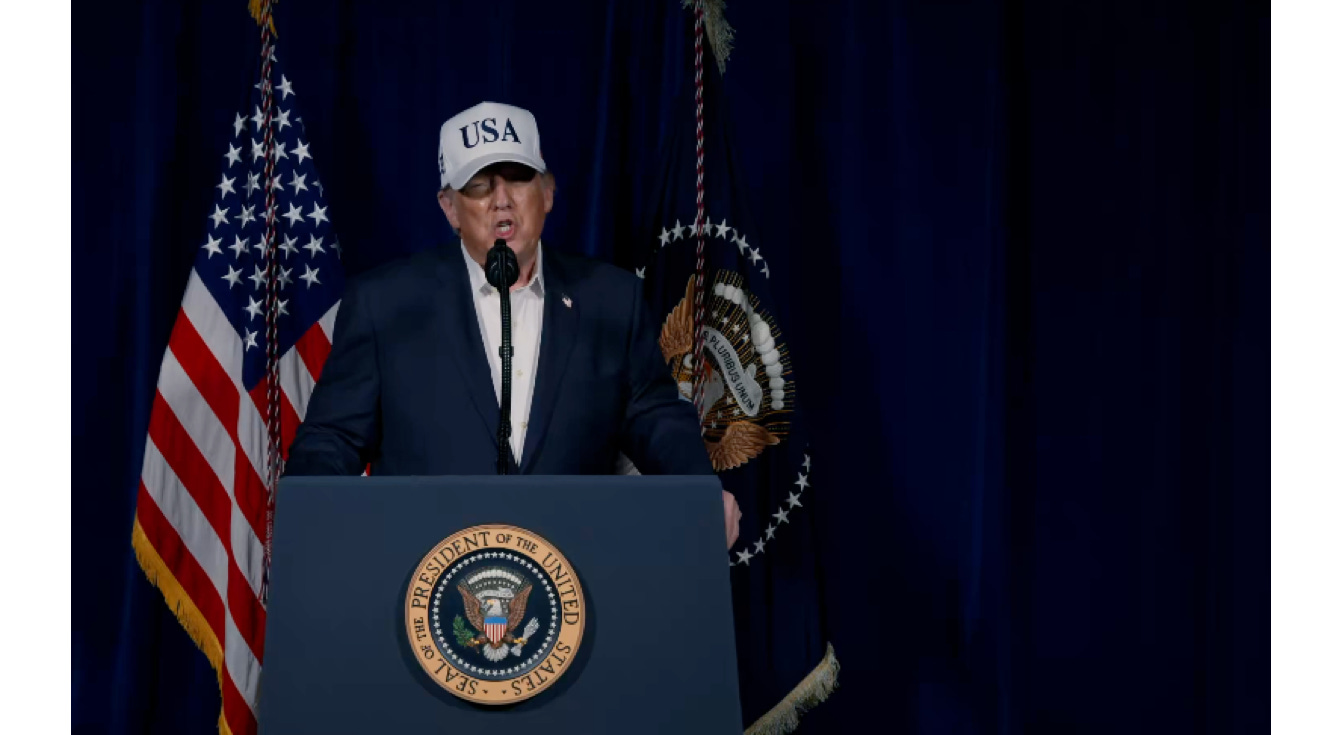
CLIP: President Trump addresses the nation about strikes on Iran (8:06).
Corporate media called the strikes ‘pre-emptive’ and ‘without warning.’ They argued that Iran didn’t see it coming because ‘good faith negotiations were in progress.’ But believing that silly narrative requires ignoring two aircraft carriers, fourteen warships, twelve stealth fighters, two months of public warnings, a ten-day ultimatum, a demand for six words, three rounds of failed negotiations, a State of the Union threat delivered on live television to 40 million Americans, and a president who had already bombed them once eight months ago.
Aside from all that, sure. It was a total surprise. Very “pre-emptive.” But— ten days to say six words.
The Pentagon calls the strikes “Operation Epic Fury.” Just stop right there. Operation. Epic. Fury. Somebody in the Pentagon’s naming department has been waiting their whole career for this moment, and they absolutely did not fumble it. The IRGC has been running ops named things like “Promised Day” and “Holy Promise.” We came with Epic Fury.
🚀 Rather than co-opt corporate media stations, President Trump posted his address to the nation on Truth Social, which must be some kind of sign of the times. But set that aside. Trump’s case has three main parts. First, President Trump stated clear military objectives: we intend to destroy Iran’s missile capability and missile industry, “annihilate” its navy, eliminate its ability to arm terrorist proxies across the region, and permanently end its pursuit of nuclear weapons.
Second, the President gave the IRGC —Iran’s black-booted Islamic Revolutionary Guard Corps— a binary choice delivered with subtlety and understanding. He told them, “You must lay down your weapons and have complete immunity. Or, in the alternative, face certain death.” Seems clear.
Third, President Trump addressed the political objectives: restoration of Iran’s pre-Islamist regime. He spoke directly to the Iranian people even as the missiles were striking top government buildings in broad daylight Tehran time:
“To the great, proud people of Iran, I say tonight that the hour of your freedom is at hand. Stay sheltered. Don’t leave your home. It’s very dangerous outside. Bombs will be dropping everywhere. When we are finished, take over your government. It will be yours to take. This will be, probably, your only chance for generations.
For many years, you have asked for America’s help, but you never got it. No president was willing to do what I am willing to do tonight. Now you have a president who is giving you what you want. So let’s see how you respond. America is backing you with overwhelming strength and devastating force. Now is the time to seize control of your destiny and to unleash the prosperous and glorious future that is close within your reach.
This is the moment for action. Do not let it pass.”
As this goes to post, Iran has managed to at least partially retaliate by firing ballistic missiles at a few American bases in the Persian Gulf. So far, missiles were launched at: the Fifth Fleet headquarters in Bahrain, Al Udeid Air Base in Qatar, Al Dhafra in the UAE, and Ali Al Salem in Kuwait. Most missiles were intercepted. As of now, no American military casualties have been confirmed, though one civilian in Abu Dhabi was reportedly killed by interceptor debris and the Abu Dhabians aren’t happy about it.
After approximately two hours of intense fighting, France surrendered. Secretary of State Marco Rubio —who was just about to become President of Cuba— realized that he’s about to become the Supreme Leader of Iran.
Now, let’s look at a few of the hot takes and reactions to all this.
🚀 I joked about France, but French President Macron quickly tweeted his support for America’s mission. The National Post reported that, “Canada ‘supports’ U.S. attack on Iran.” Reliable Social Media accounts say Saudi Arabia has offered “help of any kind,” and UAE offered support.
The support seems strong and broad, but it’s still early.
So far, apart from North Korea, the only other strong opponent of the strikes was Great Britain, which reportedly refused to allow American planes to take off from bases in the UK for the Iranian missions.
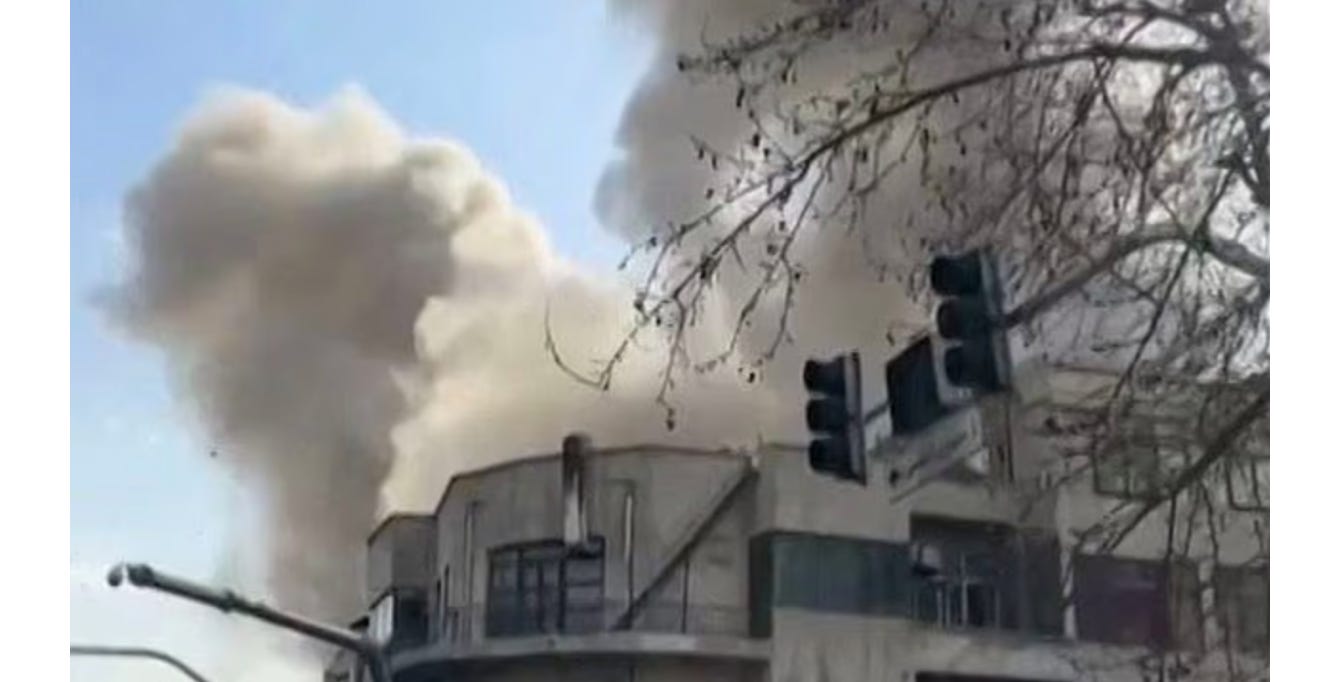
🚀 Even though the mullahs cut off their internet (again), the Iranian people are getting President Trump’s message. The regime has been explaining for 47 years that the Iranian people love the Islamic Republic and its dress codes and summary executions. The Iranian people have been trying to correct this misunderstanding for 47 years.
Within hours of the strikes, videos emerged from Tehran showing jubilant crowds on Jomhouri Street dancing, playing music, cheering the explosions overhead, and shouting slogans of freedom. Some were chanting “I love Trump!” — in a country where saying that out loud last week could get your tongue cut out, or could get you shot in the street by the IRGC. (But let’s not interfere with their local customs.)

These are the same people who have been bravely protesting since late December, in the largest demonstrations since the 1979 revolution— in over 100 cities across the country. The regime responded by mowing down an estimated 30,000 or more of its own citizens with machine guns, drones, and mounted weapons, then imposed the longest internet blackout in recorded history to keep the world from seeing the bodies. The Iranian people didn’t stop. They kept marching. And they kept asking for America’s help.
The most striking and suggestive response came from Crown Prince Reza Pahlavi. Pahlavi is the son of Iran’s last Shah, Mohammad Reza Pahlavi, whose government was toppled in the 1979 Islamic Revolution that started this whole 47-year mess. Reza has lived in exile ever since, watching from the outside as the mullahs transformed his country into the world’s leading exporter of terrorism. In recent months, as the protests exploded, Reza became the symbolic figurehead of the Iranian resistance — the man whose name protesters chant in the streets. He personally urged President Trump to intervene on behalf of his people.
In a non-coincidence, when Michelle and I were in Santa Monica last weekend and taking a Sunday afternoon stroll, we stumbled into a massive downtown demonstration: thousands of Iranian-Americans supporting Crown Prince Reza Pahlavi and demanding regime change in Iran. Here’s a picture that I personally took on my iPhone; the sign is a little hard to read, but it says “Make Iran Great Again.”
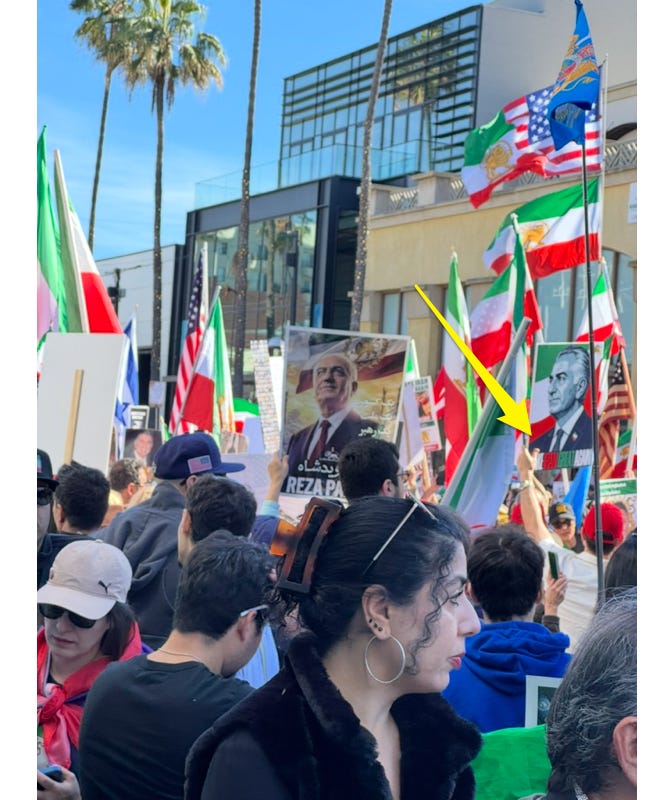
Reza Pahlavi is a monarch-in-exile. These pro-Trump Iranians literally want to restore a king. Somewhere, progressive heads are exploding.
Minutes after the strikes began —in timing that strongly suggests coordination— Prince Pahlavi posted a video message almost completely ignored by corporate media:
“Decisive moments lie before us. The assistance that the President of the United States had promised to the brave people of Iran has now arrived. This is a humanitarian intervention, and its target is the Islamic Republic, its apparatus of repression, and its machinery of killing — not the country and great nation of Iran.”
He addressed Iran’s military forces directly: “You have sworn an oath to protect Iran and the Iranian nation, not the Islamic Republic and its leaders. Join the nation and help ensure a stable and secure transition. Otherwise, you will sink with Khamenei’s ship.”
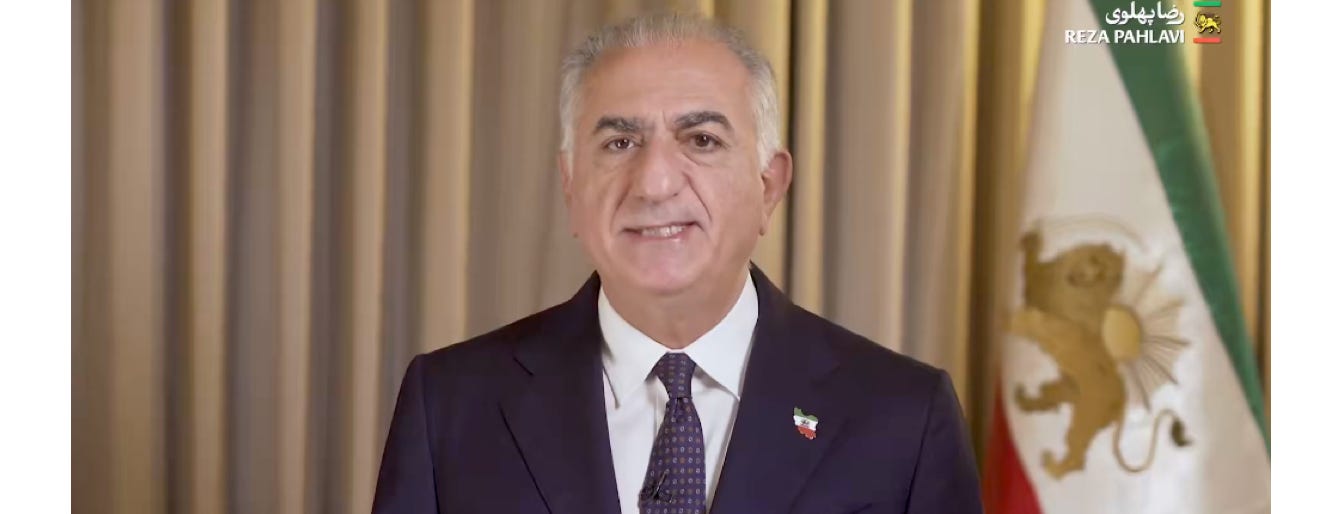
And to his people: “We are very close to final victory. I hope to be with you as soon as possible so that together we may reclaim Iran and rebuild it.”
This is the key to understanding what’s happening. America is not imposing a government on Iran, or manufacturing a fake, Zelensky-style, actor-turned-president for a color revolution about some dumb social issue. This is the Iranian people’s own chosen leader, heir of the Royal line that long preceded the oppressive Islamist rebels. Reza is their symbol of resistance, the continuation of the pre-revolutionary government. He’s telling them their moment has arrived.
President Trump isn’t selecting Iran’s next leader. He’s giving Iranians the chance to select their own. It’s up to them.
Now let’s tackle the inevitable psyops.
🚀 First, even though Iran’s exiled Crown Prince supports the strikes, and many Iranians inside and outside Iran support them, and serious countries all over the world support them —even Canada!— Democrats are about to start raging against the Administration and accusing Trump of “starting wars.”
This war started in 1979 and has been underway in slow motion ever since. Every President since Carter has grappled with the “Iran problem.”
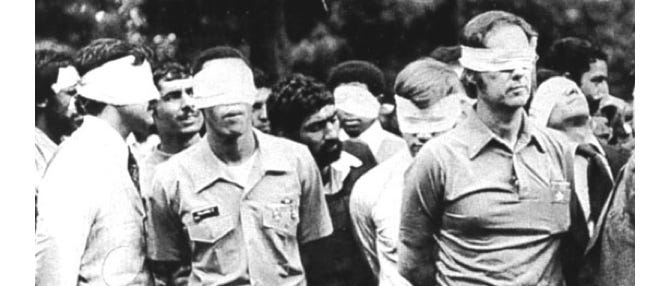
Trump’s address laid out the regime’s protracted, bloody résumé, and it’s worth reviewing since the timeline is so astonishingly long it’s easy to lose track:
1979: Iran backed the violent takeover of the U.S. Embassy in Tehran. Islamist rebels held fifty-two Americans hostage for 444 days.
1983: Iran’s proxies bombed the Marine barracks in Beirut killing 241 Americans.
2000: Iran “knew and was probably involved” in the bombing of the USS Cole.
Iraq: Iranian IEDs killed and maimed hundreds of American service members as the regime caused trouble during the war.
Recent years: Constant proxy attacks on U.S. forces and commercial shipping in the Middle East.
October 7, 2023: Iranian proxy Hamas slaughtered over 1,000 people in Israel, including 46 Americans, took 12 Americans hostage.
2025–2026: The regime massacred an estimated 30,000+ of its own citizens for the crime of protesting.
For the last 47 years, every president kicked this can down the road. They tried to manage it, contain it, sanction it, and Obama sent it billions in bills stacked on pallets. They wrote stern letters about it. They “observed” and “monitored” Iran while it enriched weapons-grade uranium and built secret underground nuclear labs. Meanwhile, Iran’s mullahs kept chanting “Death to America” and killing people. To borrow a useful metaphor, the diplomatic approach to Iran was working about as well as a rusty screen door on a nuclear submarine.
More importantly, there were three main axes of Middle East instability, and Iran was the biggest. More on that in a minute.
Let’s tackle a few more bubbling hot takes first.
🚀 There are serious objections circulating this morning, and they deserve honest answers, not strawmen. Let’s tackle the biggest three, using the objectors’ own words.

First up is gadfly Representative Thomas Massie (R-KY), who, within hours of the operational launch, called the strikes “unauthorized by Congress and unconstitutional.” Massie had been working with Representative Ro Khanna (D-CA) on a ‘bipartisan’ vote to restrict unilateral presidential military action against Iran. In the Senate, Rand Paul (R-KY) and Tim Kaine (D-VA) have a joint War Powers resolution. Kaine called a war with Iran “a grand disaster — completely unnecessary.”
This is a legitimate constitutional argument, and I respect the consistency of the people making it— especially our libertarian-leaning friends, who are probably freaking out.
But here’s the thing: this particular ship sailed decades ago. Obama bombed Libya for months without so much as a courtesy call to Congress, and nobody got impeached. Biden unilaterally struck Syria and Iraq. The War Powers Resolution gives the president 60 days before requiring congressional authorization, and 48 hours before notice to Congress. Even at that, every single president since its passage has treated it more like a loose guideline than a legal requirement.
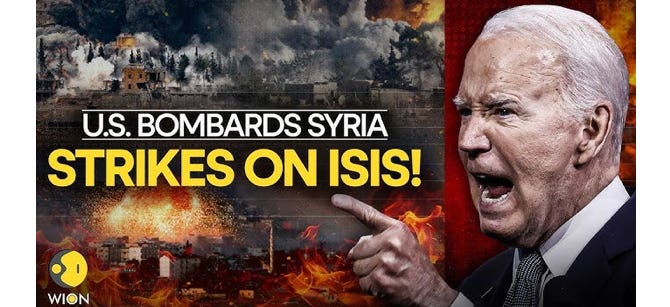
If this is the constitutional hill folks want to die on, welcome aboard— but they’d better have been equally outraged when the last few presidents did the exact same thing. Most of the currently outraged were conspicuously quiet then.
If Obama had done this, the Nobel Committee would have cut a second medal, Hollywood would be in production on the biopic, and the editorial board of the Times would be weeping with pride. Instead, Trump did it, so we’re going with ‘pre-emptive.’
🚀 “Young working-class kids should not pay the ultimate price for regime change,” tweeted Sen. Ruben Gallego (D-AZ), an Iraq combat veteran, who wrote: “I lost friends in Iraq to an illegal war.” These are strong words that resonate with all of us who endured the war for “weapons of mass destruction.”
But this isn’t Iraq 2003. Iraq was built on bad intelligence (at best) about weapons that didn’t exist, followed by a decade-plus of occupation and nation-building nobody asked for. On the other hand, Iran’s weapons are real. They fired ballistic missiles at four countries this morning. Iran’s terror campaign isn’t theoretical, it’s been documented across 47 years and multiple continents.
And critically, Trump has explicitly committed not to occupy or nation-build. His words to the Iranian people were: “When we are finished, take over your government.” That’s the anti-Iraq. No 20-year quagmire, no puppet government, no trillion-dollar reconstruction project. Strike the military infrastructure, cut off the regime’s capacity for violence, and let the Iranian people —who are already in the streets begging for this— finish the job.
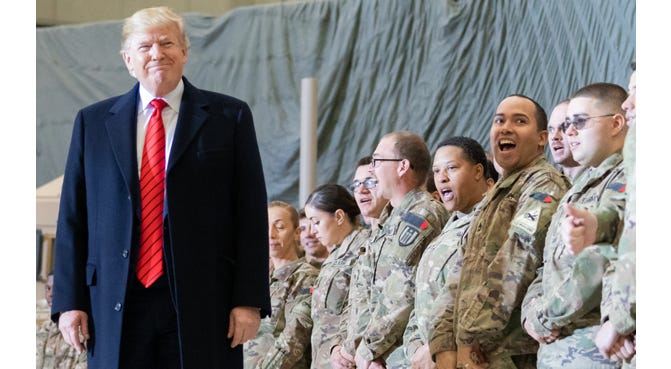
🚀 Next: “Trump promised no forever wars!” That is true. He never said he wouldn’t use the military though. He kind of said the exact opposite, “peace through strength.”
A “forever war” is letting Iran arm Hamas, Hezbollah, and the Houthis for 47 years while a succession of American presidents issued progressively sternly worded statements and hoped for the best. The forever war has already been happening. It just had good PR. It was a forever war that didn’t lead the evening news because corporate media sympathizes with the terrorists.
It’s been 47 years of half-measures, proxy skirmishes, hostage crises, dead Marines, blown-up embassies, terror campaigns, and diplomatic theater with a regime that negotiates the way a cat plays with a mouse— batting it around for entertainment, never intending to let it go. The forever war is not acting; letting Iran continue to arm Hamas, Hezbollah, and the Houthis while pretending sanctions and sternly worded IAEA reports will eventually work. That is the forever war. It’s just a slow, quiet one that doesn’t produce corporate media headlines.
Trump is trying to end the forever war. You may disagree with his methods, but the ambition is literally the opposite of what he’s being accused of.
And notably, this isn’t just a partisan position. Democrat Senator John Fetterman (D-PA) —who’s getting less popular with his base by the minute— tweeted, “President Trump has been willing to do what’s right and necessary to produce real peace in the region.” Fetterman agrees with the mission, so Trump has at least one Dem on board.
🚀 Now, at last, let’s connect the dots.
For our entire adult lives, the Middle East has been the world’s powder keg. Every few years something explodes. Somebody gets invaded, some embassy gets torched, some shipping lane gets mined, and American kids get sent to babysit a region that has been fighting since roughly the invention of the pointed stick. Or as Trump has said, “for the last two thousand years.”
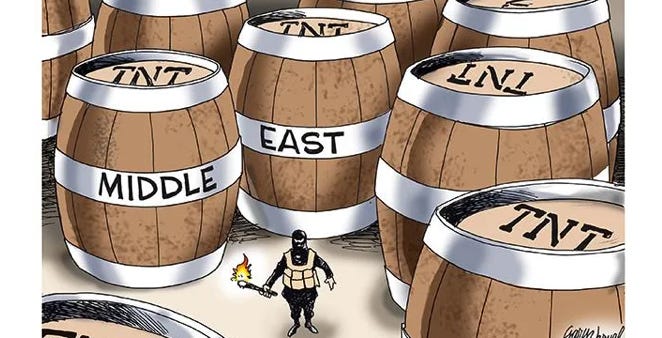
Imagine what a world without Middle East conflict would look like.
Until last year, the decades-old instability has flowed from three main places: Palestine, Syria, and Iran. Compare that list to what Trump has tackled:
Palestine. Under Trump 1.0, the Abraham Accords began normalizing relations between Israel and the Arab world— something the credentialed experts had insisted was impossible right up until the moment it happened. After the October 7th war and the Gaza crisis, Trump forced a resolution to a conflict that had been festering since Israel became a nation again in 1948.
Syria. The Assad regime —Iran’s closest ally and the geographic weapons conduit to Hezbollah in Lebanon— collapsed. Just … gone. That domino toppled without a single American boot setting foot on Syrian soil.
Now, Iran. Israel calls Iran “the head of the snake.” It’s the oil-rich banker, armorer, and puppet master behind Hamas, Hezbollah, the Houthis, and a dozen or so other militias that have soaked the region in blood for nearly half a century. Iran is the final domino, and the biggest.
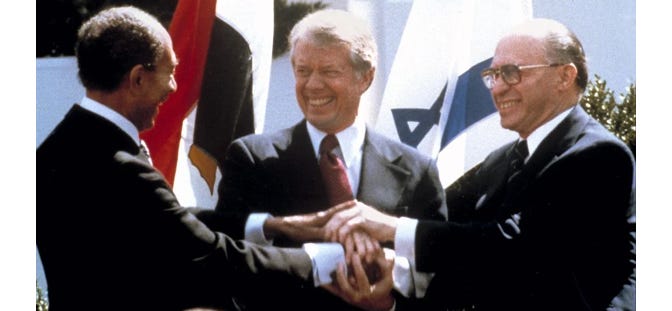
Every single president since Jimmy Carter has managed the Middle East, playing whack-a-mole with the latest crisis and passing the ruined wreckage along to his successor. Nobody dared try to actually solve the problem. Nothing ever changes. Not until President Trump.
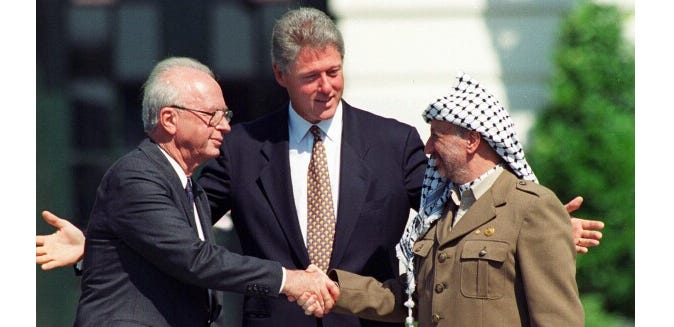
Trump is swinging for the fences. He’s done with ceasefires, peace summits, international committees, inspection regimes, and ‘talks’ with a regime that uses negotiations the way a boxer uses the ropes to buy time to catch their breath before the next round of violence. President Trump is aiming at a permanent end to the source of the instability.
If he pulls it off, and ends the Middle East forever war, it could produce an era of global peace and stability not seen since before World War I. If you’ve been reading C&C for the last six months, you’ve been watching this puzzle assembled one piece at a time: Abraham Accords II, Syria, Gaza, Ukraine peace negotiations, and now this. It’s the most coherent foreign policy strategy in a generation, executed by a man most of the world’s capitals spent four years insisting was too dumb to have one.
It could fail, of course. War is messy, unpredictable, and heartbreaking. The missiles Iran fired at our bases this morning are real and dangerous, a bone-chilling reminder that this is a real and dangerous conflict, and brave Americans are in harm’s way right now.
But for the first time in our adult lives, an American president is actually trying to solve the problem instead of just managing it for four years and passing the bill along to become the next president’s problem. He’s not pursuing a forever war. He’s pursuing a forever peace.
That is the most important point, and it deserves to be understood for what it is. Some people might not like Trump’s means, but they can’t argue with the goal.
Ten days, six words, forty-seven years of managed decline, one speech at 2:30 a.m., and a president crazy enough to actually try. Whatever comes next— pray for the troops, pray for the Iranian people dancing in the streets, and remember: the impossible thing about solving a problem is that first you have to believe it can be solved. For the first time in your adult life, somebody does.
Have a wonderful weekend! Avoid the hot takes and propaganda, and meet me back here on Monday morning to collect our thoughts and hopefully get to some of the terrific developments unfolding in all our areas of regular interest lately. See you then.
Don’t race off! We cannot do it alone. Consider joining up with C&C to help move the nation’s needle and change minds. I could sure use your help getting the truth out and spreading optimism and hope, if you can: ☕ Learn How to Get Involved 🦠
How to Donate to Coffee & Covid
Twitter: jchilders98.
Truth Social: jchilders98.
MeWe: mewe.com/i/coffee_and_covid.
Telegram: t.me/coffeecovidnews
C&C Swag! www.shopcoffeeandcovid.com
ERRATA:
— "Pavlavi" corrected to "Pahlavi"
— Typo fixed, missing dash
— An alert math wizard reader pointed out "We will never have a nuclear weapon" is seven words, not six, so I shortened it to "We will never have nuclear weapons." It was easier than changing "ten days, six words" all over the place. My bad.
People sleep peaceably at night only because rough men stand ready to do violence on their behalf.
“It is not the critic who counts: not the man who points out how the strong man stumbles or where the doer of deeds could have done better. The credit belongs to the man who is actually in the arena, whose face is marred by dust and sweat and blood, who strives valiantly, who errs and comes up short again and again, because there is no effort without error or shortcoming, but who knows the great enthusiasms, the great devotions, who spends himself in a worthy cause; who, at the best, knows, in the end, the triumph of high achievement, and who, at the worst, if he fails, at least he fails while daring greatly, so that his place shall never be with those cold and timid souls who knew neither victory nor defeat.”
—Theodore Roosevelt
January- Maduro
February - El Mencho
March - Ali Khamenei
Nice first quarter!