

Good morning, C&C, it’s Thursday! Your roundup includes: the New York Times' shocking sequel discovers influencers now come cheaper by the dozen; Drew from Dallas turns out to be Alex from Utah, and Harvey from Austin turns out to be Harvey from Leicestershire; California passes a law that can't reach a single congressional race or a single Englishman; and Reuters counts 30,000 non-citizens on the voter rolls in just twelve states, then calls in an expert to explain why it's not a problem.
🌍🇺🇸 ESSENTIAL NEWS AND COMMENTARY 🇺🇸🌍
🔥🔥🔥
The New York Times has published its second installment in its shocking investigation into paid social media influencers, and get ready: episode two is somehow even more shocking than the first. I covered the first installment —more on that shortly— on August 31st. On Tuesday, the Times reported, “An Army of Paid Creators Is Carpeting the Web With Political Content.”
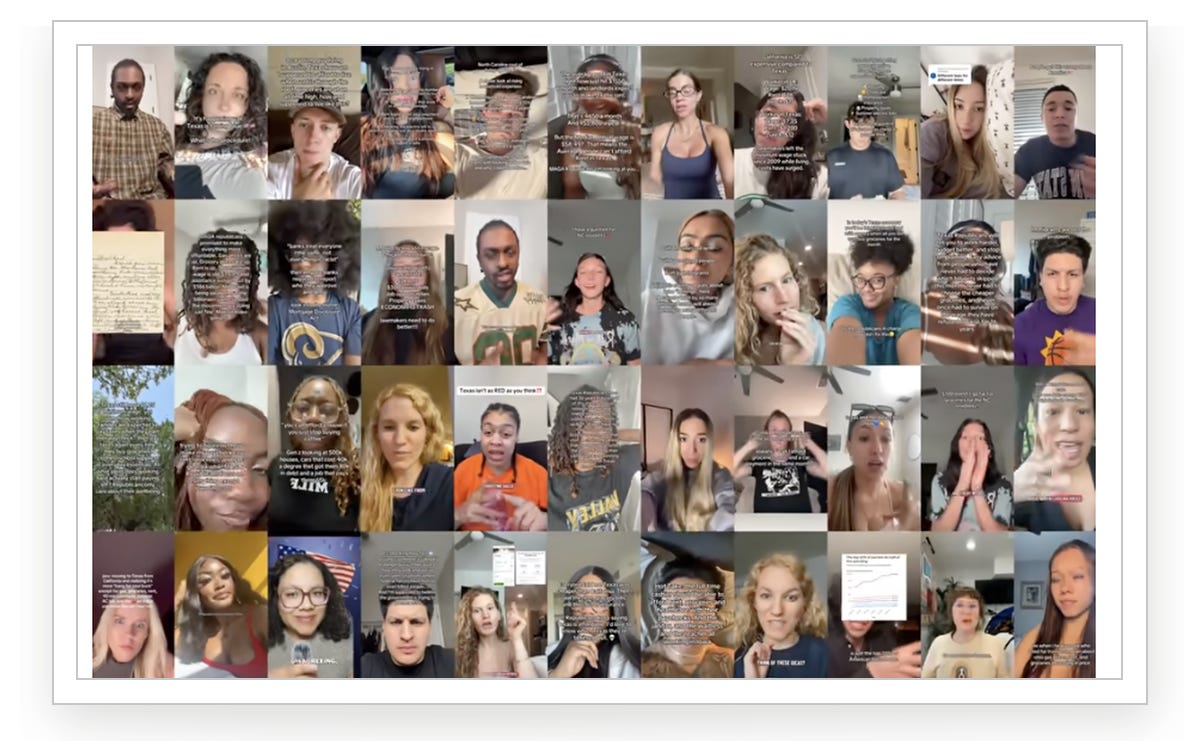
In round one, the Times discovered that famous progressive influencers were taking medium-sized sums of money to praise politicians (like $15K-$25K per post). This month, reporters Ken Bensinger and Stuart Thompson uncovered something far more sinister: unfamous influencers are taking small sums of money to praise politicians.
Instead of paying one celebrity $25,000 for a single video, political campaigns have figured out they can pay a hundred nobodies $25 apiece and carpet the internet with slop. Functioning, as the Times puts it, “more like birdshot than a single bullet.” The industry even has a name for the nobodies: “user-generated content,” or the inevitable acronym U.G.C., which can be translated from Latin as “we got a guy but he only takes cash.”
Drew Levin, co-founder of a company called SideShift that runs one of these marketplaces, recently explained the business model on a podcast: “Why spend $1,000 on one video, when you can spend $1,000 on 30 videos?” This is the Costco theory of democracy. Buy in bulk! The American voter now comes in a 30-pack. “People are sick of paying the insane pricing that typically comes with influencer marketing,” Levin said. Adjusted for inflation, democracy is getting cheaper.
The Times profiled Drew (no relation to Drew Levin). Judging from his TikTok feed, Drew was a young man living near Dallas, being crushed by his grocery bills, barely getting by, and spending most of his time searching for thrift store discounts. His video comparing the cost of living in Texas versus California was viewed nearly 3 million times.
But there was just one teensy problem: “Drew” was actually named Alex Forrester, from Utah, currently residing in Florida. In June, he posted a confessional, later deleted, explaining: “All of it was paid for. I don’t even live in Texas!” This was followed by an expletive, which I like to think was directed at the gods of the algorithm.
Drew (aka Alex) was one of more than 100 creators paid up to $30 a post —later cut to $25, times being tough— by a Democrat-aligned group called Project Bullhorn, which claims it wants to combat right-wing dominance on social media. Okay. The Times dryly noted that “the affordability crisis apparently hit Project Bullhorn as well,” which is the funniest sentence the Times has written all year, and I suspect they meant it to sting.
According to the Times, only a third of Project Bullhorn’s affordability creators actually live in the states they are posting about. One “Austin, Texas born and raised” man complaining about rent and gas turned out to be Harvey Whitehead of Leicestershire, England, whose British accent the Times described as “unmissable.” Another “American” affordability crusader lives in Ontario, Canada.
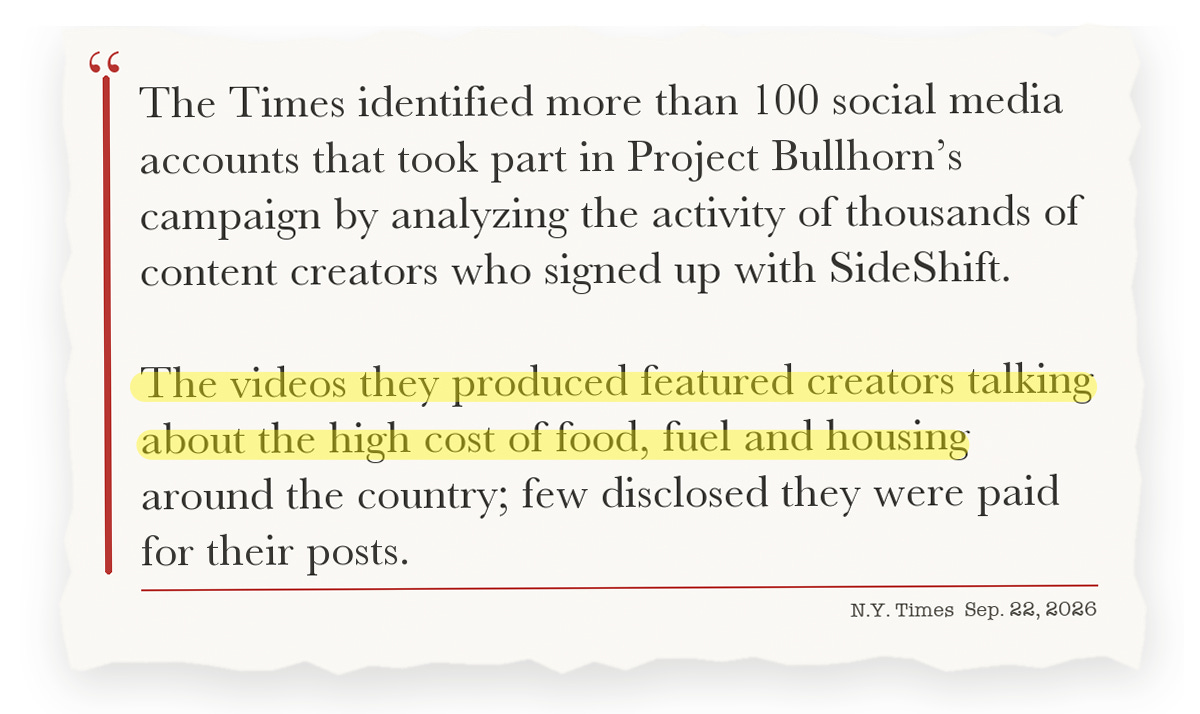
And we wonder why Americans feel like the economy is terrible even though it is booming. The vibes are coming from inside the house. Headline from Investopedia, May:
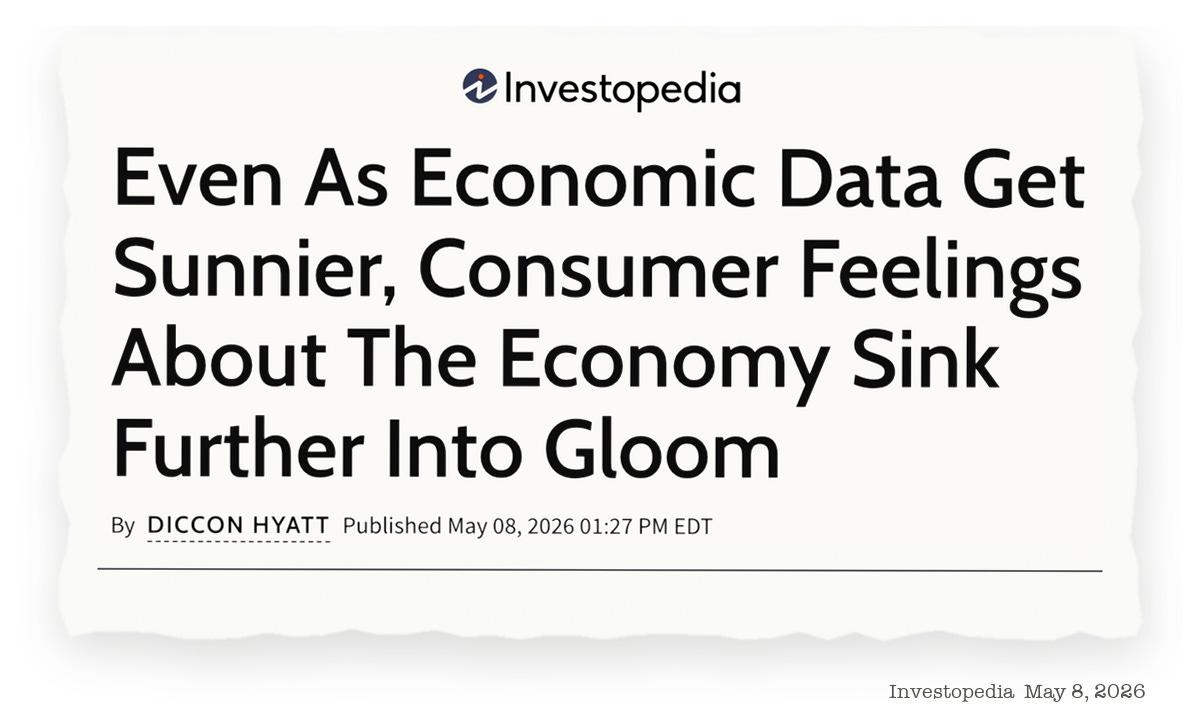
“Stocks are booming, unemployment is low, businesses are raking in record profits,” Investopedia reported, “and people hate the economy more than at any other time in history.” Weird.
So. To summarize the utter state of American political discourse: Democrat-aligned groups pay Englishmen to pretend to be Texans so they can complain about the price of groceries to an AI algorithm. To “help combat Republican social media dominance.”
🔥 If you want to get in on the action, it’s easy! A few clicks and you can just... sign up online. The marketplaces advertise openly. On Whop, a “social commerce platform,” you can earn $3 per thousand views for clipping videos of Pierre Poilievre, $2 per thousand for a member of the Greek parliament, or $1.50 per thousand to elect Mike Minogue, the Republican nominee for governor of Massachusetts, with a maximum payout of $150 per post (roughly 0.001 percent of the $12.7 million Minogue has spent on television ads).
On Drumbeat, another marketplace, recent gigs included opposing the SAVE Act at $250 a post, complete with scripted talking points, and promoting the idea that extreme heat is a political problem (not a personal one).
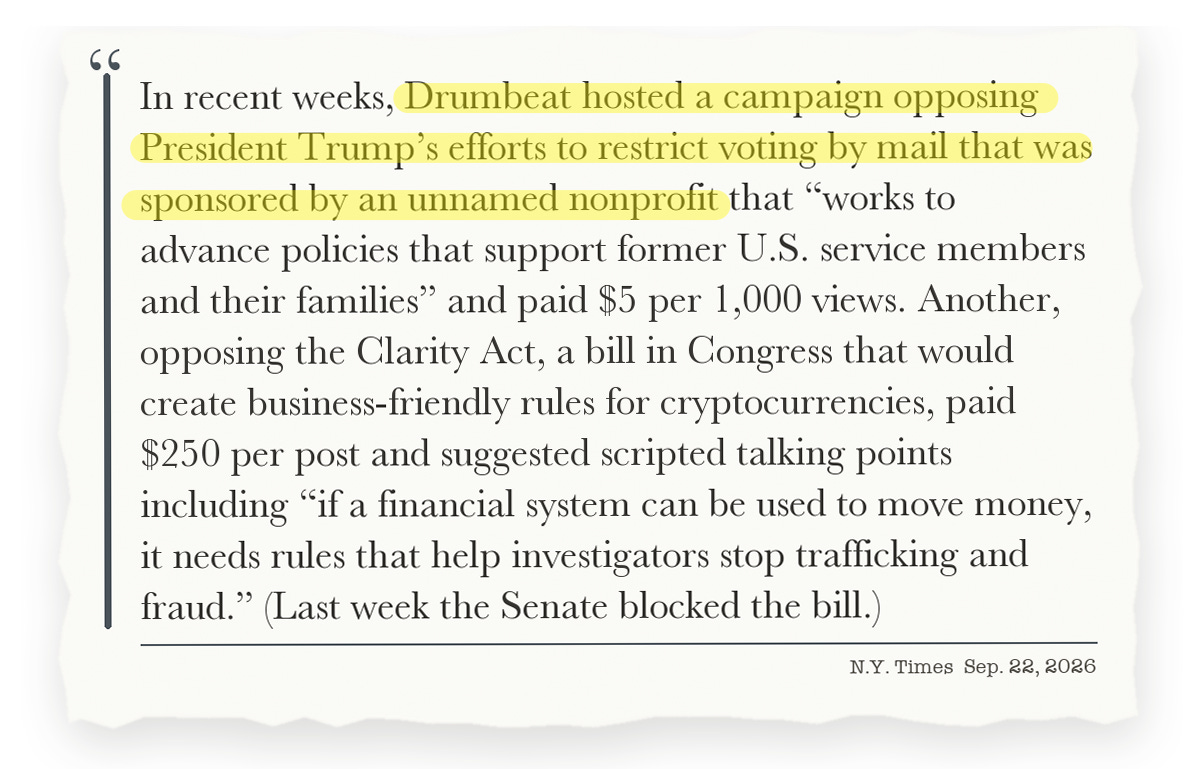
People First, yet another marketplace, offered $300 or more per post for a campaign called “Protect What’s Human” demanding “real rules on A.I.” The only requirement was that creators self-verify they had “a personal perspective or experience” related to AI. In other words— the honor system! Applied to professional pretenders.

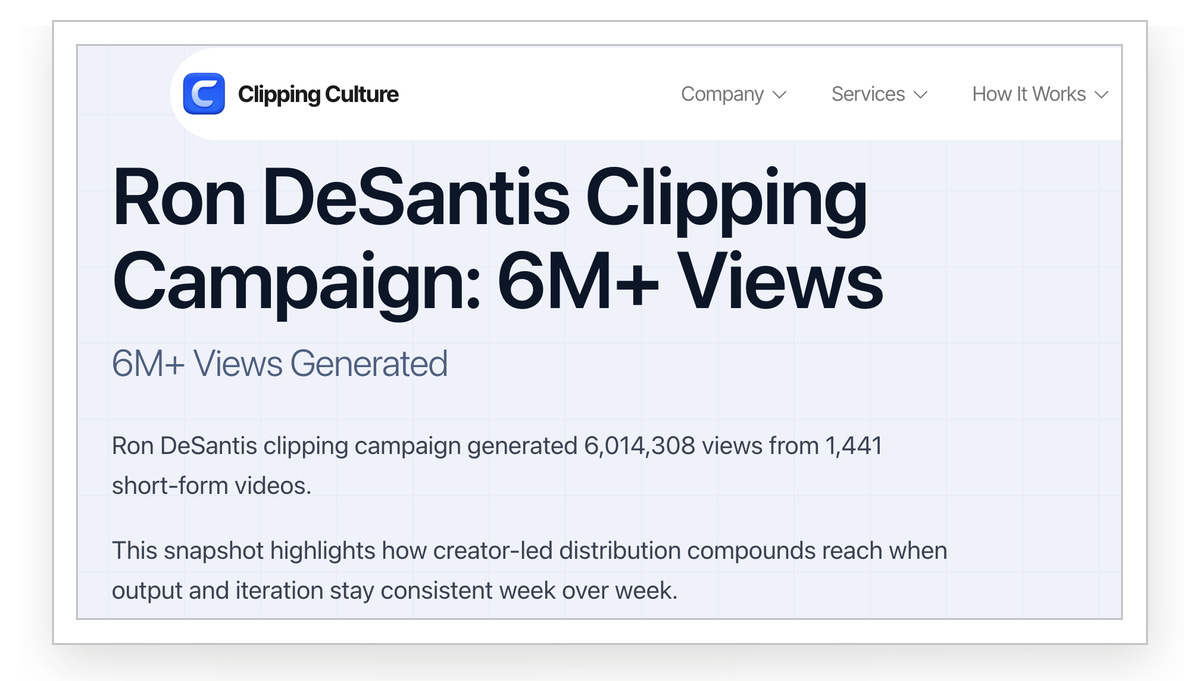
Republicans do it too, though on a smaller and somehow more embarrassing scale. A clipping campaign for Gov. Ron DeSantis paid $1.50 per thousand views with scripted captions like “DeSantis not holding back 🔥” and one golden rule: “Can’t make Ron look bad.” The agency behind it bragged on its website of getting the Governor 6 million views across 1,441 videos, a number of them posted by accounts based overseas, including one in Pakistan, which is not normally known for its abiding affection for the Sunshine State’s chief executive.
At least Republicans have an excuse. When corporate media ignores your achievements, you need some way to get the word out.
The article’s only other conservative example came from Los Angeles. Republican mayoral candidate Spencer Pratt paid two clipping firms more than $55,000. One of them, Cliphaus, boasts of a “network of 50,000+ independent creators” and 50 million views, with creator accounts traced to India, Turkey, and the Philippines. Its founders explained that clients can, if they want, check a box for U.S.-only accounts, “and when it comes to most clients, this is the case,” which is exactly what you say when it is not the case.
But to be fair, since fairness is my middle name (it isn’t), the Democrats are running far ahead. Project Bullhorn alone fielded a hundred-plus accounts. The marquee ‘swarm campaigns’ the Times detailed —the affordability carpet-bombing, the AI-regulation push, the SAVE Act opposition— were all progressive operations.
The Republicans have DeSantis tribute clips and a reality star’s long-shot mayoral bid, which is like comparing a brigade of U.S. Marines to the Pickettville Civil War reenactment society.
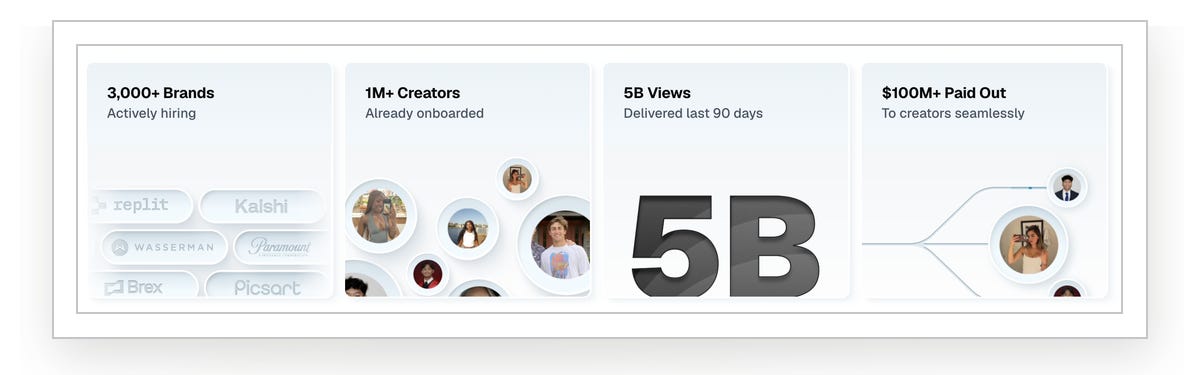
🔥 Naturally, the Times consulted an expert. (What would we do without experts?) In this case, it was the distinguished Samuel Woolley, a University of Pittsburgh professor, who solemnly declared, “This is digital astroturfing, plain and simple.” Thank you, professor. Next, the Times will consult a lab-coated scientist to confirm that the astroturf is not real grass.
And then there was Reporter Bensinger’s comment on his own article, the follow-up to his famous first comment from his August piece —“As the midterms approach, social media is overflowing with influencers propping up candidates for political office…”— which frankly should have headlined both columns. (Why bury this in a comment? Why not put this analysis in the article? Oh, never mind.)
Anyhow, this time Bensinger insightfully commented that the digital astroturf campaigns “fools the social media algorithm into believing it’s organic,” creating “a manufactured echo chamber.” Put simply, this brand-new industry only exists because people need to trick the AI running the platforms into thinking the campaigns are human.
So here we see AI creating jobs. Ha! Irony.
“Once you’ve seen it, you can’t stop seeing it,” Bensinger continued. We can only hope. Now consider this: What the algorithm giveth, the algorithm can taketh back. One change to the code and the entire industry could vanish overnight. It’s not exactly job security, in case you were considering a late career change.
🔥 Can anything be done? Well, first of all, we can all stop reacting emotionally to random posts by people we don’t know on our scrolling feeds, because they are probably fake. I hate to break this to anyone, but that is not actually a cute, fresh-faced 19-year-old coed in a revealing tank top who’s angry about the price of diesel. It’s actually a deeply cynical 43-year-old Nigerian scam artist who has completely upgraded his game from sending us badly worded emails about deposed princes who need a little help “transferring gold” to the US.
It’s still a scam, though. Just a better-looking one.
Not one week ago, on September 19th, California Governor Gavin “NGO” Newsom signed AB 1130, giving regulators power to fine influencers up to $5,000 per undisclosed paid post and refer cases for misdemeanor prosecution. (Texas also has a disclosure law.)
AB 1130 replaces a prior 2023 disclosure rule that carried no penalty whatsoever— a law without punishment, which in scholarly legal circles we refer to as a suggestion. The new bill was inspired by billionaire Tom Steyer’s $200 million gubernatorial faceplant, during which his campaign paid dozens of creators who frequently forgot to mention it. (Steyer’s campaign was later cleared when the creators added obligatory disclosures after the election. Terrific!)
Regulation seems like everyone’s knee-jerk initial idea. But there are problems. First up is the good old First Amendment. The Supreme Court has protected anonymous political pamphleteering (McIntyre v. Ohio) and donor anonymity (Americans for Prosperity v. Bonta), though it has generally allowed disclosure requirements under strict scrutiny. So maybe.
But it is inevitable that, once they actually get around to prosecuting someone, some influencer’s NGO-appointed lawyer will become the test case, and good luck to him. But second, and even more to the point: how do they enforce it? Even if they wanted to —there’s no evidence of this at present— how on the good Earth do they plan to collect a $5,000 fine from a man in Leicestershire?
California’s regulators can barely find Sacramento. They’re supposed to police Pakistan? They have zero jurisdiction there. So the current regulatory efforts are mere political theater.
🔥 Real people who have been busy posting on Social Media for free are reacting to this news. One Instagram creator, having absorbed the Times’ reporting, called it “a rented mob with a ring light” and “fake news wearing a rented person’s face.” That was more aptly put than anything in either Times article, and she did it for free, which in this Wild West digital economy makes her the real victim.
Is this an influencing arms race? Obviously. Both sides, Democrats and now Republicans, are building the machines. The marketplaces are open for business. The algorithms are rewarding volume, and nobody —no law, no norm, no code of ethics, no pinkie promise, not even a Saturday hearing of the House Agriculture Committee— can stop it. The Times will probably publish installment three right around the midterms, installment four before 2028, and each time the reporters will sound freshly shocked.
But there’s one thing the Times keeps dancing around: the detail hiding in plain sight between the lines of every paragraph. These small-time hustlers are not called “persuaders.” They are not called “advocates” or “operatives” or “fellow citizens with authentic grocery concerns.” They are called influencers. It is literally right in the job title. We have built an entire profession whose title is also the confession, and then the Times acts surprised when the confession turns out to be true.
Cough up the black pill. It’s not real.
The article mentioned somebody was paying influencers $1,500 per video to assure us the electoral system is working correctly. But Reuters just checked.
🔥🔥🔥
Next, before I start ripping Reuters a new one, a word of credit where it’s due. Reuters has done something no other Corporate Media outlet has done: it actually counted. Its reporters reviewed official records from a dozen states and produced the first nationwide tally of non-citizens mistakenly added to America’s voter rolls — a tally that, Reuters notes, “has not previously been reported.” Give them credit. They did the reporting, and yesterday ran the sensational headline, “How US states mistakenly added 30,000 non-citizens to voter rolls.”
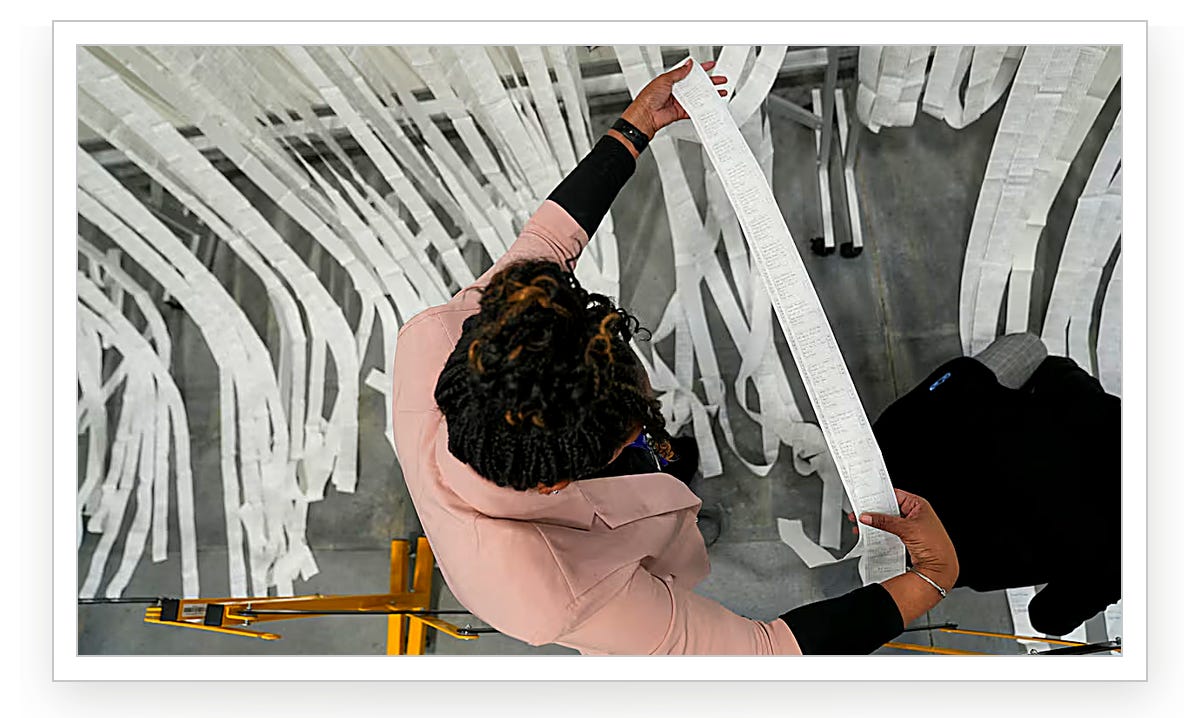
According to Reuters’ own investigation (and we can assume they weren’t looking enthusiastically), since 2000, more than 30,000 self-declared non-citizens have been added to voter rolls in twelve states, red and blue alike, ‘mostly’ through ‘software glitches’ and ‘clerical errors’ at driver’s license agencies. That’s only the type they noticed most.
In New Jersey, a “technology glitch” added about 6,600 non-citizens between June 2023 and June 2024. Every one answered “no” when asked if they were citizens, and the computer registered them anyway, like a bouncer who checks ID, reads them carefully, and waves people in regardless. In Virginia, more than 4,500 self-identified foreign nationals turned up on the rolls in 2025 alone. In California, the DMV mistakenly registered as many as 1,500. In Oregon, officials registered hundreds of immigrants who presented foreign passports and birth certificates —they walked in holding documentary proof they weren’t citizens and walked out registered to vote— plus hundreds of American Samoans, who are U.S. nationals but not citizens, a distinction the Portland DMV apparently never covered in orientation.
Despite all the confident conclusions of non-problemness, Reuters only examined data from twelve states. At last count, there are fifty. Feel free to extrapolate from “above 30,000.”
Reuters also conceded, in passing, that “the numbers are inexact because state data is often tentative and subject to revision”— a sneaky way of admitting the real number could be wildly higher. Nineteen states plus D.C. shower driver’s licenses on illegal immigrants, and nearly every DMV in America doubles as a voter-registration office thanks to Democrats’ federal motor-voter laws. So.
If you ever wanted a corporate media article to best illustrate the stages of progressive denial, this is that article.
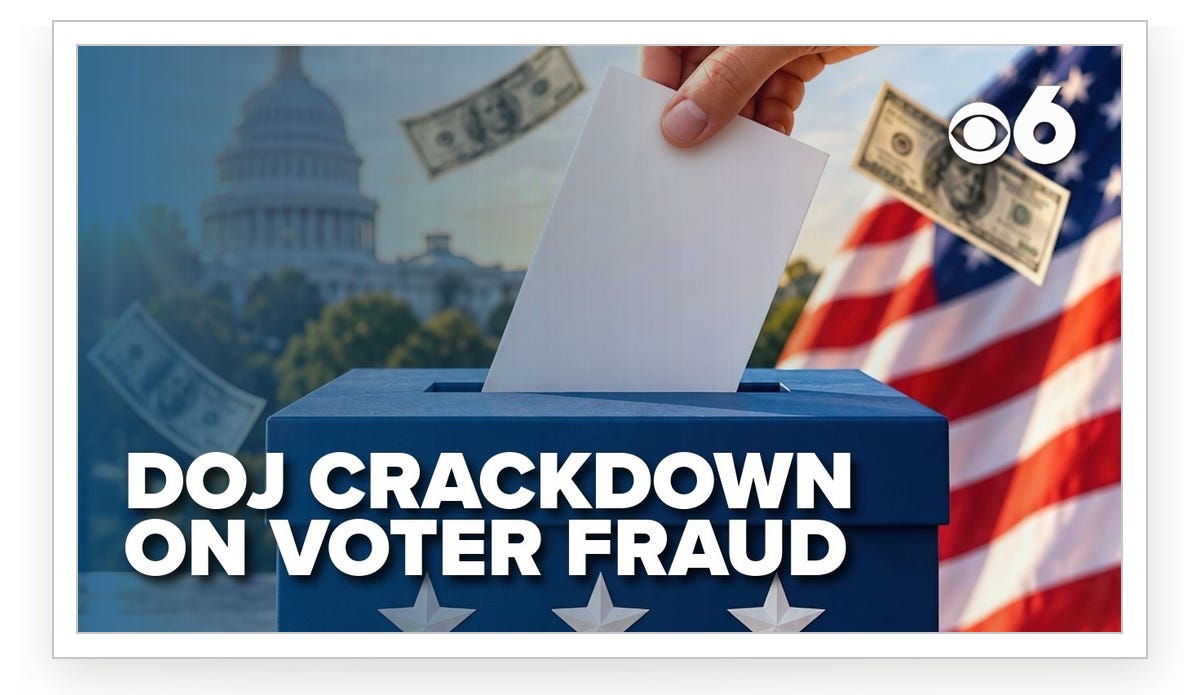
🔥 Stage one: it’s not happening! This stage lasted decades. Corporate media spent years insisting non-citizens don’t register and don’t vote, and anyone who said otherwise was a flat-Earth conspiracy theorist. As White House spokeslady Lauren Bis put it, “after decades of the media denying that non-citizens register and vote in our elections, they are finally being forced to admit after a flurry of recent arrests nationwide that it does happen.” Stage one is now in the rearview mirror. Buh bye.
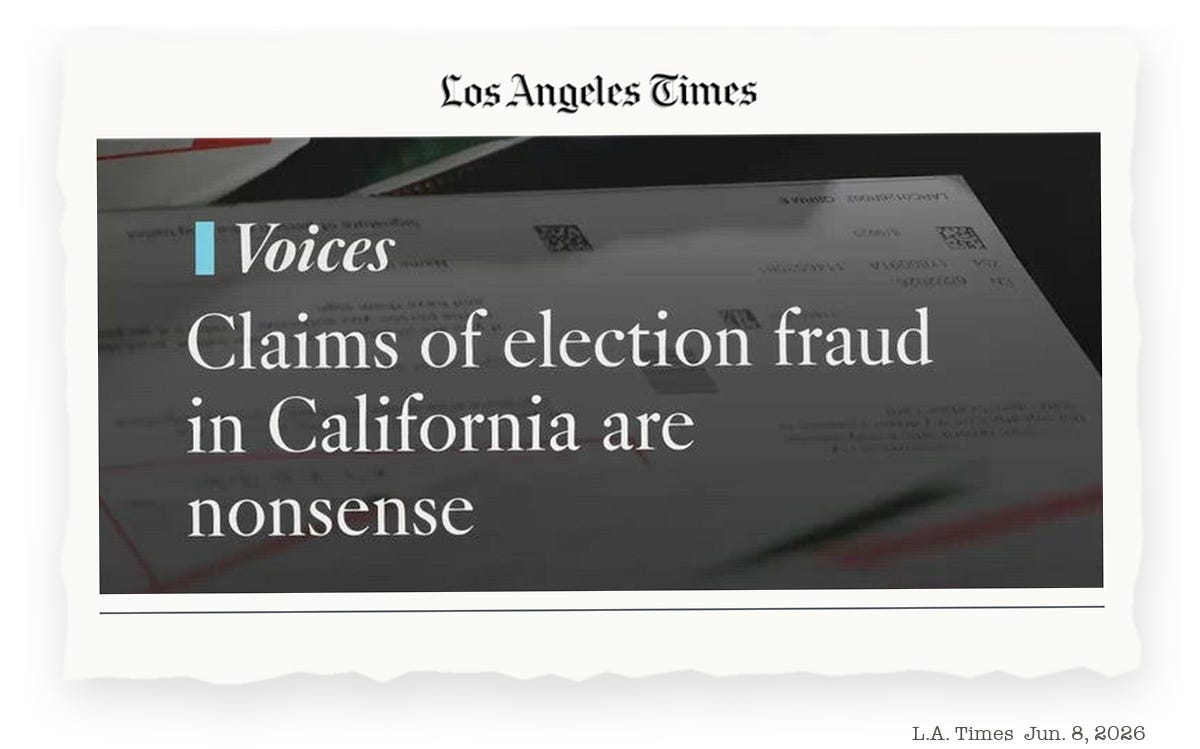
Stage two: okay, it’s happening, but rarely. Thirty thousand self-declared non-citizens since 2000— but look, there are 170 million registered voters, so it’s “too small... to impact elections,” according to “experts” who were unnamed, unquoted, and untroubled by American electoral history. “Above 30,000.” Above! Meaning, at least 30,000, from twelve states, from admittedly inexact data. That’s a floor disguised as a ceiling.
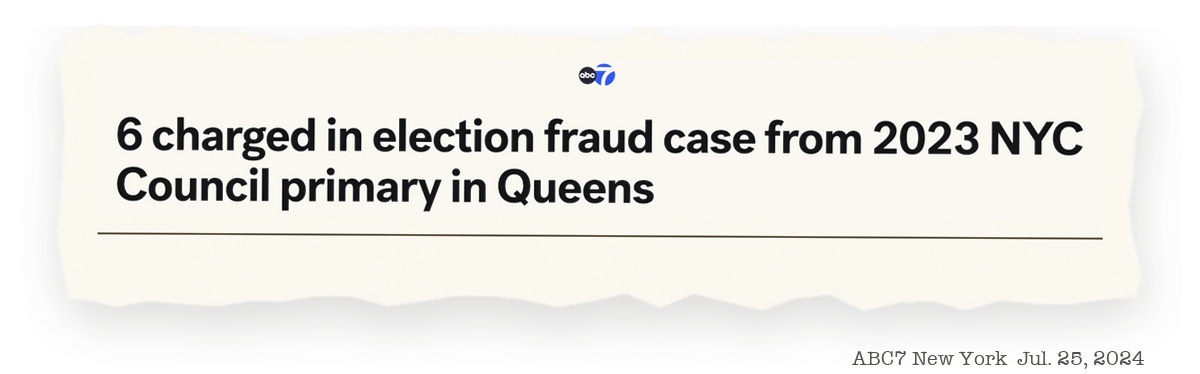
It’s like finding six cockroaches in the kitchen and reassuring your wife the infestation is mostly little ones and only “above a half dozen.” Compared against 170 million voters, 30,000 sounds tiny— until you remember that American elections are routinely decided by hundreds of votes. The presidency turned on 537 votes in Florida. A House seat in Iowa turned on 6. A Virginia legislative seat in 2017 ended in a dead tie and was settled by pulling a name out of a bowl— in Virginia, the same state that just found 4,500 foreign nationals on its rolls in a single year.
So… ‘small’ compared to what? Compared to the margins that actually decide elections, 30,000 isn’t small. It’s a landslide.
Stage three: okay, it’s not rare, but it’s also not THAT big. “This is not a problem,” Elaine Kamarck of the Brookings Institution confidently said. “There’s just no evidence that massive numbers of non-citizens are voting.” To be a problem, there must be massive numbers. Not “numbers.” Not even “a lot.” Massive numbers. Thirty thousand documented cases clears every bar except the new one they just invented. Behold the beauty of the moving goalpost: it never stops moving. So the kick never counts. (Sorry, Charlie. But keep trying!)
Tell us, professor — how many is massive? A hundred thousand? A million? Name the number, or admit there isn’t one.
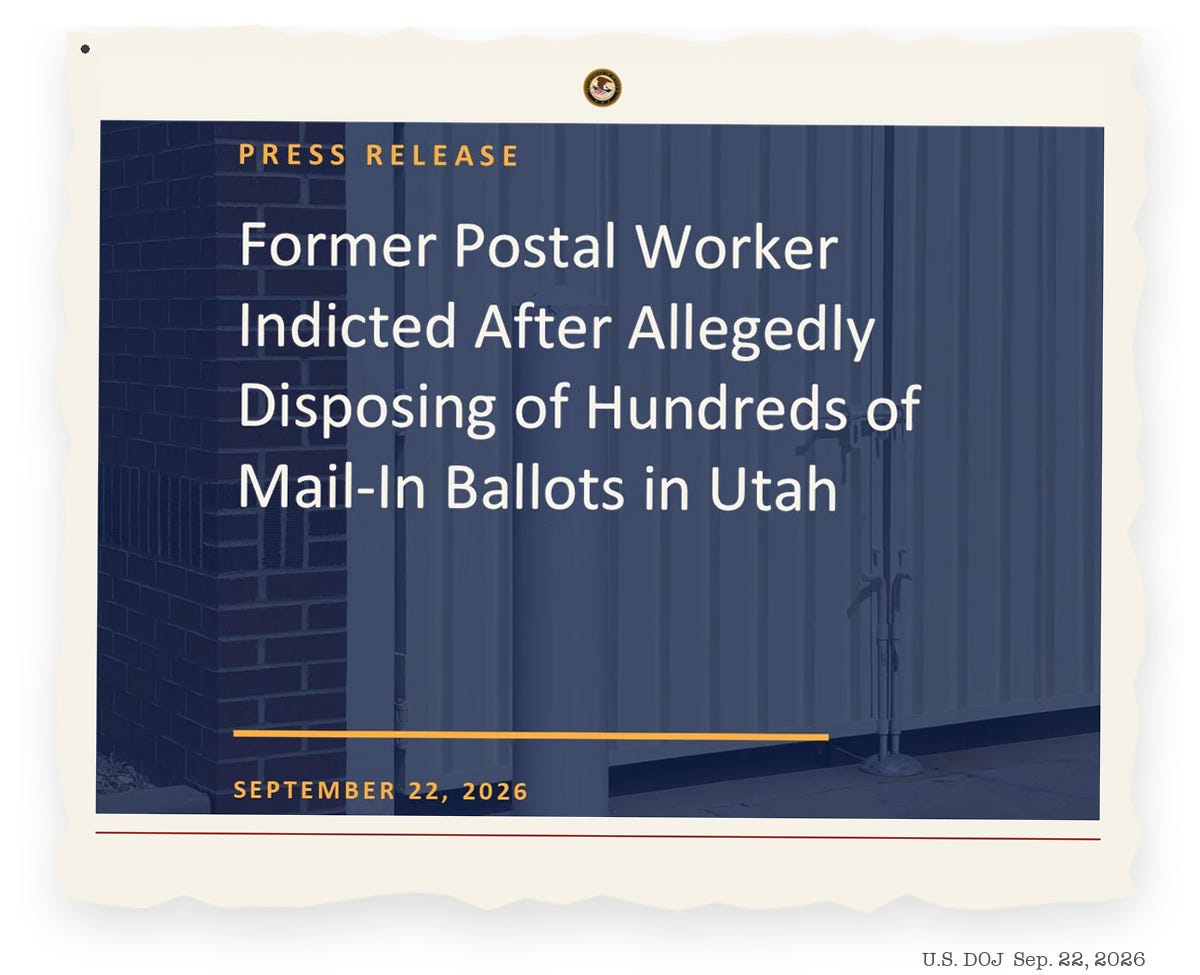
Stage four: okay, it’s happening, but fighting it is no use. Asked whether the SAVE America Act —proof of citizenship to register— would help prevent these mistakes, David Becker of the Center for Election Innovation & Research said it is “unlikely” such a bill would help. Unlikely. Which means, on the other hand: it might. CEIR, incidentally, is the group whose data Reuters used to find the 30,000 in the first place. The man who counted the escaped horses is now assuring us that locking the barn wouldn’t have helped anyway.
Right after confidently quoting the lack of any problem because there’s no evidence (yet) of “massive numbers,” Reuters vomited up this astonishing admission: “Reuters was not able to determine how many of these non-citizens actually cast a ballot.” They don’t know! They admit they don’t know. But they’re certain it didn’t matter. The votes might be uncountable; but logic is not.
In what can only be described as a self-own, in an article documenting 30,000 cases of non-citizens landing on voter rolls from only twelve states, Reuters sneered that President Trump has claimed “without evidence” that non-citizen voting is widespread. Without evidence— in an article that is, itself, evidence. I really can’t make this stuff up (though Reuters keeps trying).
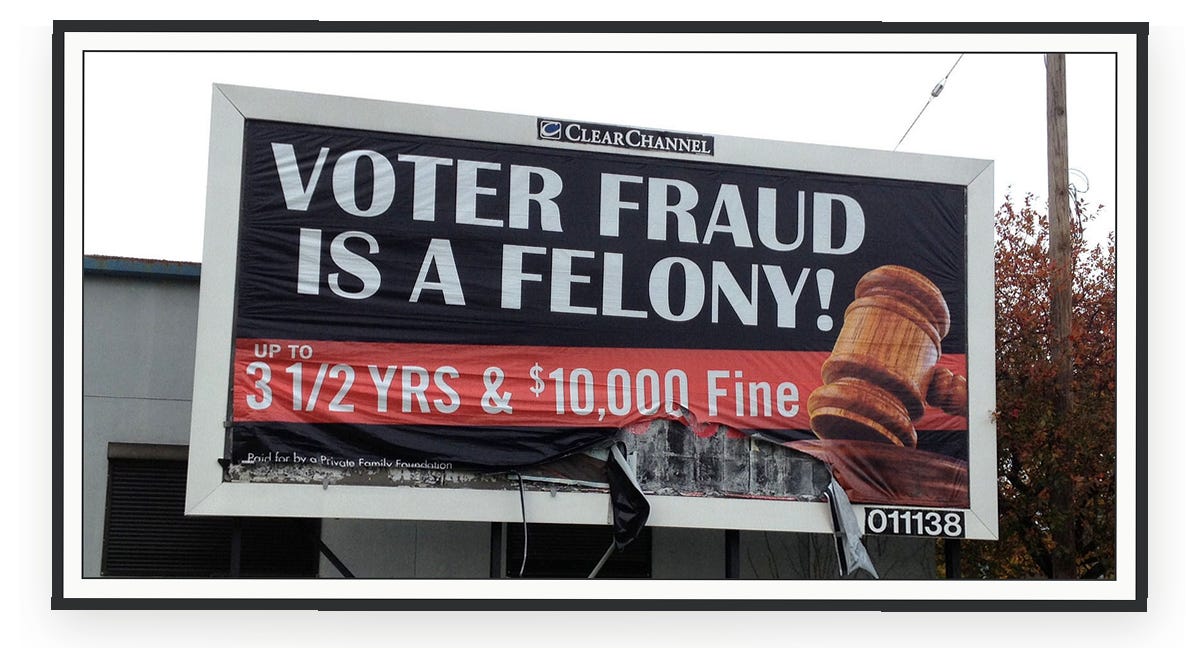
Just before one collapses from argumentative exhaustion, one wonders what they would consider to be evidence, if not arrests, prosecutions, and 30,000 confirmed illegals on voter rolls. If the entire cast of CSI testified, would that work? Do we need it confirmed by the Pope?
Finally, before the 2024 election, Iowa had announced 2,000-plus self-reported non-citizens on its rolls; six months later, after diligent re-investigation, it had shrunk the number to 277, and officials confirmed that 35 non-citizens cast ballots that were counted. Thirty-five. Even accepting that as true, Iowa is a state where legislative races are often decided by double digits. But Reuters assures us it isn’t massive.
In an article packed with reassuring numbers, there was one conspicuously missing number: how many is enough? A hundred thousand? A million? Twenty million? Give us an exact number. Then explain it. Because we all know the stages will keep expanding forever, just like the universe —it’s not happening, it’s rare, it’s not massive, the fix won’t work, it’s actually a good thing, there goes Proxima Centauri!— and the only number that will ever be enough is the one that is apparently as uncountable as the stars in the Heavens.
The article stank. It did everything it could to minimize the findings. But to be fair— Reuters did publish it. It feels like the truth is trickling out faster and faster now, like somebody finally found the valve.
Have a terrific Thursday! Refresh your email folder tomorrow morning for the next exciting installment of C&C essential news and caffeinated commentary.
Don’t race off! We cannot do it alone. Consider joining up with C&C to help move the nation’s needle and change minds. I could sure use your help getting the truth out and spreading optimism and hope, if you can: ☕ Learn How to Get Involved 🦠
How to Donate to Coffee & Covid
Twitter: jchilders98.
Truth Social: jchilders98.
MeWe: mewe.com/i/coffee_and_covid.
Telegram: t.me/coffeecovidnews
C&C Swag! www.shopcoffeeandcovid.com
Suicidal Empathy
Michael Savage wrote Liberalism is a mental disorder, no truer words have ever been spoken.
There’s a bar that opened in Massachusetts called The Last Ditch Bar. It was 3 woke communists women that took out a “loan” for 50 thousand dollars and opened their dream bar where if you couldn’t afford it the drinks were free. Oh yah, wearing an n-95 mask is mandatory 7 days a week.
Well 2 of the 3 partners decided they didn’t want to run a bar any longer so the 3rd partner got stuck holding the bag of sh-t. One of the partners that left decided to go to clown school. The remaining partner said she is now working 4 jobs, has become homeless, is living in her truck, is behind on the bar rent and is about to be evicted. This is socialism in a nut, and I mean nut, shell.
Well because she is complaining about working 4 jobs being homeless, credit has gone to sh-t, the other 2 partners and thousands of other insane woke socialists are bashing her saying she’s a racist, capitalist pig.
Socialism is wonderful until you run out of someone else’s money (Margaret Thatcher). Funny I don’t see any liberal communists stepping up with suitcases of money to bail out the socialist bar. Maybe AOC could donate 7 or 10 shifts a week getting her old job back as a bat-back? I don’t think so!
It’s incredible how these socialists have this mental disorder. I believe it’s called suicidal empathy. America is 40 trillion dollars in debt because of these socialist ideas that no one has to work, no one has to produce anything, we’ll just print money and spread it around because we are such virtuous people. Capitalists are such pigs. God help us if these communists get back into power.
Here’s a great old fable that describes America and socialism to a tee.
There once was a man who owned a wonderful goose.
Every morning, the goose laid for him a big, beautiful
egg — an egg made of pure, shiny, solid gold. Every
morning, the man collected golden eggs. And little by
little, egg by egg, he began to grow rich. But the man wanted
more. “My goose has all those golden eggs insider her,” he kept
thinking. “Why not get them all at once?” One day he couldn’t
wait any longer. He grabbed the goose and killed her. But there
were no eggs inside her! “Why did I do that?” the man cried!
“Now there will be no more golden eggs.”
Now America will be unable to help anyone!
✝️✝️✝️
First of all, then, I exhort that petitions and prayers, requests and thanksgivings, be made for all men, for kings and all who are in authority, so that we may lead a tranquil and quiet life in all godliness and dignity. This is good and acceptable in the sight of God our Savior, who desires all men to be saved and to come to the full knowledge of the truth.
— 1 Timothy 2:1-4 LSB
✝️✝️✝️