

Good morning, C&C, it’s Saturday! In the Weekend Edition: Trump blows afforability out of the water with another massive announcement on pharma prices; president teases insurance concessions coming soon, too; HHS cracks down on sponsors of legal immigrants who go on welfare; peak FAFO story turns out in Elon Musk’s favor, signaling great momentum; blast from Elon’s past highlights historic irony; Rogan platforms undeniable ivermectin story; Epstein disclosure day disappoints critics but puts a stake through Bubba’s vampiric heart; great inflation news as numbers moving faster than the most optimistic experts predicted; and the Times tries (and fails) to define ‘affordability.’
🌍 WORLD NEWS AND COMMENTARY 🌍
💉💉💉
Here is why Democrats will lose the affordability war. Yesterday, Newsweek ran a terrific story headlined, “Donald Trump scores big win on Medicare, Medicaid drug pricing.” In a dramatic White House press conference yesterday afternoon, the President announced that nine more major pharmaceutical companies will join his “most favored nation” drug pricing policy, “bringing down the price of prescription drugs” for Americans. Affordability!
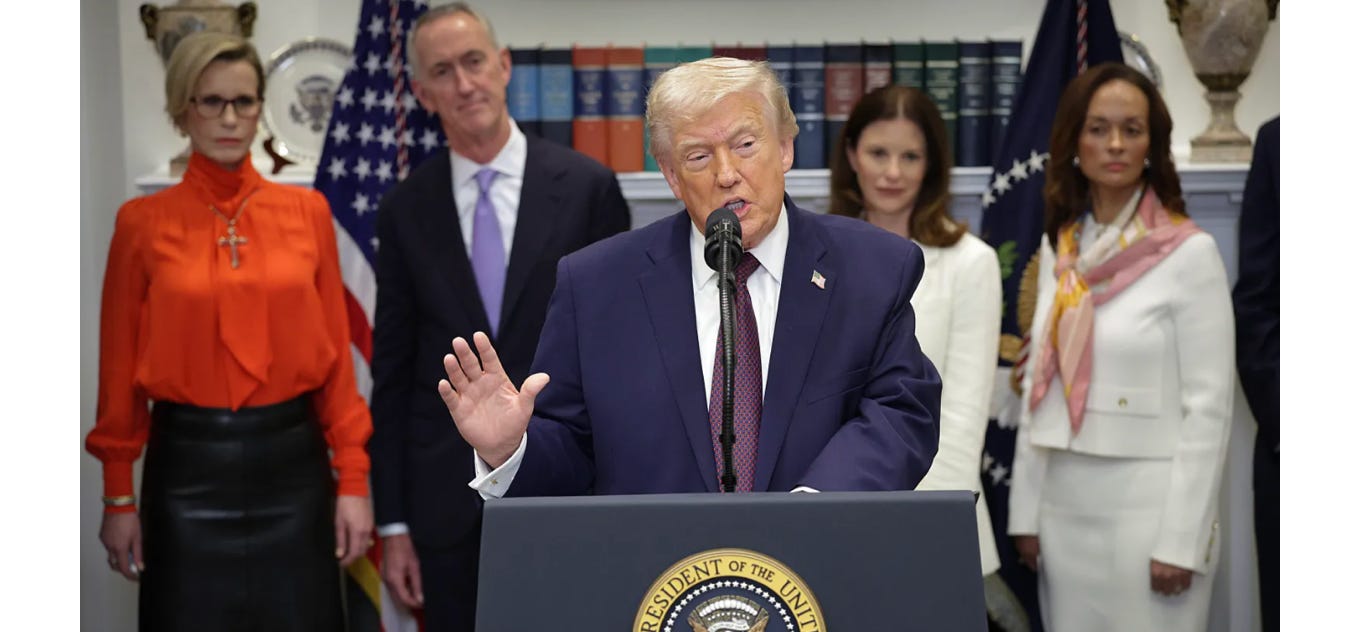
“The deal,” Newsweek reported, “ensures that drugs will be sold at reduced prices, many at the same price as overseas, and purchased through the new TrumpRx platform due to launch in January.” In other words, now that the Democrats have pushed all their midterm gambling chips onto the “affordability” square, President Trump is days away from opening up a website for people to buy common drugs at rock-bottom prices— a website with his name right in the URL.
It requires little imagination to forecast that nearly every American over 18 years old will use that website at one time or another. They’d better have fast servers.
The program will lower some popular drug costs to below co-pay prices (but only if the drugmakers give their drugs long, ridiculous-sounding, and difficult-to-pronounce names. Oh, wait.). Standout examples include:
Boehringer Ingelheim will reduce the price of its Type II diabetes medicine, Jentadeuto, from $525 to only $55.
Merck will reduce the price of its diabetes medication, Januvia, from $330 to $100.
Sanofi will reduce the price of its prescription blood thinner, Plavix, from $756 to $16, and its insulin products at $35 per month’s supply.
Those were remarkable. But one drug captured the headlines— a medication used by millions of Americans: Eliquis, the most prescribed blood thinner on the market. Get this (and I am not making this up): Bristol Myers Squibb and Pfizer agreed to provide Eliquis for free to all Medicare patients. (Pfizer has certainly made a lot of concessions this year so far. It’s almost like Trump has something on Pfizer. I couldn’t say what, exactly.)
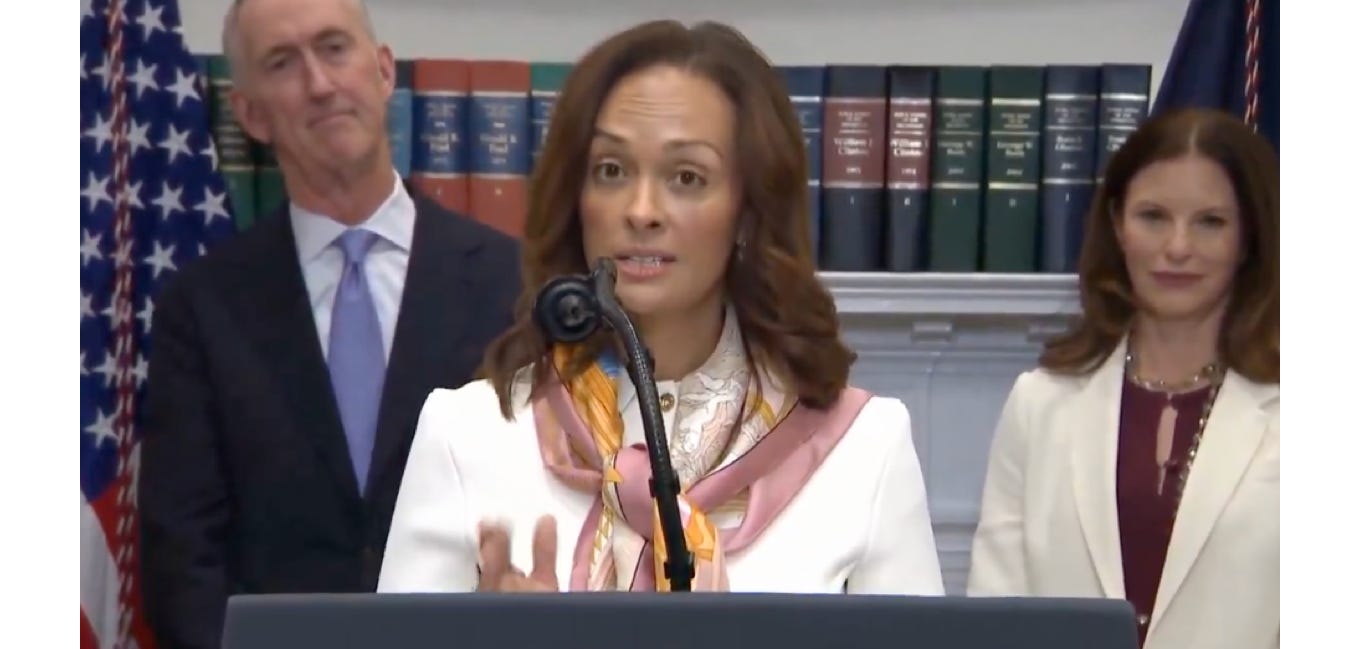
CLIP: Bristol Myers Squibb delivers hostage video (0:37).
It’s not just prices. Bristol Myers Squib also agreed to donate 6.5 tons of Eliquis to the national security stockpile, which FYI is probably a fatal dose, also for free, and to invest $40 billion in new U.S. R&D and manufacturing. (Is it my imagination, or in that clip did the BMS pharma executive not smile once during her joyful announcement of pharmaceutical largesse? I mean, look at that face.)
Under every previous Administration, these announcements would trumpet vast new contracts with pharma to sell drugs to the government at insanely profitable prices. Not give stuff away. Not promise to spend billions on new manufacturing. But now we have a dealmaker in chief.
President Trump humbly explained it wasn’t even him. The drugmakers agreed to give away their most popular, most profitable drugs for free or a tenth of the original price —in exchange for nothing back— out of patriotism. “The pharmaceutical companies were difficult, but they also love our country, they knew it was unfair,” President Trump explained yesterday. Filled with a boundless love of country (and a keen sense of self-preservation), the pharma CEOs got on board the affordability express.
💉 Having tackled drugs, Trump promised yesterday to start ‘negotiating’ with insurance companies and convincing them it is also in their best interests to lower their prices, just like drugmakers. These kinds of negotiating sessions can be intense, can sometimes strain the boundaries of professionalism, as seasoned bargainers play ever tougher cards, and often include post-session stops at the urgent care center.
Big drugmakers might be the most reviled industry in the nation, and they clearly knew nobody would listen to them whine about being treated unfairly. Nobody cares about how, if they stop overcharging Americans, then their vast pharma profits might shrink, or how it’s really the middlemen who make the big bucks.
Insurance companies squat with drugmakers in the same leaky boat of unpopularity. Nobody cares that Obama and Congressional Democrats made the rules of the game that insurance companies must play. People blame the insurers, probably because their profits have multiplied ten times. (See, e.g., Luigi Mangione.)

Democrats think that they have Trump over a barrel of expiring Obamacare subsidies, which until now had artificially lowered the prices for about 20 million Americans with “top-tier” plans. Corporate media is salivating at the chance to run twenty million separate tragic personal interest stories next year, informing everyone exactly how much more expensive insurance has become for, say, Sally Witherspoon from Topeka, Kansas, and how she can no longer donate $9 a month to help feed starving African children, and now, to afford her healthcare, must eat out of the same bowl as her least-favorite cocker spaniel.
But … what if Trump ‘makes a deal’ with the insurance companies for them, the insurance companies themselves, to subsidize the plans? And what if nothing actually changes, or policy prices even go down? Who wins then?
More than anything, Democrats suffer from a lack of imagination. They cannot see the possibilities that Donald Trump can. I am beginning to think the Democrats will ultimately regret having picked affordability as their big 2026 issue. They forget who they’re playing against. TAW.
🔥🔥🔥
“Am I,” Cain once innocently asked, “my brother’s keeper?” Until very recently, the answer was ‘no’ for the highly compensated commercial sponsors of foreign aliens resettled here under Biden’s various dumb plans. That may have changed yesterday. An article from the New American (selected because corporate media is ignoring the story) was headlined, “HHS to Immigrant Sponsors: Pay What You Owe for Immigrants Who Use Medicaid or Face Collection.”

Under various laws and programs, foreign citizens can ‘permanently reside’ in the U.S. as non-citizens. It’s not U.S. citizenship, but it’s not not citizenship, either. Biden used one of these programs, for example, to submerge midwestern towns with Haitians who can’t drive. (Ditto for Somalis and many other failed-state refugees.) The rules are complex and arcane, which is why Biden also paid lawyers to help the migrants.
One of the rules requires each permanent resident to have a sponsor, an individual who demonstrates sufficient assets and income to support the person if they ever become a financial burden on the state.
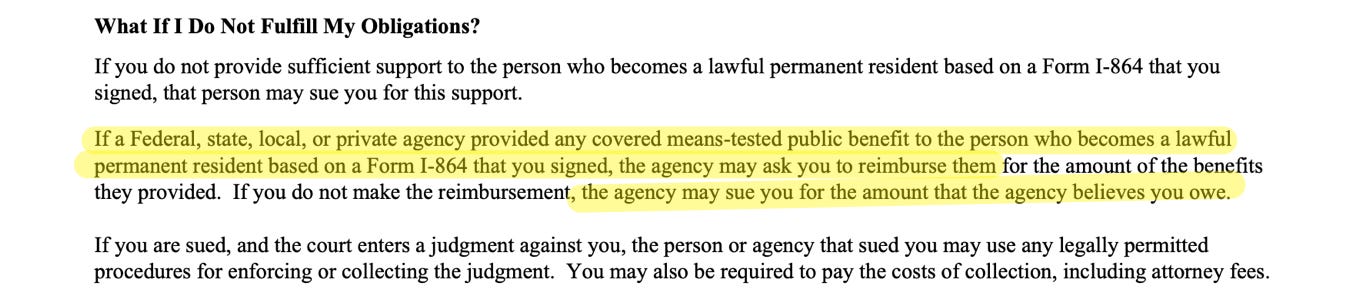
There’s even a sponsor form, the I-864, which includes a contract. The contract puts the sponsor on the hook for any welfare given to the immigrant by any local, state, or Federal agency. Here’s the relevant language from the form:
Right about now, you’re probably thinking this sounds great, and wondering why you never heard of it before. The reason is simple. The Democrats passed this law to ‘prove’ immigrants wouldn’t be a burden, and then promptly broomed it via their favorite tactic: selective non-enforcement. Two tiers of justice are better than one!
So far as I can tell from court records, the government has never before sued a sponsor. After all, the contract only says the agency “may ask for reimbursement.” May. Not “must.”
One imagines the interview. The sponsor, ready to sign, stumbles over the liability paragraph. He holds the pen, blinking, unsure, and looks up querulously at the free immigrant attorney. “Does this mean…” they begin to ask. They needn’t finish the sentence. The lawyer waves her cigarette airily and says, “don’t worry about that section. They never do anything about that.”
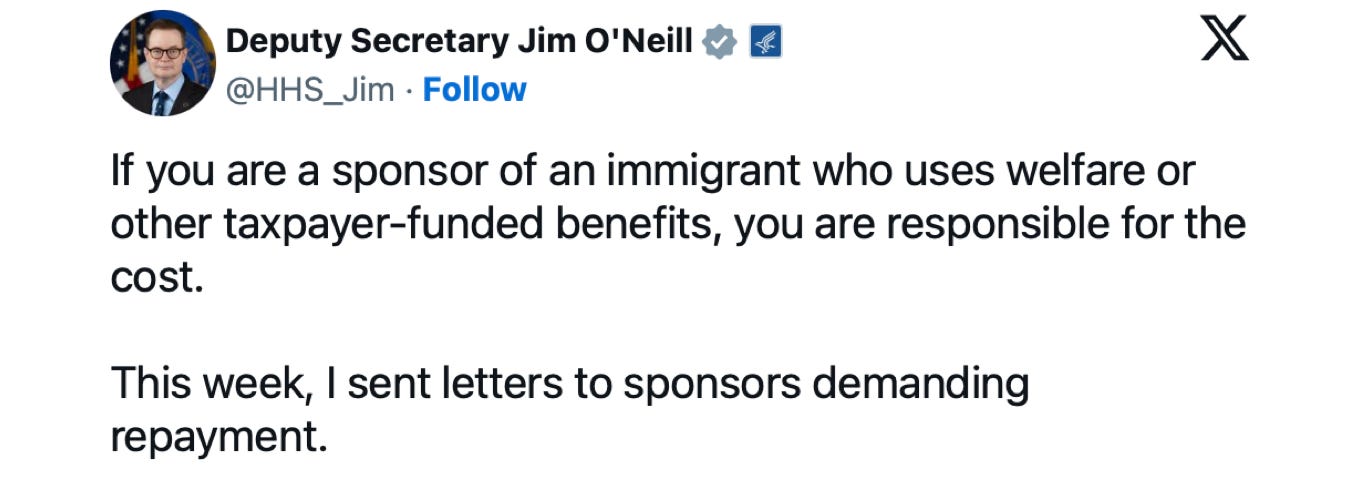
Well, yesterday, HHS Deputy Secretary Jim O’Neill —the same “men are men” official from yesterday’s C&C post— announced what may be the first demand letters sent since the law originally passed in 1996 under Bill Clinton. According to his tweets, Mr. O’Neill has begun dunning some sponsors for the cost of Medicaid used by their sponsored immigrants:
It’s that easy. Just enforce the laws already on the books.
Mr. O’Neill has been a very good boy this week. Santa is noticing!
🔥 🔥 🔥
The biggest FAFO story in human history has reached its inglorious end. It was also a major signal of shifting momentum. The New York Times ran the story below the headline, “Elon Musk’s 2018 Tesla Pay Deal Is Restored by Delaware Supreme Court.” The sub-headline explained, “A state judge had invalidated the package, saying shareholders were not properly informed about it. Friday’s ruling cleared the plan, now worth $139 billion.”
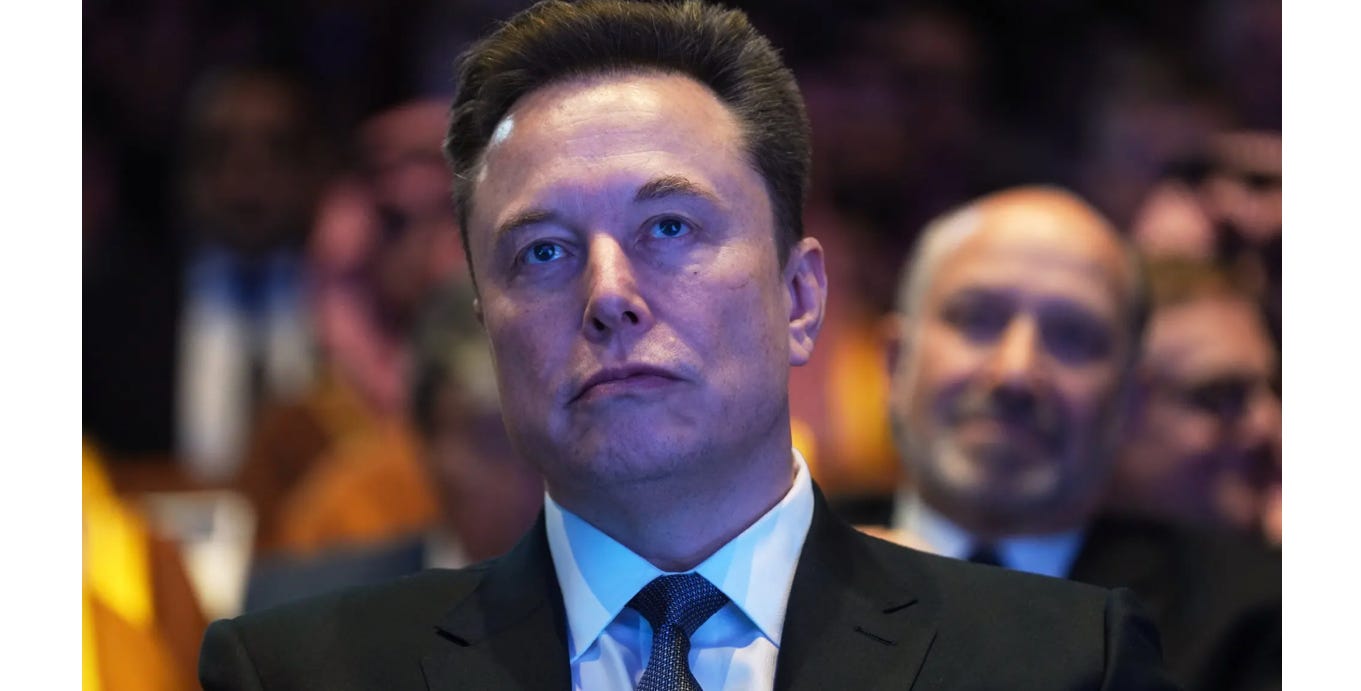
In 2017, Telsa’s shareholders approved a pay package for Mr. Musk that included a performance bonus if he achieved certain financial milestones. Under the deal, Musk would get a whopping $59 billion in extra stock, but only if the company succeeded in certain measurable ways. Seven anti-Musk activists —holding around 1 share of stock each— sued in Delaware, the state where Tesla was first incorporated.
A Delaware judge shocked the international business world by yeeting Musk’s bonus —which had been approved both by the board and a majority of shareholders— as unfair. So much for democracy. The appeals court agreed, and the case went off to the Delaware Supreme Court for a long nap. That was seven years ago.
It was just like when California started the whole ball rolling by driving Tesla right out of the Golden State. Never forget to thank the Democrats for convincing the world’s richest man to change parties and move his companies to Texas. Whereupon, still not in a forgiving mood, he bought (and freed) Twitter’s bluebird. And helped elect Trump. And so on. Thanks, Democrats!
Most large and mid-sized corporations are incorporated in Delaware for a very good reason. Or at least, it used to be a good reason. Delaware is famous (or infamous) for hosting the most business-friendly laws and courts anywhere in the country, or maybe the world. Companies rely on this favorable climate in profound ways. It reduces risk. It lowers legal expenses. It provides a degree of consistency and predictability.
But after a liberal judge bent the rules to punish Musk —there’s no other way to put it— Delaware has faced a steady erosion of its status as corporate America’s default home. Unsurprisingly, Tesla and SpaceX rage-quit Delaware as fast as the paperwork could be shoved through the little window to panicked Delawarean state clerks who kept pretending the office was closed for renovations.
🔥 Oh, and Musk complained. Loudly. In public. On the world’s most popular social media platform. For years. It took a toll. Headline from Reuters, this May:
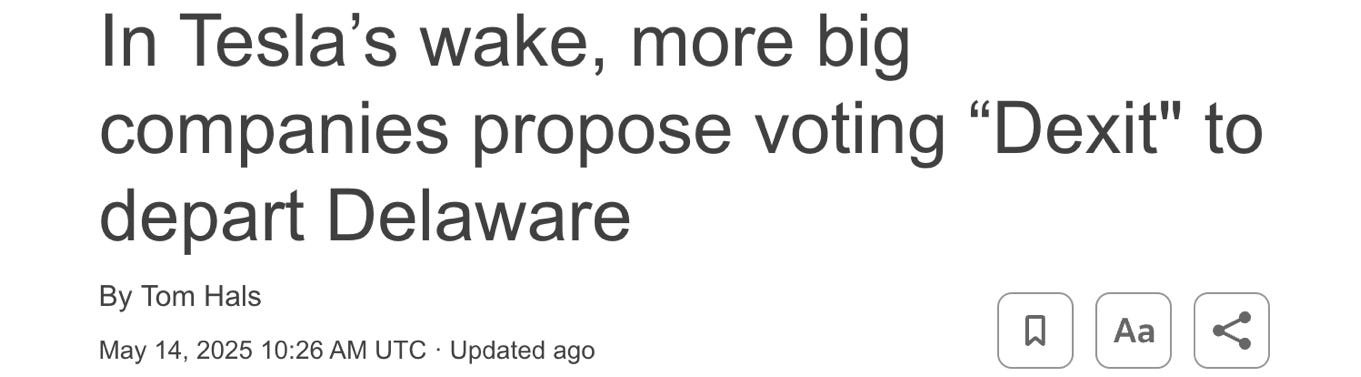
According to that Reuters article, by this May, thirteen major U.S. billion-dollar corporations had either already voted to depart Delaware or had votes scheduled to approve such a move. The media took to calling it “Dexit,” which financial reporters thought was a very clever name but which never caught on with normal people, for some reason.
The controversy also encouraged a slew of other states, smelling blood in the corporate water, to begin legislating like crazy, seeking to seduce the country’s biggest companies into reincorporating in their jurisdictions. This caused Delaware politicians, who had always enjoyed a close camaraderie and good working relationship with the state’s corporate citizens in the form of generous campaign donations, to panic and start proposing reams of new laws to shred the wings off the state judiciary, which seemed to have lost its damned mind.
Enter the Delaware Supreme Court. Yesterday, in an unsurpassed display of judicial independence, and demonstrating the profound courage of its convictions, hastily ran up the white flag. In its unanimous decision yesterday, the five-member state Supreme Court wrote that “although the justices have varying views on the liability determination, we agree that rescission was an improper remedy.”
The short version is they didn’t exactly admit they were wrong. Instead, they fined Musk $1 (one dollar) and restored his full “unfair” pay package. Ironically, back in 2018, the bonus stock would have been worth $59 billion. Now, seven years later, it is valued at $139 billion. So.
🔥 Musk’s origin story is so delicious it is worth retelling. On May 9, 2020 —a day that will live in Democrat infamy— at the height of Alameda County’s covid‑shutdown fight over Tesla’s Fremont factory, California state Assemblywoman Lorena Gonzalez (D‑San Diego), intoxicated by pandemic powers, drunk-tweeted “F*ck Elon Musk,” and the rest, as they say, was history.
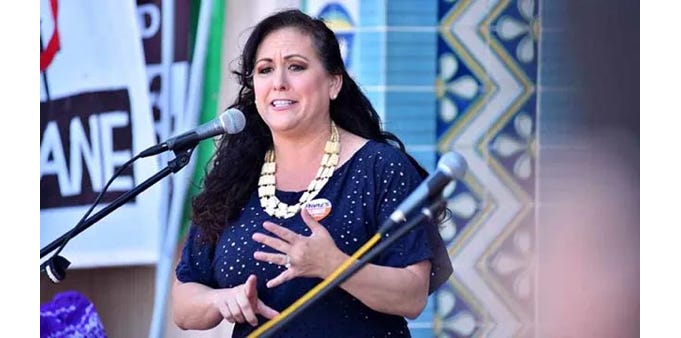
Musk, intensely frustrated that his car plant was deemed “non-essential” by county officials, saw the tweet immediately. Musk shot back, “Message received.” It underscored that a Democratic state official was openly hostile to one of the state’s most prominent employers, and signaled that the billionaire took the insult personally, as confirmation of California’s broader opposition to him— not for his political ideology, but over pandemic policy.
At that time, mind you, Musk publicly described himself as a Democrat voter and donor. After all, he specialized in “green technology” that directly benefited from Democrat electric car subsidies. Musk donated to politicians and causes in both parties, but had a long record of backing Democrats, and described himself as a supporter of Obama, Clinton, and then Biden in 2020.
But thanks to Lorena “Dumb as Rocks” Gonzalez, as quickly as possible for humans or robots, Musk moved his companies from California to Texas. By 2022, he’d switched his party registration and was urging voters to back Republicans. He was funding GOP candidates and pro‑Trump PACs heavily, and positioning himself as a key cultural and regulatory antagonist of the same Democrat Party he once supported.
You can’t beat the irony with two belts. Had there been a single sane Democrat anywhere in California in May 2020, Elon Musk might never have swallowed the red pill. History is funny like that. Be sure to send Lorena Gonzalez a Christmas card this year.
🔥🔥🔥
Here’s a clip from this week’s Joe Rogan Experience #2427 (December 17, 2025), where Bret Weinstein discusses Pierre Kory’s book “The War on Ivermectin.” The book documents 80 U.S. court cases between 2021-2022 as a kind of accidental natural experiment. In the cases, which were brought by families of patients who wanted courts to make hospitals administer the drug, 38 of 40 patients survived when courts ordered ivermectin, versus 38 patients out of 40 who died when courts denied ivermectin.

CLIP: Brett Weinstein tells Joe Rogan about Kory’s ‘natural’ ivermectin experience (3:49).
Weinstein displayed the appropriate amount of incredulity about this outcome. As a scientist, he ran the numbers. The chances of those outcomes happening by random chance are so small as to be impossible (1 in 20 quadrillion). But, as Weinstein ruefully pointed out, nobody will pay any attention to this astonishing evidence since it doesn’t appear in a peer-reviewed study.
One can sympathize with the ever-masker brigades, if they weren’t so dangerous. After all, it takes a lot of work to deny reality. It must be exhausting.
🔥 🔥 🔥
Yesterday, as we noted, was Epstein Release Day! Unsurprisingly, the hundreds of thousands of documents the DOJ released satisfied no one. The UK Guardian ran its story below the headline, “Jeffrey Epstein files latest: Trump administration criticized over partial and heavily redacted release.”
As we expected, not “all” documents were released yesterday. Just a lot. In a Fox News interview last night, DOJ Deputy Secretary Todd Blanche said, “I expect that we’re going to keep releasing over the next couple of weeks; so today, several hundred thousand, and then over the next couple weeks, I expect several hundred thousand more.” Blanche continued, “There’s a lot of eyes looking at these, and we want to make sure that when we do produce the materials, that we are protecting every single victim.”
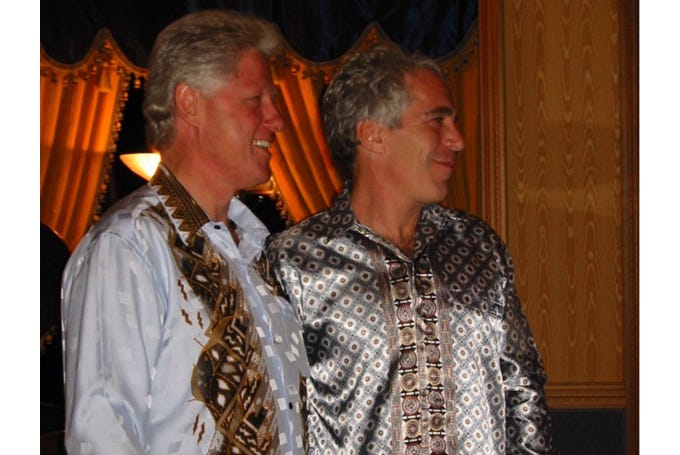
The documents were described as “heavily redacted.” So far, no one has reasonably argued the redactions were inappropriate, in that they concealed anything other than stuff that could identify victims. For example, here’s another photo of President William “Bubba Bill” Clinton, hot tubbing with one of the victims:
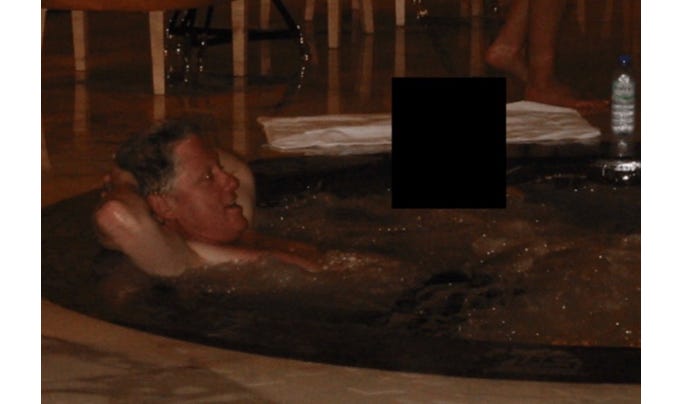
Apart from a bunch of new photos of Bill Clinton, there was not much in the several hundred thousand pages of anything new or different than what has already been available.
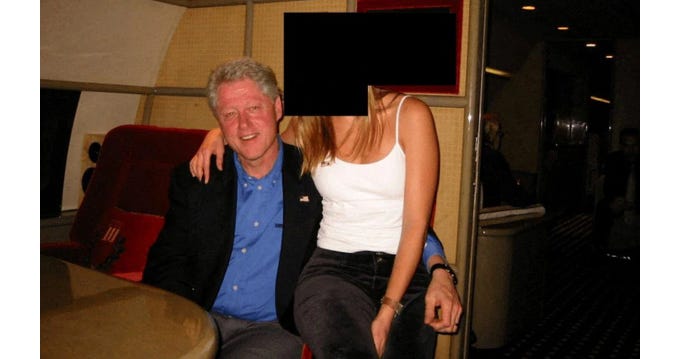
But there were plenty of new ones of the former president swanning around with Jeffrey, Ghislaine, and various redacted young ladies:
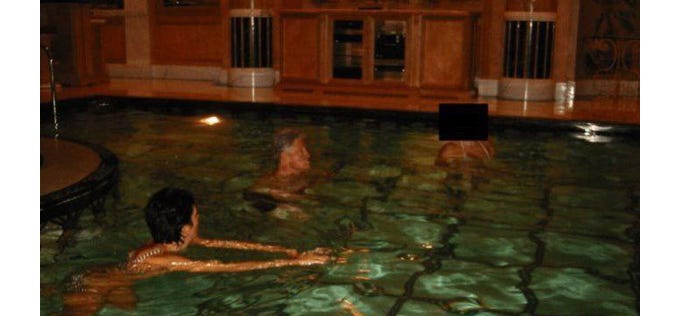
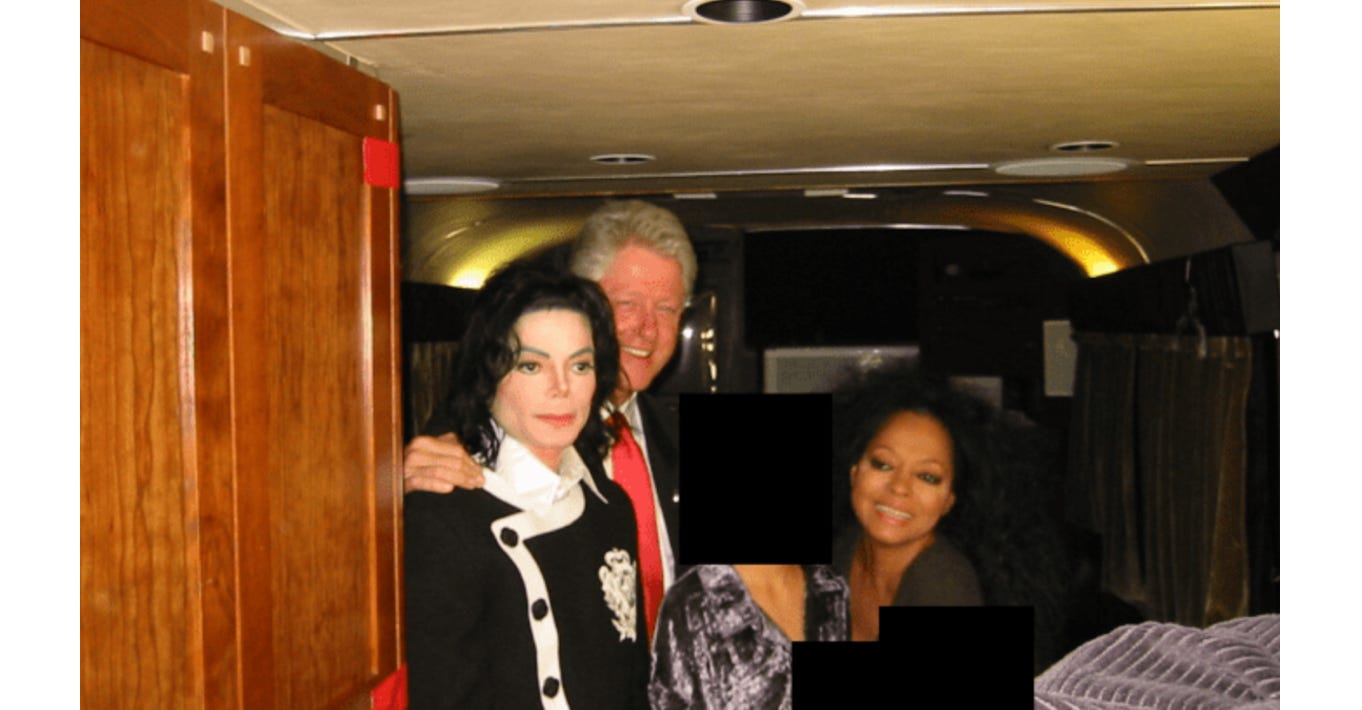
Other celebrities appeared in the new images, including Mick Jagger, Michael Jackson, Richard Branson, Chris Tucker, David Copperfield, and Kevin Spacey. Some were combos, like Bill Clinton, Diana Ross, and Michael Jackson (a better version of an already-released photo):
The Justice Department confirmed on X that no politicians’ names were redacted from the files, as the law requires. Trump is a politician. This batch appears to have few or no Trump references. So.
Some media have already started hinting that this dump looks like a hit job on Bill Clinton. Clinton has always insisted he knew Epstein only in the context of a small number of social events, meetings, and flights connected either to Clinton Foundation work or to Clinton’s post‑presidential charitable activities, but not as a close friend or associate of Epstein’s.
The new trove of Clinton pictures appears to expose that as a horrible lie. It’s impossible to explain hot tubbing with minor females as part of a charitable meeting, for example. Well, maybe that’s how they do things in Davos, but not here.
It’s worth noting that, ten years ago at CPAC in 2015, Sean Hannity asked Trump about Bill Clinton. Trump replied, “He’s a nice guy. But… a lot of problems coming up, in my opinion, with the island.” In other words, Trump knew this was coming. And, absent the Democrats’ relentless Epstein focus, nobody would be paying much attention to these Clinton pictures. Just saying.
🔥🔥🔥
Finally, on Thursday, ABC admitted some good economic news in a story headlined, “Inflation drops to lowest level in months, defying expectations of uptick.” After years of Bidenflation, the rate continues to drop. By the most recent report, released this week, it’s falling faster than any experts predicted.
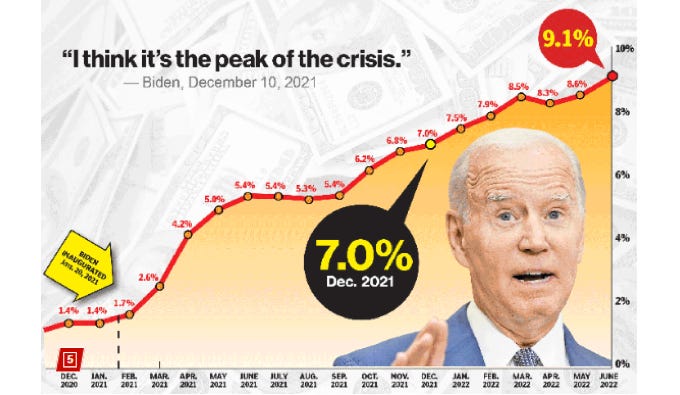
“Consumer prices rose 2.7% in November compared to a year earlier,” ABC said “marking a notable reduction from 3% year-over-year inflation in September.” Meanwhile, the critical real wage continues to increase:

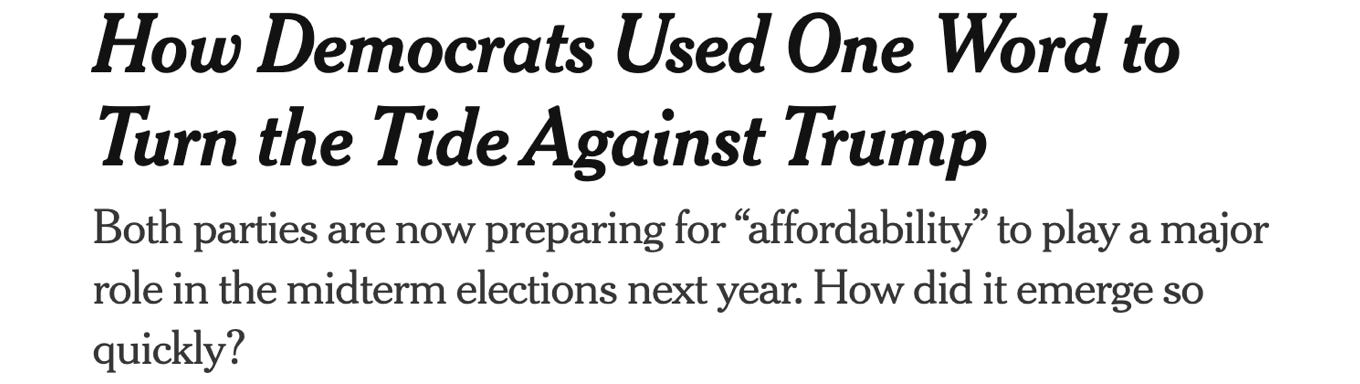
This is another reason the Democrats’ affordability war will fail. It also explains why the New York Times is increasing its efforts to help the donkeys. Behold this triumphalist headline, published yesterday:
The Times even included a handy chart, as if to prove that counting how often Democrats say the word “affordability” replaces any measurable economic news like the inflation rate, employment, real wage growth, gas prices, or how many people cancel their Times subscriptions:
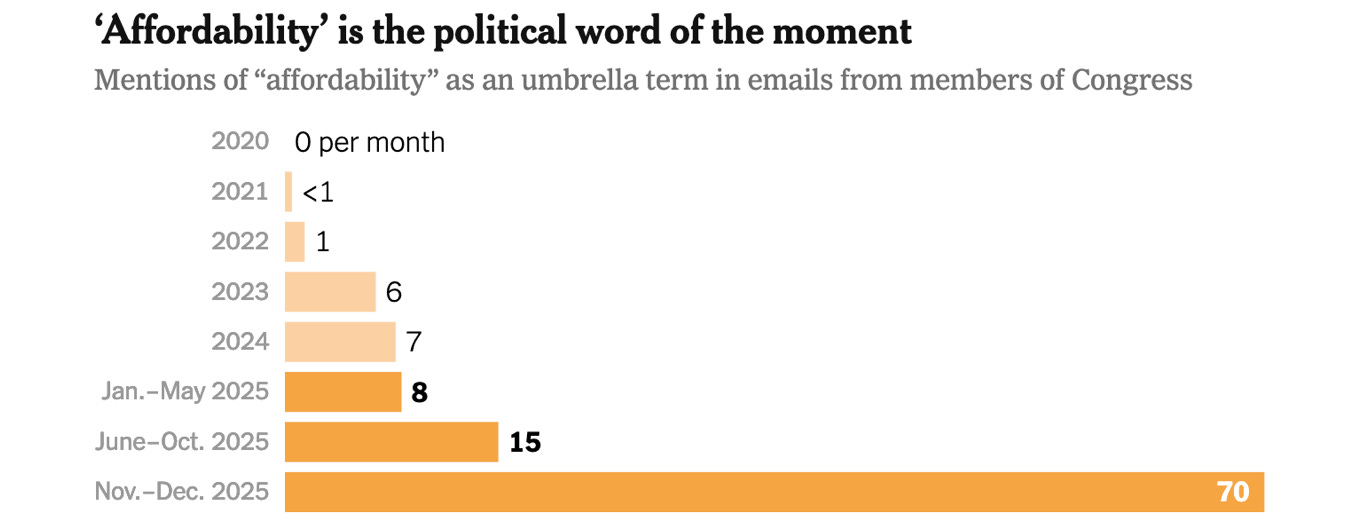
The problem, as it always is with Democrats, is how do you define affordability? The definition is deliberately elastic and jello-like. Pollsters have described “affordability” as more of a feeling than anything classically measurable. Put another way, “affordability” is a measure of how successfully media negativity is making people feel anxious about the future.
Undoubtedly, it has struck a nerve. Everyone is aware that the cost of groceries and dining out have skyrocketed. We’re still buying groceries, and dining out, but we don’t like it. That is why, with egg and turkey prices dropping, the Times pivoted to trying to stuff a little more substance into the murky concept, and ran a second big affordability story yesterday headlined, “These Young Adults Make Good Money. But Life, They Say, Is Unaffordable.”
“Economists say that a typical middle-class family today is richer than one in the 1960s,” the Times patiently explained, but “Americans in their 20s and 30s don’t believe it.” The story was packed with quotes from angsty Millennials. “Upward mobility is sort of dead,” said Gray Thurston, 27, an electrical engineer in Philadelphia, who earns about $90,000 a year.
Gray explained that older Americans have multiple houses, take lots of vacations, and have healthy retirement accounts— but he doesn’t. It’s not fair, somehow. How Gray ever got the expectation he should have those things by age 27 is open for debate.
“In other words,” the Times explained, without explaining anything, “what is considered necessary is relative.” (Read ‘relative’ as a synonym for ‘subjective.’)
Eric Fuqua, 25, a structural engineer earning $86,000 a year, is frustrated that he cannot afford a house in the downtown Atlanta neighborhood where he grew up. This “means settling for a place far from the city center, adding as much as 90 minutes each way to his commute. He does not want to live that way.”
Keyana Fedrick, a full-time manager at a department store in northeastern Pennsylvania, said, “I’m 36, and I don’t have children yet. I should have a flipping life by now. I should be traveling. I should have a luxurious closet. But instead all I have is a good credit score and a paid-off 2013 Nissan.”
Probably deliberately, the Times completely missed the point of a recent study about economic pessimism. It described the classic success results of “delayed gratification,” instead painting it as some kind of inequity:
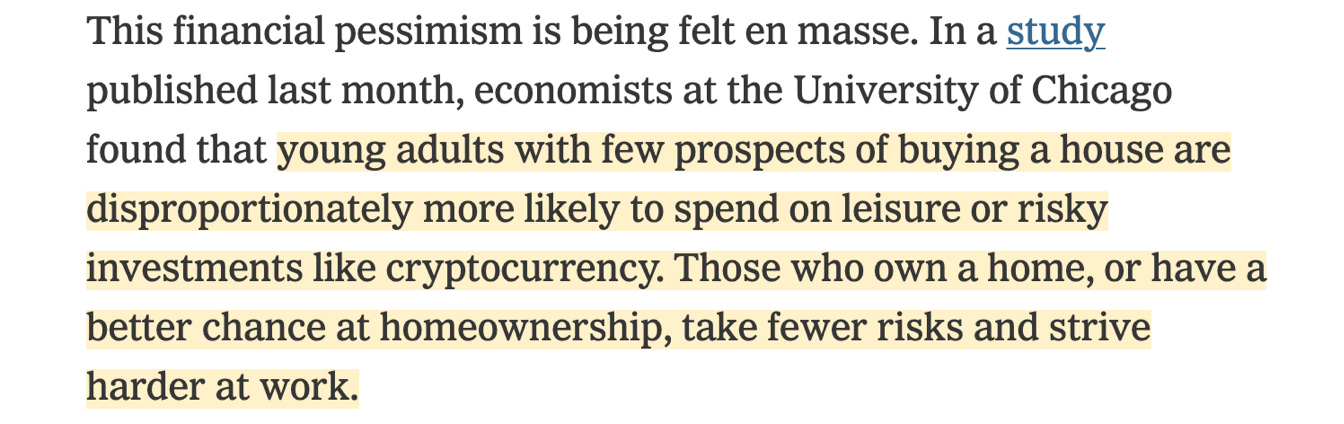
In other words, successful integration into the asset‑owning middle class is associated with classic delayed‑gratification behaviors; blocked entry is associated with present‑oriented and speculative behaviors. But the Times would rather frame it as, “they’ve given up and just want to gamble on crypto and take vacations.”
🔥 Here are the takeaways:
The word “affordability” has clearly resonated, probably as a result of four straight years of Bidenflation.
“Affordability” is a chimeric, subjective word with a slightly different meaning for everyone who says or hears it.
It includes a component of reality, measurable, for example, in the average age of first homeownership (now 40, versus 28 in 1991).
It is also largely marketing, either from changing perceptions of young people who are measuring success as increasing lifestyle and current consumption rather than slowly building long-term security, and from cynical political agents trying to score electoral advantages.
Maybe it’s a generational thing. To me, it feels like there are more ways for young people to be successful now than ever before. They can effortlessly start YouTube channels and put up websites just by making a decision. Gig jobs, Etsy stores, eBay hustles, all offer zero-barrier access and business models my generation could only dream about. AI, robotics, space— all are vast new areas of opportunity that did not exist ten years ago.
And yet, it does not feel, to these younger persons, like it has ever been easier to arrive. As the people quoted for the story prove, with their good jobs, low debt, and steady prospects, apart from the housing crunch, this is less of a structural problem and more of a marketing problem. And marketing problems have marketing solutions.
Have a wonderful weekend! Meet me back here on Monday morning, to pick up the threads as we head straight into the jolliest week of the year.
Don’t race off! We cannot do it alone. Consider joining up with C&C to help move the nation’s needle and change minds. I could sure use your help getting the truth out and spreading optimism and hope, if you can: ☕ Learn How to Get Involved 🦠
How to Donate to Coffee & Covid
Twitter: jchilders98.
Truth Social: jchilders98.
MeWe: mewe.com/i/coffee_and_covid.
Telegram: t.me/coffeecovidnews
C&C Swag! www.shopcoffeeandcovid.com
Bret Weinstein represents the glaring contrast between authentic scientists and glorified experts. Peer reviewed data doesn't amount to a hill of beans when the peers doing the peering are unprincipled charlatans. Over $20 billion dollars in fines (admittedly what amounts to couch change) levied against pharmaceutical companies since the early 2000's for fraud, corruption, false claims and....wait for it....hiding safety data. Boggles the mind how the socially conditioned lemmings just keep lining up for more safe and effective "treatments."
Major Publisher Retracts 64 Scientific Papers in Fake Peer Review Outbreak - https://tinyurl.com/mpzjyw6s
Internal Pharma Documents Reveal Strategies Used to Corrupt the Medical Field - https://tinyurl.com/5436p66z
“And this will be the sign for you: you will find a baby wrapped in cloths and lying in a manger.” And suddenly there appeared with the angel a multitude of the heavenly host praising God and saying,
“Glory to God in the highest,
And on earth peace among men with whom He is pleased.”
— Luke 2:12-14 LSB