

Good morning, C&C, it’s Friday! Your roundup today includes: ICE insurrections continue in Minnesota, and President Trump considers invoking the Insurrection Act to allow military to help restore law and order there; President Trump unveils political atom bomb in the form of a “healthcare affordability plan,” and corporate media sneers till its face breaks; Governor DeSantis makes key state supreme court appointment of one of our favorite pandemic judges, bar none; Florida moves to quash far-left American Bar Association and terminate its role as accrediting gatekeeper; Texas supreme court beats Florida by mere days in doing the same; and a Colorado appeals court seems skeptical of Tina Peter’s sentence— and hope blooms anew for the courageous imprisoned election whistleblower.
🌍 ESSENTIAL NEWS AND COMMENTARY 🌍
🔥🔥🔥
Somebody said something! Yesterday, the Washington Post plopped a story at the top of its website headline, “Trump threatens Insurrection Act deployment to quell Minnesota ICE protests.” As the mostly peaceful ICE protests in Minneapolis became even more mostly peaceful yesterday, President Trump created headline news by posting on Truth Social that, if Minnesota can’t control its “insurrectionists,” he would “institute the INSURRECTION ACT … and quickly put an end to the travesty that is taking place in that once great State.”

It might be more than bluster this time. Last night, ICE Director Tom Homan told Laura Ingraham he planned to meet with President Trump today, and said that one of the items on the agenda paper was whether it was time to invoke the Insurrection Act. In short, invoking the Insurrection Act would give the military authority to assist with domestic law enforcement functions, including making arrests, tear-gassing AWFLs, and parking armored vehicles outside the gubernatorial mansion.
Corporate media was emboldened by a recent Supreme Court ruling that curtailed presidential police powers. The mixed majority held that the National Guard cannot be deployed without a state’s consent until things get really bad, such as when protesters escalate by directly attacking police, organizing themselves into gangs, or boycotting all soy products.
But the decision also raised the possibility that a president could simply skip the National Guard stage and go straight to sending U.S. military forces into protest zones.
The ruling was issued about three weeks ago and revolved around Trump’s authority under a National Guard-related statute, not under the Insurrection Act. It was also limited to the use of forces to protect federal property and personnel (rather than control riots). But the decision oddly created more questions than it answered. E.g., a CNN headline, Christmas Eve:

In a footnote to his separate concurring opinion, Justice Brett Kavanaugh agreed: “As I read it, the court’s opinion does not address the president’s authority under the Insurrection Act.” He continued, “One apparent ramification of the court’s opinion is that it could cause the president to use the US military more than the National Guard to protect federal personnel and property in the United States.”
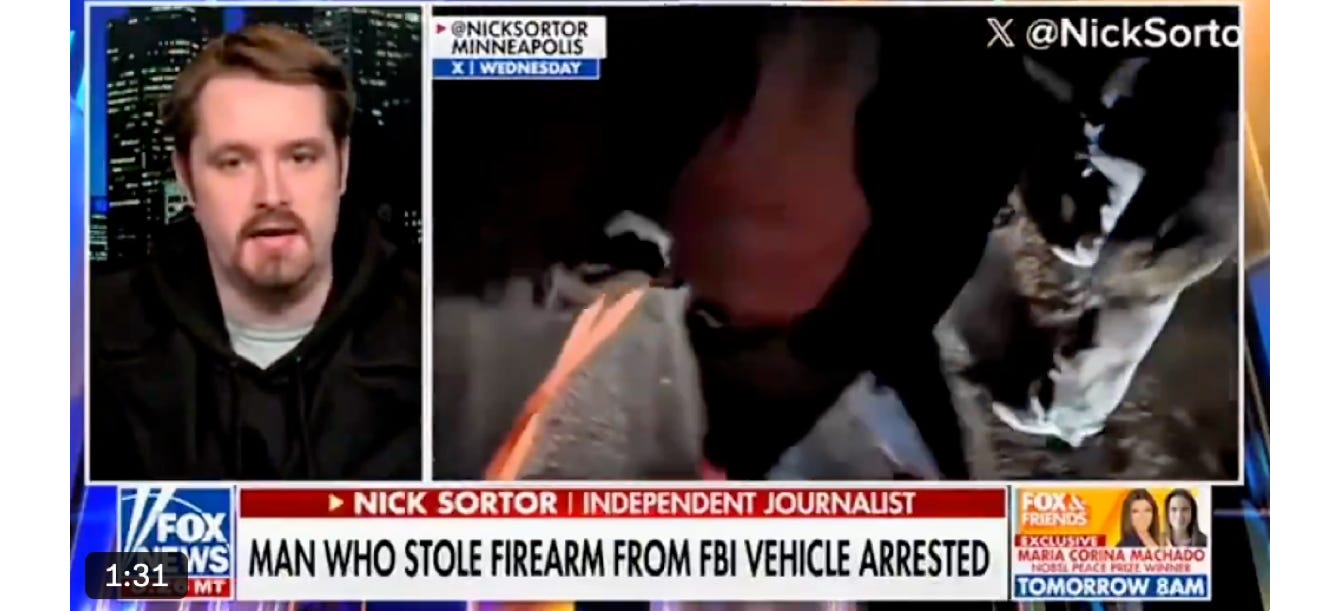
CLIP: Venezuelan gang members joining in on Minneapolis ICE riots and raiding FBI cars (1:49).
Another ‘apparent ramification’ was that, by deleting the halfway step of using civilians called up for National Guard duty, SCOTUS just incentivized the federal government to intentionally and quickly allow a situation to escalate until conditions meet the legal and political standards for a professional U.S. military response to an “insurrection.” In other words, presidents can let things roll until people start demanding they invoke the Insurrection Act. Thanks, justices!
Justice Neil Gorsuch dissented, apparently recognizing this tension created by the majority’s ruling. He wrote that he was “not comfortable venturing an answer” to many of the questions raised by the case. “If all those questions were not fraught enough, an even graver one lurks here too: When, if ever, may the federal government deploy the professional military for domestic law enforcement purposes consistent with the Constitution?” Gorsuch rhetorically queried.
Believe it or not, more presidents than you might guess have at one time or another invoked the Insurrection Act, and for various reasons. In 1992, George H.W. Bush dramatically used the Act to suppress the Rodney King riots in Los Angeles. In 1957, President Dwight Eisenhower (R) federalized the Arkansas National Guard and sent the 101st Airborne Division into Little Rock to assist integration by walking black children into Democrat-controlled schools.
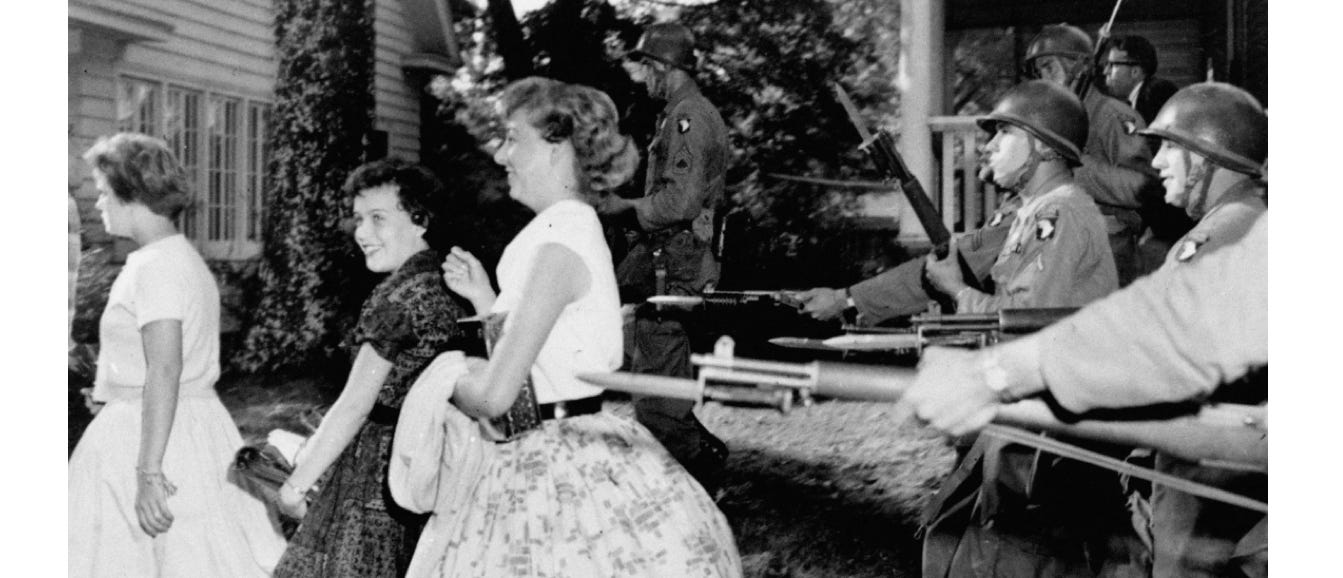
Eisenhower’s use of the Insurrection Act faced serious legal challenges; President Bush’s did not. But courts have never directly defined what constitutes an “insurrection” for purposes of the Act, always ultimately deferring to the Executive Branch’s decisions. If President Trump does invoke the Act, odds seem good this time that courts will not follow their usual deferential customs, but will abandon historic caution and rush in where angels have always feared to tread.
Invoking the Act without a state’s permission requires a scenario where state officials are “unable or unwilling” to control a serious breakdown of public order, or where an “unlawful combination or conspiracy” is involved. I’ll let you decide whether scandal-plagued Governor Tim “the Coach” Walz is able and willing to restore order to the Twin Cities.
It appears Trump may be angling to satisfy both prongs of the test. Yesterday, FBI Director Kash Patel told Just The News that he believes the protests are not “spontaneous,” but rather organized and paid for, and the DOJ is currently investigating organizations paying for and helping coordinate the riots. If the FBI finds solid evidence of national coordination —a conspiracy that “impedes” federal law— it would support the legal invocation of the Insurrection Act. Paging George Soros.
It’s impossible to predict what happens next. But it’s clear that, if anything, the Trump Administration is not backing down, but rather is surging even more immigration resources into Minnesota. The protesters are escalating along with the surge. Assuming this continues, at some point, the minimum legal and political threshold for the Insurrection Act —whatever that is— will be achieved.
🔥🔥🔥
Yesterday, the UK Guardian ran a sneering story headlined, “‘Absolutely no detail’: experts alarmed as Trump unveils healthcare plan.” At this point, anything that is described as alarming to experts is almost certainly good news. But what, exactly, is President Trump’s so-called “Great Healthcare Plan”? And why is it so alarming?
The very first line of the White House’s official plan website explained the plan’s goal, in all-caps: “CALLING ON CONGRESS TO LOWER HEALTHCARE COSTS.”
In other words, the “plan” is really a blueprint for Congress to codify President Trump’s various healthcare affordability initiatives. There were basically four main objectives, none of them new:
Sending Obamacare subsidies directly to eligible taxpayers, to help them buy insurance, instead of sending the money to the insurance companies;
Making permanent “Most Favored Nation” drug pricing for Americans;
Requiring insurance companies to plainly disclose costs and profits “without industry jargon;” and
Requiring healthcare providers to “prominently post their pricing and fees.”
All of these objectives are already fully or partially underway in a Trump executive order, regulatory initiative, or pressure tactic. Recall, for example, the recent presidential announcement of “persuading” insurance companies to “join” his TrumpRx discount drugs website.
All four objectives are also incredibly popular 80/20 issues. Popular, that is, with everyone except insurance companies, healthcare providers, Congressmen, and Democrats.
🔥 Trump’s new “plan” is better understood as pressure on Congress, to get busy passing laws making Trump’s executive orders and initiatives permanent. Noticeably absent from Trump’s announcement were House Speaker Mike Johnson or Senate Majority Leader John Thune. If this announcement had been coordinated with a receptive Congress, we might have expected to see one or both gentlemen there, if for no other reason than to soak up some of the credit.
Progressives are appalled. The Guardian was deeply skeptical and dismissive. “The Trump plan would require the approval of Congress before it could go into effect,” the article noted, “an outcome far from guaranteed despite Republicans holding a majority in both chambers.”
But assuming Republicans draft and propose a bill to implement Trump’s plan, it would shove Democrats into the politically awkward posture of opposing direct subsidies to Americans and lowering drug prices. They must now argue in favor of preserving the status quo— which will be difficult since they’ve already criticized the status quo of healthcare as unaffordable.
Checkmate!
Read critically. After a few short paragraphs describing Trump’s plan, the Guardian spent the rest of its column inches rounding up a cockroach nest of anxious experts to criticize the plan— not a single one finding anything at all to like among the plan’s hugely popular objectives. What did I tell you yesterday about articles quoting experts only on one side? I won’t bother to cite the Guardian’s rancid stew of pro-big-health propaganda, except to note that its experts both ironically complained about the plan’s lack of details and also predicted it would surely send Obamacare into a “death spiral” (which, for some of us, would be a feature and not a bug).
Trump just handed Republicans in Congress a massive political opportunity. For now, I will assume they are smart enough to grab the affordability ball and run toward the goal. I know— it’s a big assumption.
⚖️⚖️⚖️
Next, a little local Florida judicial news that you will certainly enjoy. Yesterday, the Tallahassee Democrat ran a terrific story headlined, “DeSantis cements conservative majority on Florida Supreme Court.” Governor Ron DeSantis has now named six of the state’s seven current high court justices. That’s good enough, but it was much better than it even appears. Yesterday’s appointment was of perhaps my personal favorite appellate judge, Adam Tanenbaum, whom the paper described as “a staunch conservative.”
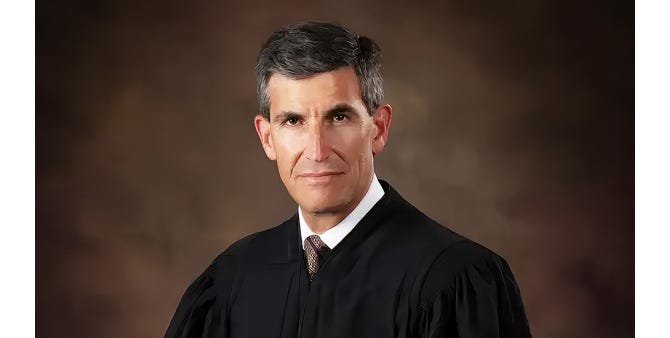
It’s only January, but I will already award the label “staunch conservative” the prize for understatement of the year. Even though Judge Tanenbaum recently ruled against me in a local elections case, I will never forget the very first time he ruled in my favor: my successful mask case. Here’s my favorite paragraph from his order, where Judge Tanenbaum described Alachua County’s mask ordinances as “diktaks”:
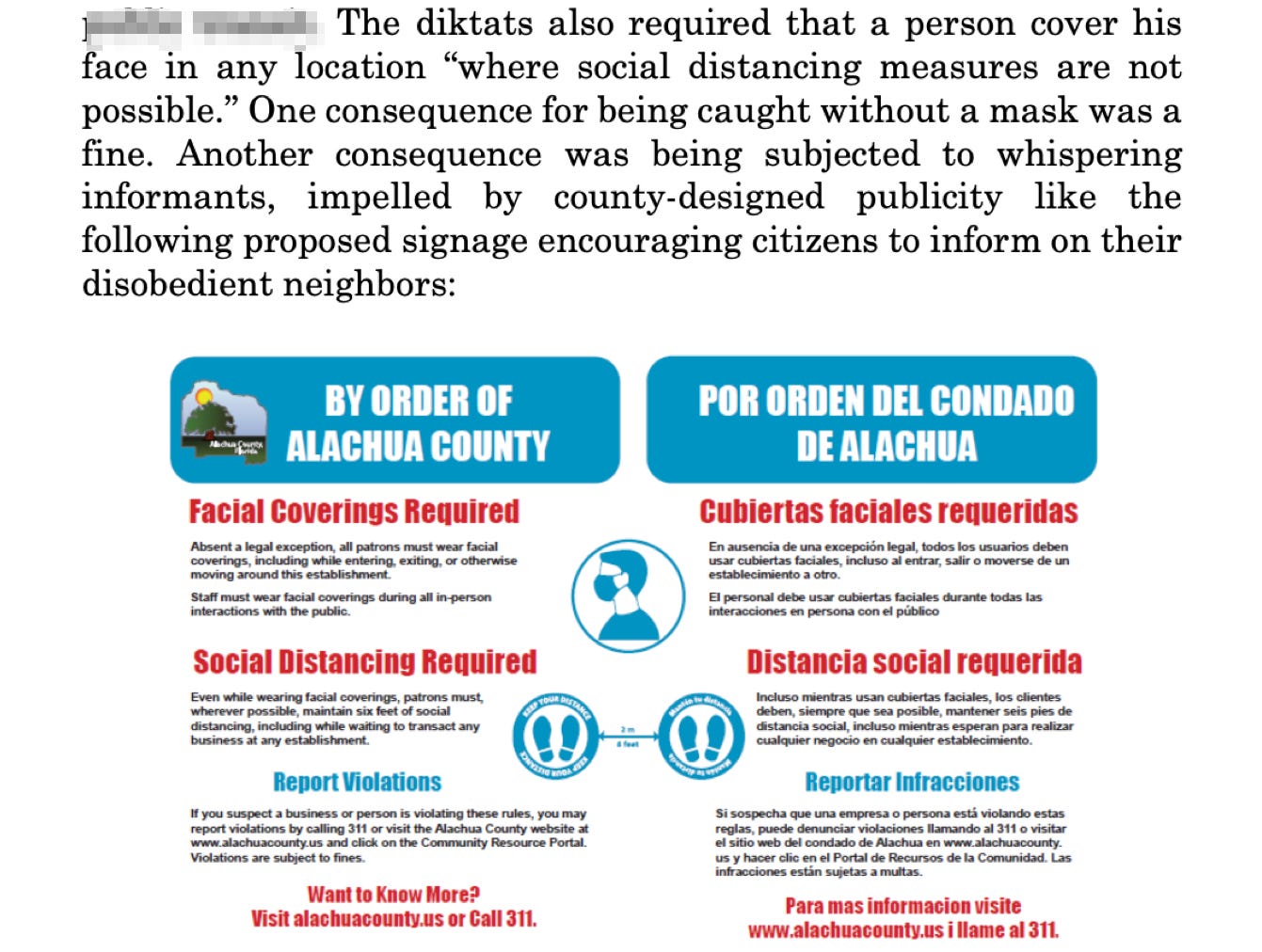
If you’ve never read Judge Tanenbaum’s order, you’ll love it. Here is a link from my personal dropbox. It wasn’t always easy to find. The big legal databases refused even to assign the opinion a citation number for two years. They covered the story up to the ruling, but not much afterwards.
Here, for instance, is a November, 2020, headline from a CBS story about the case before the ruling: “Florida Appeals Court Weighs Mask Mandate.” CBS briefly described our oral arguments:
The significance of Tanenbaum’s mask decision, rendered the following June, has never been fully appreciated. This was the very first case (and to this day, I believe, the only mask case) where an appellate court in the United States ruled against one of the central pandemic mitigation policies on constitutional grounds. Even though it wiped out mandatory masking in 33 counties in Florida, and caused the rest of the Sunshine State’s 67 counties to begin quietly retreating from their own mask orders, media stubbornly refused to report on it.
But the damage, as they say, was done. It was a game-changer. All across the country, news spread among lawyers who were fighting pandemic rules: it was possible to win. It encouraged more lawyers to join the fight. It began turning the tide. Just two months later, on the strength of my mask victory, I won the nation’s first broad injunction against a municipal “vaccinate or terminate” mandate.
The lawsuits began to multiply, and you know the rest of the story. The pushback took time to pick up speed, but for the pandemic powers, it was all downhill from this key case, judicially speaking.
As you can imagine, even though Judge Tanenbaum’s order carefully skirted the radioactive issue of whether the useless things work or not, he still took furious flak and was savaged over his “anti-masking” decision. After all, at the time, it was June, 2021— the peak of mask and vaccine mania. He was the first appellate judge to rule against any significant pandemic policy. To say the least, it required a rare kind of selfless, heroic bravery.
But now, Governor DeSantis, bless him, has elevated this courageous and brilliant jurist to the Florida Supreme Court, over a wide field of competition. Both Governor DeSantis and Judge Tanenbaum deserve substantial credit for turning the tide and ending the pandemic nightmare. Once again, I thank them both on everyone’s behalf.
Congratulations, Judge Tanenbaum, on your well-deserved appointment!
⚖️ Governor DeSantis is on a roll this week. In related news, the Florida Phoenix ran a story yesterday headlined, “Florida Supreme Court ends three-decade reliance on ABA, handing win to DeSantis.” Boom.
The American Bar Association (ABA) has long held the nation’s law schools in its ruthless grip, by having a monopoly on authority to say which ones are “accredited” and can therefore graduate students authorized to take state bar exams and become lawyers. On Wednesday, Governor DeSantis bashed the ABA as a far-left organization undeserving of being the “arbiter of legal education.”
The very next day, the Florida Supreme Court (in which Judge Tanenbaum has now become a member) issued a nine-page opinion ending 30 years of ABA dominance over legal education in the Sunshine State. “The Court is persuaded that it is not in Floridians’ best interest for the ABA to be the sole gatekeeper deciding which law schools’ graduates are eligible to sit for the state’s General Bar Examination and become licensed attorneys in Florida,” the Court wrote.
Although the timing of coming just after DeSantis’s criticism was suggestive, the Supreme Court had been considering the issue since last March, when it created a working group to recommend whether to keep the ABA or shove it out the airlock. This week, the Florida supremes expanded the list of accrediting organizations, relegating the ABA to just one of many, and ending its tumultuous reign as the legal system’s monarchical gatekeeper.
⚖️ In even more curious timing, on Tuesday, the Houston Chronicle ran a story headlined, “Texas first state to break with ABA over law school oversight.” All the way back in 1983, the Texas Supreme Court delegated authority to the ABA to accredit the Lone Star State’s law schools and set standards for bar eligibility.
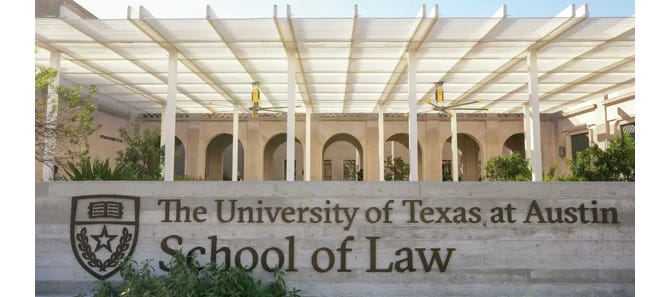
On January 6th —another saucily suggestive date— the Texas Supreme Court snatched back that long-standing authority. Texas will no longer require law schools to be “accredited,” but will instead focus on bar-passage rates and transparency. The state’s supreme court will recognize schools that, it said, can meet “simple, objective and ideologically neutral criteria.” The state Supreme Court will now itself keep the list of schools authorized to graduate bar-ready students.
Texas’s Supreme Court began its review of ABA involvement in April of last year— mere weeks after Florida did. It issued its ABA order just days before Florida.
The result of these remarkable, if not revolutionary, developments is that two of the country’s biggest states just ended the ABA’s decades-long monopoly on approving legal education. The two-state push began shortly after President Trump’s inauguration, and the coup de grace was delivered this week. Coincidence? I report, you decide.
⚖️ Here is what I am driving at. During the long, painful Biden years, I often wrote about the conservative counter-revolution that was slowly gaining ground behind the scenes and holding back Democrats’ efforts to transform the country into a giant, open-air drag show and a massive mandatory-vaccine distribution center.
But now, enjoying a friendly federal government, the red states —formerly plucky revolutionaries, surrounded on all sides— are surging. The blue states are not holding ground, like the red states largely did during the Cabbage Era. The blue states are collapsing in disarray. Consider California, struggling under looming welfare fraud investigations and a confiscatory wealth tax proposal driving away its most productive citizens. Or Minnesota, which is crumpling under ICE protests and ongoing welfare scandals.
In other words, amidst the blizzard of national (and international) news, let’s not overlook all the terrific progress being made in the red states. Of course, depending on where you live, your mileage will vary.
⚖️⚖️⚖️
In more great appellate news, the Colorado Sun ran a story yesterday headlined, “Colorado appeals panel appears skeptical of Tina Peters’ sentence. It might be the first truly good news for election whistleblower Tina Peters since she was first sent to prison.

CLIP: Appellate judges tear into state prosecutor in the Tina Peters appeal (3:37).
“A Colorado appeals panel on Wednesday,” the Sun reported, “seemed skeptical that a judge could use former county clerk Tina Peters’ insistence on spreading election conspiracy theories as part of the reason to sentence her to nine years in prison for orchestrating a data breach of election equipment.” The reason is simple and constitutional. “The court cannot punish her for her First Amendment rights,” Appeals Judge Craig Welling said.
During sentencing, District Court Judge Matthew Barrett called Ms. Peters a “charlatan” and said she posed a “danger to the community” for “spreading lies about voting” and undermining the democratic process.
Not only that, but just as legally significant —maybe even more so— the appellate judges seemed honestly shocked and appalled that Tina’s jurors were given a verdict form with the wrong legal standard on it. The jurors were instructed on misdemeanor charges, even though Peters was sentenced for felony charges.
You don’t need to be a lawyer to hear the judges’ incredulity as they questioned the state’s lawyer in the clip, above.
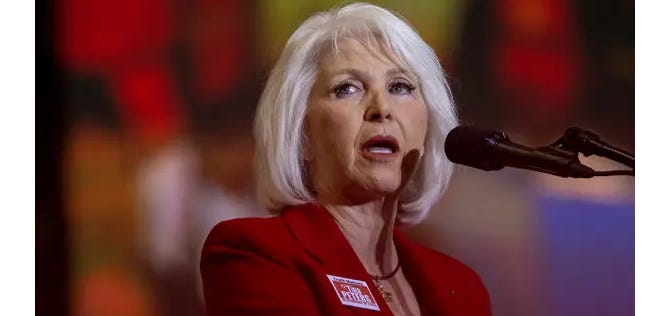
There was more good news for Tina. Recently, after President Trump pardoned Ms. Peters of any federal crimes (she’s jailed under state law), Colorado’s Democrat Governor Jared Polis said he would consider clemency, and even described Ms. Peter’s sentence as “harsh.” At the hearing yesterday, Tina’s lawyers did not raise their long-shot issue about Trump’s federal pardon nevertheless extending to the state charges (they said they lacked time in their allotted 30 minutes to argue that issue).
The best news is the combination of the two events. The legal weaknesses in Tina’s case, now exposed, provide political cover for Governor Polis to grant clemency— rather than wait for the appeals court to overturn her sentence. He should go ahead and do it, now, while he can still take the credit for his magnanimity.
Miracles always show up when you least expect them.
Have a fabulous Friday! Coffee & Covid will be back online tomorrow morning, with a Weekend Edition roundup of essential news and commentary.
Don’t race off! We cannot do it alone. Consider joining up with C&C to help move the nation’s needle and change minds. I could sure use your help getting the truth out and spreading optimism and hope, if you can: ☕ Learn How to Get Involved 🦠
How to Donate to Coffee & Covid
Twitter: jchilders98.
Truth Social: jchilders98.
MeWe: mewe.com/i/coffee_and_covid.
Telegram: t.me/coffeecovidnews
C&C Swag! www.shopcoffeeandcovid.com
Dear ICE Agents,
This would all go a lot more smoothly if you would just stop trying to enforce the law.
Sincerely,
The Retarded Street Urchins
Perhaps we are being a bit too harsh, if not flat out iron-fisted, upon the delicate sensibilities of our beleaguered and misunderstood Somalian brothers and sisters. To that end, in part to extend an olive branch, but mostly because I never like to let a good crisis go to waste, I’m pulling up stakes and moving to Minnesota to open up: Ollie Ackbars Therapy Goats and Camels Serenity Now Emporium. “Stressful times call for smelly animals.” Franchises available in all urban sprawl hell holes. Frauds and charlatans preferred.
✝️✝️✝️
But God demonstrates His own love toward us, in that while we were yet sinners, Christ died for us.
— Romans 5:8 NAS95
✝️✝️✝️